Gstaad Skiing: A Complete Guide to Switzerland's Most Discreet Alpine Resort
Gstaad Skiing: A Complete Guide to Switzerland's Most Discreet Alpine Resort
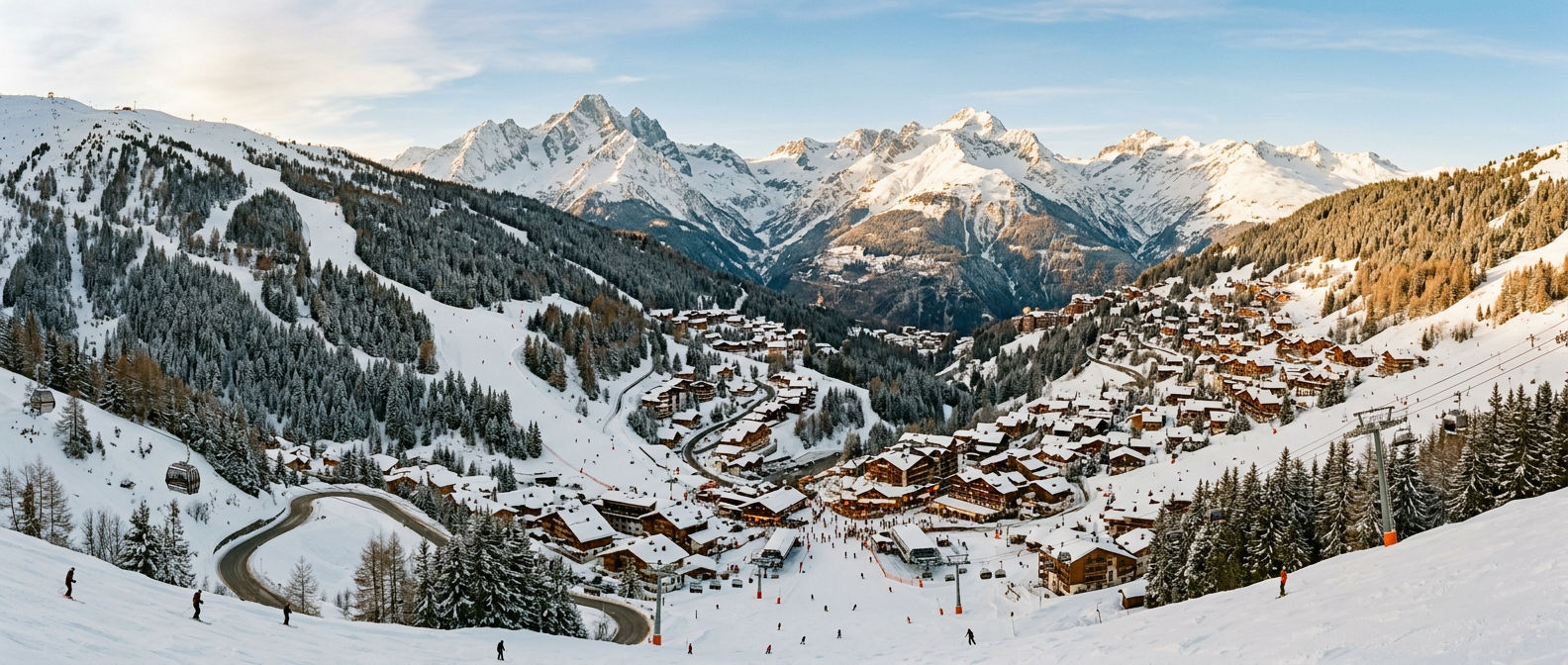
Gstaad sits at 1,050 metres in the Bernese Oberland, anchoring 200 kilometres of pistes that rise to 3,000 metres at Glacier 3000. It is not the largest ski area in Switzerland, nor the steepest. What it offers instead is something rarer: a resort where wealth is assumed rather than advertised, where the village promenade feels more like a mountain hamlet than a destination, and where the skiing is genuinely varied without ever feeling crowded.
The Ski Area at a Glance
Gstaad's skiing spans six interconnected sectors under the Gstaad Mountain Rides umbrella, reaching from the gentle meadows above Saanenmöser to the glacial terrain at Glacier 3000. The combined area covers 200 kilometres of marked pistes, served by 53 lifts, with a vertical drop of nearly 2,000 metres from summit to valley.
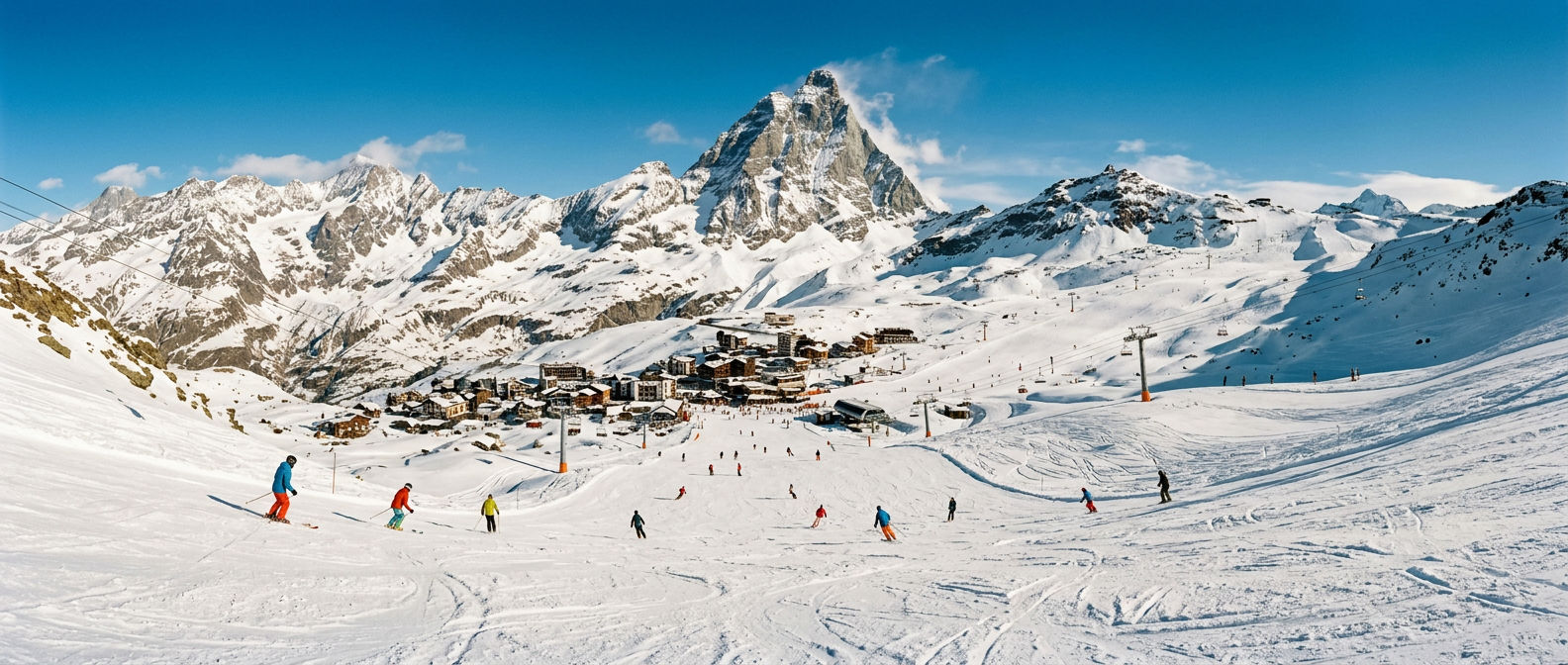
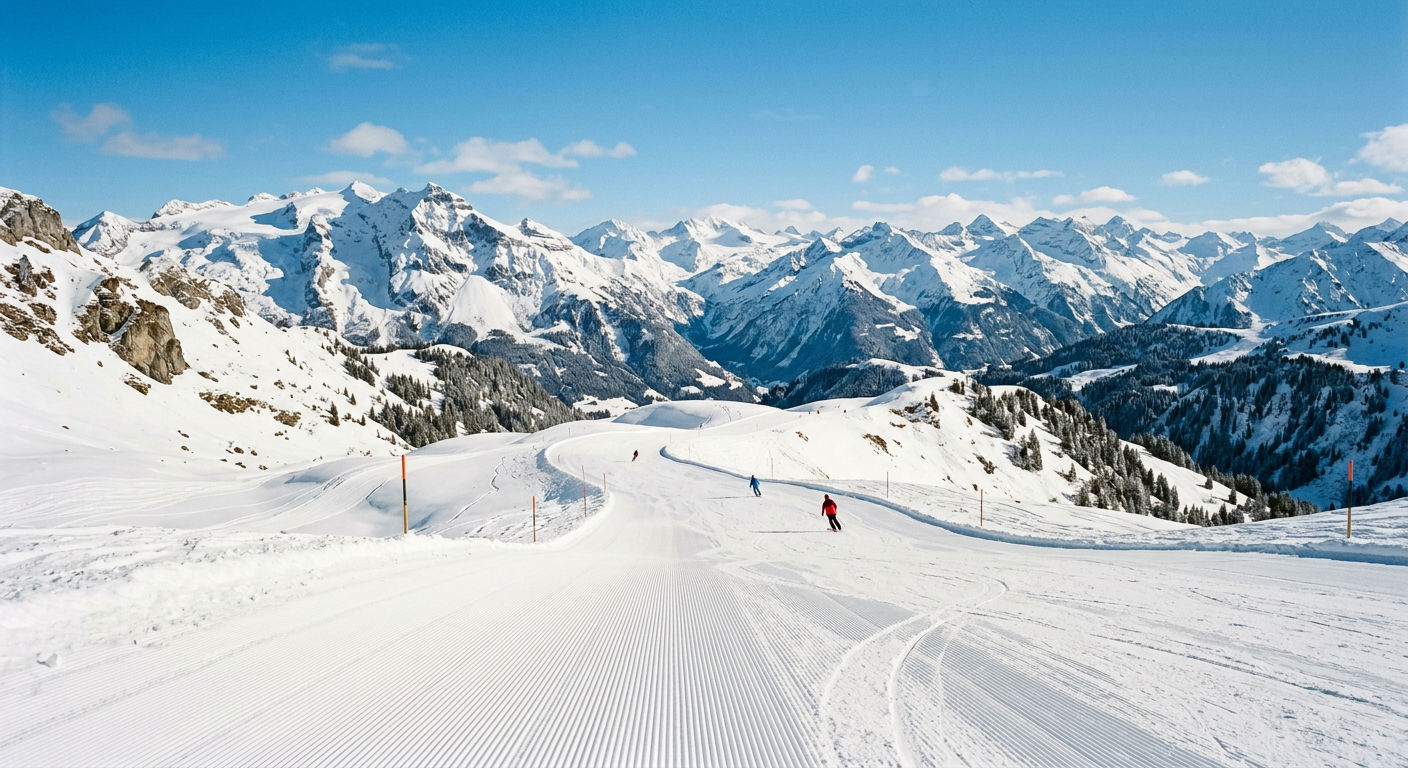
The terrain suits intermediate skiers particularly well. Roughly 60 percent of runs are graded red, with wide, well-groomed boulevards running through the Eggli and Wispile sectors. Advanced skiers gravitate towards the steeper Rinderberg–Saanerslochgrat area and the off-piste possibilities around Glacier 3000, where the snow record is the most reliable in the region.
| Feature | Detail |
|---|---|
| Village altitude | 1,050 m |
| Highest point | 3,000 m (Glacier 3000) |
| Total pistes | 200 km |
| Lifts | 53 |
| Run breakdown | 60% intermediate, 28% advanced, 12% expert |
| Longest run | 10 km |
| Snowmaking coverage | 60% |
Notable Sectors
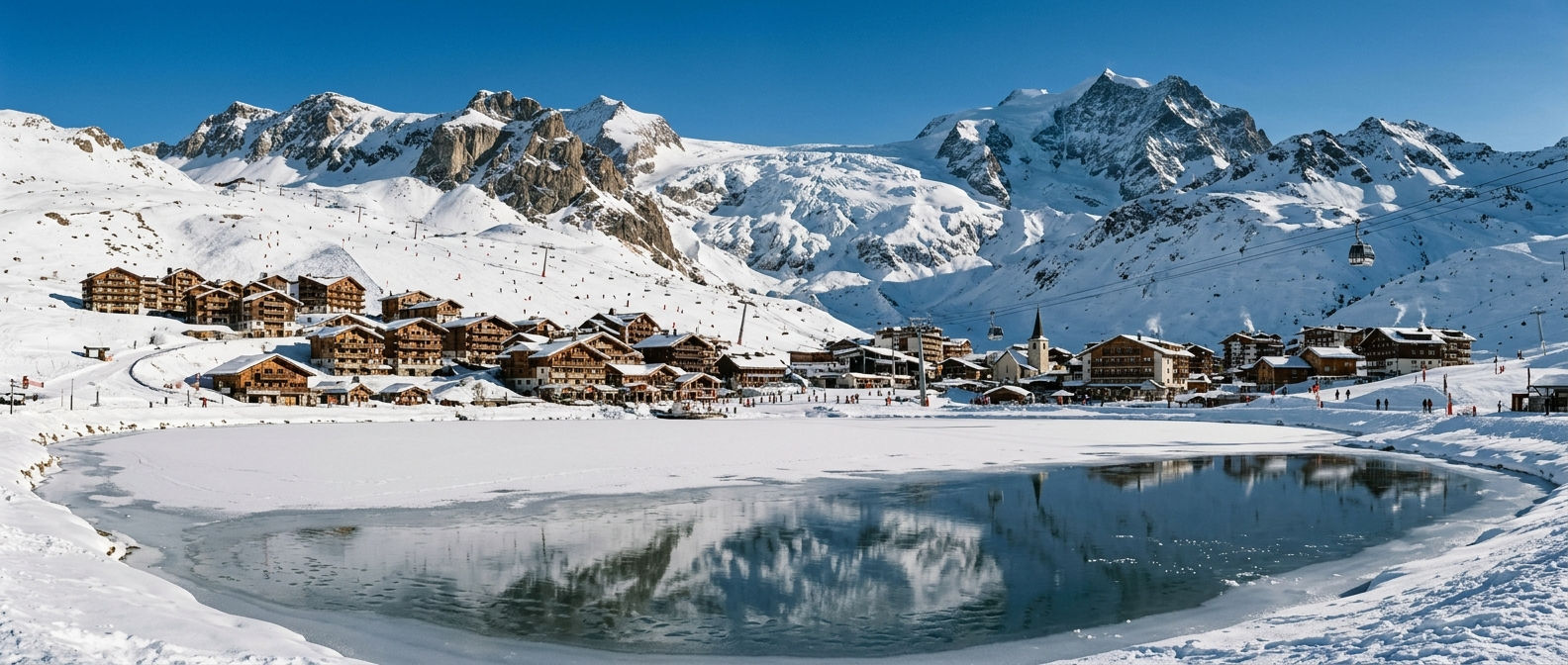
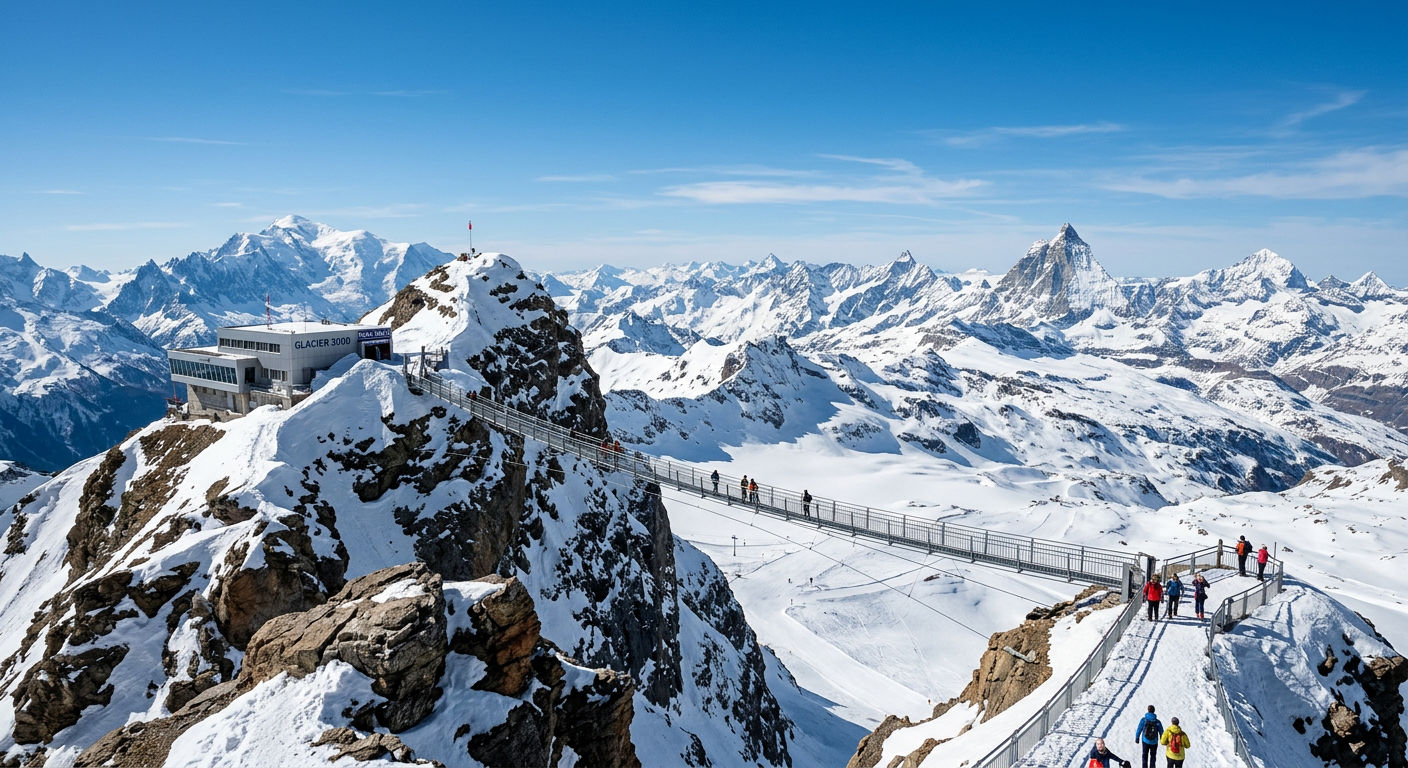
The Eggli sector is Gstaad's home mountain — a south-facing area ideal for morning cruising with views across the Saanenland valley. Glacier 3000, reached via a 15-minute drive to Col du Pillon, offers the highest and most snow-sure skiing, along with the Peak Walk — the world's first suspension bridge connecting two mountain peaks.
For families and improvers, the Saanenmöser–Schönried area provides gentle, tree-lined runs above 1,400 metres. Advanced skiers seeking sustained vertical will find it on the Rinderberg face and the Wasserngrat above Gsteig.
When to Ski Gstaad
The main Gstaad season runs from mid-December through late March, with Glacier 3000 extending the window from early November to late April. For the 2025/26 season, Glacier 3000 operates from 8 November to 30 April.
Snow reliability on the lower slopes depends partly on the year. At village level (1,050 m), natural snowfall can be inconsistent in lean seasons, though 60 percent snowmaking coverage provides a buffer. The higher sectors — Rinderberg (2,000 m+) and Glacier 3000 — hold snow well throughout the winter.
Best months:
- January–February — Peak conditions across all sectors, coldest temperatures, most reliable coverage
- March — Longer days, spring snow on lower slopes, still winter conditions at altitude
- Late November–December — Glacier 3000 open; lower areas dependent on early snowfall
The Magic Pass — a multi-resort season pass covering Gstaad alongside 80+ Swiss resorts — offers strong value for those splitting a season across multiple destinations. Day passes for Gstaad Mountain Rides are also available.
Getting to Gstaad
Gstaad is well connected by both road and rail, though the approach from any direction takes some time. This relative inaccessibility is part of what keeps the resort quiet.
| Route | Distance | Duration |
|---|---|---|
| Bern Airport | ~80 km | 1.5 hours by car |
| Geneva Airport | ~150 km | 2 hours by car |
| Zurich Airport | ~200 km | 2.5–3 hours by car |
| Geneva by rail | — | 2 hours 40 minutes |
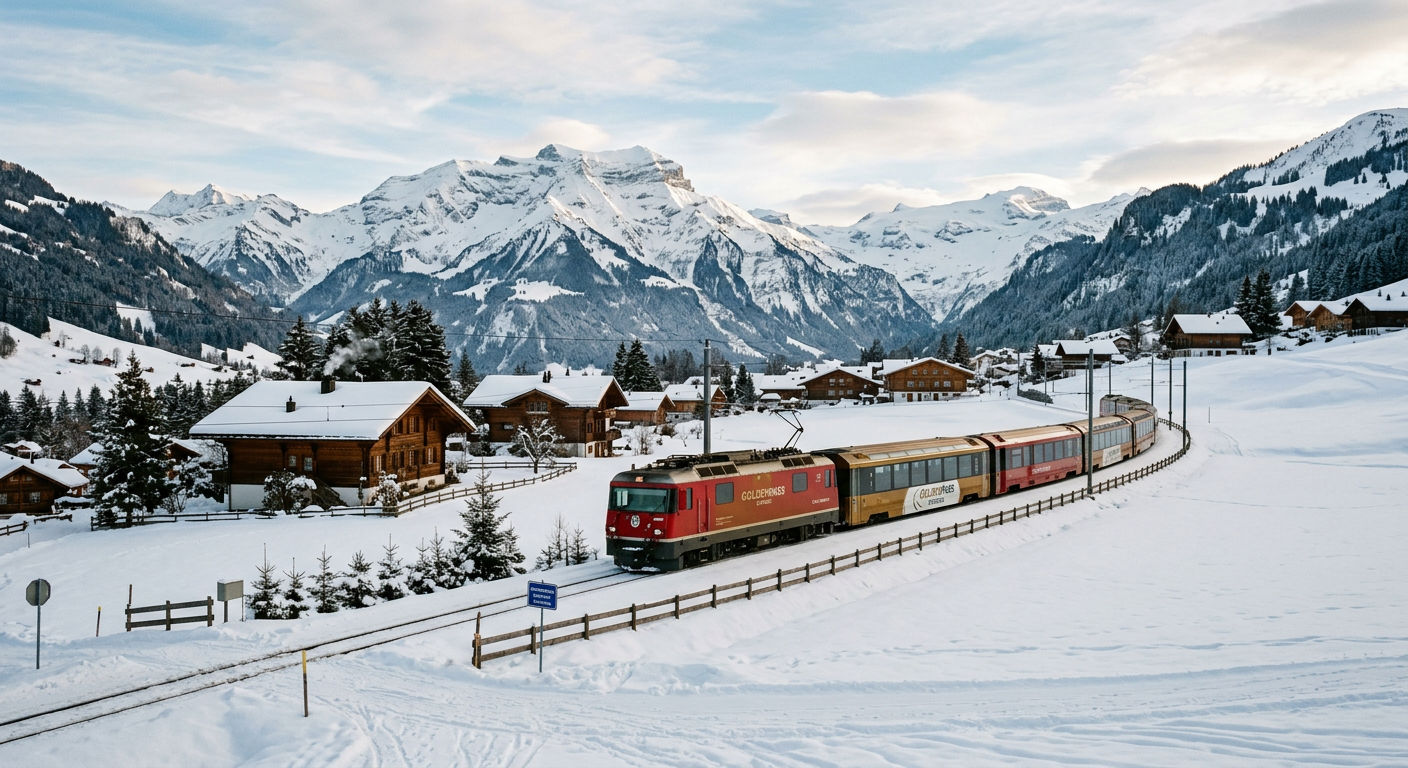
The GoldenPass Express railway connects Montreux to Interlaken via the Saanenland, with Gstaad station sitting directly on the line. The train journey from Montreux is one of Switzerland's most celebrated scenic routes, winding through the Pays-d'Enhaut before arriving in the village centre. For those flying into Geneva, the combination of a short train to Montreux and the GoldenPass line offers a refined alternative to a road transfer.
Private transfers from Geneva or Bern are widely available, and Gstaad has ample parking for those arriving by car.
The Village and Its Character
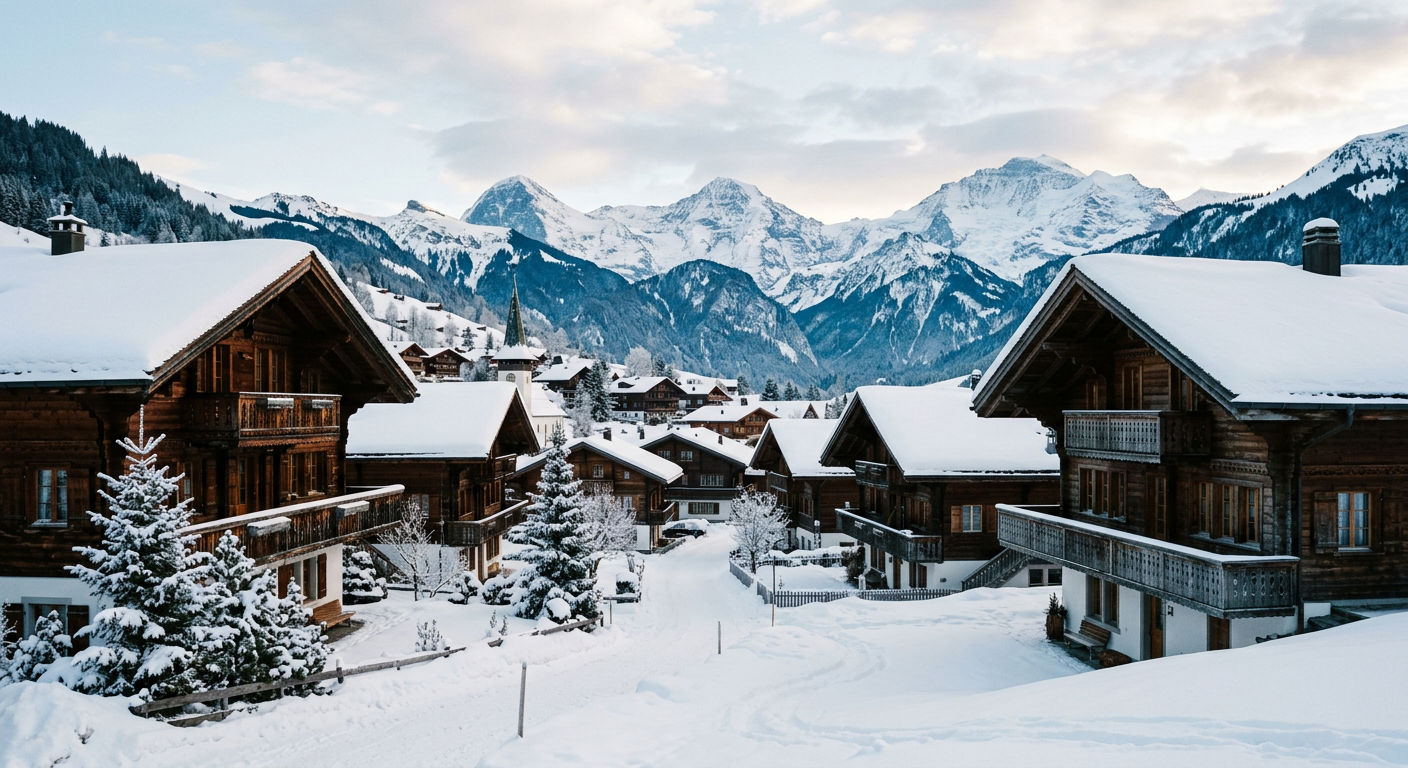
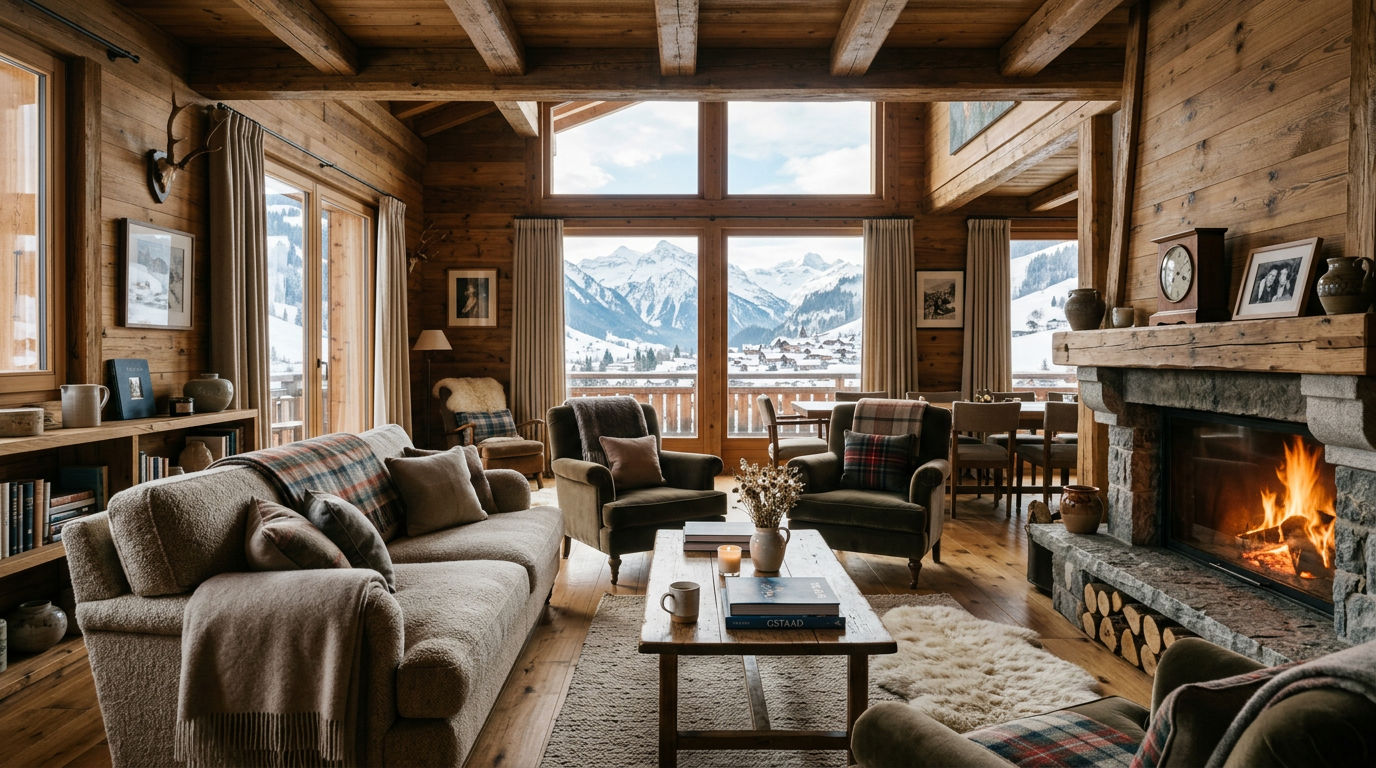
Gstaad's reputation rests not on spectacle but on discretion. The village promenade is lined with understated boutiques, yet the architecture remains firmly traditional Bernese Oberland: dark timber chalets with carved balconies and snow-draped eaves in winter. There are no glass towers or purpose-built apartment blocks.
The atmosphere is notably quieter than Verbier, Courchevel, or Zermatt. Après-ski in Gstaad is a low-key affair: hot chocolate at the Gstaad Palace terrace, a drink at the Rialto bar, or an early dinner at one of the village's dozen-odd restaurants. The Chesery, a Michelin-starred restaurant with a storied history, anchors the dining scene.
The Saanenland region encompasses several satellite villages — Saanen, Schönried, Rougemont, and Gsteig — each with its own character but connected by the ski area and local transport. Rougemont, in particular, has drawn those seeking even more privacy than Gstaad proper.
Beyond skiing, Gstaad hosts the Polo Gold Cup on snow in January, an annual tennis tournament, and the Menuhin Festival in classical music. The resort draws a clientele that returns year after year — a pattern reflected in the accommodation market, where long-standing relationships between owners and guests are the norm.
Where to Stay in Gstaad
Accommodation in Gstaad tilts heavily towards high-end hotels and private residences. In our current collection of 23 Gstaad properties, every one includes sauna and pool access — a reflection of the resort's emphasis on wellness and indoor comfort alongside the skiing.
The collection spans chalets, apartments, and hotels. Four chalets anchor the standalone rental offering, with the largest accommodating 16 guests in a fully catered setting. Ten apartments — several within the Ultima Gstaad complex — provide a more self-contained option with hotel-level amenities. Nine hotel properties round out the portfolio, including some of the most recognised names in Swiss hospitality.
Across the portfolio, 20 of 23 properties feature a hot tub, and six offer private chef service for a fully hosted stay. At time of writing, nearly half of the collection accommodates 10 or more guests, making Gstaad a strong option for multi-generational or group trips.
Among the catered chalets in our Gstaad collection, Ultima Promenade stands as the portfolio's most comprehensive private residence — 16 guests, full staff, and direct slope access.
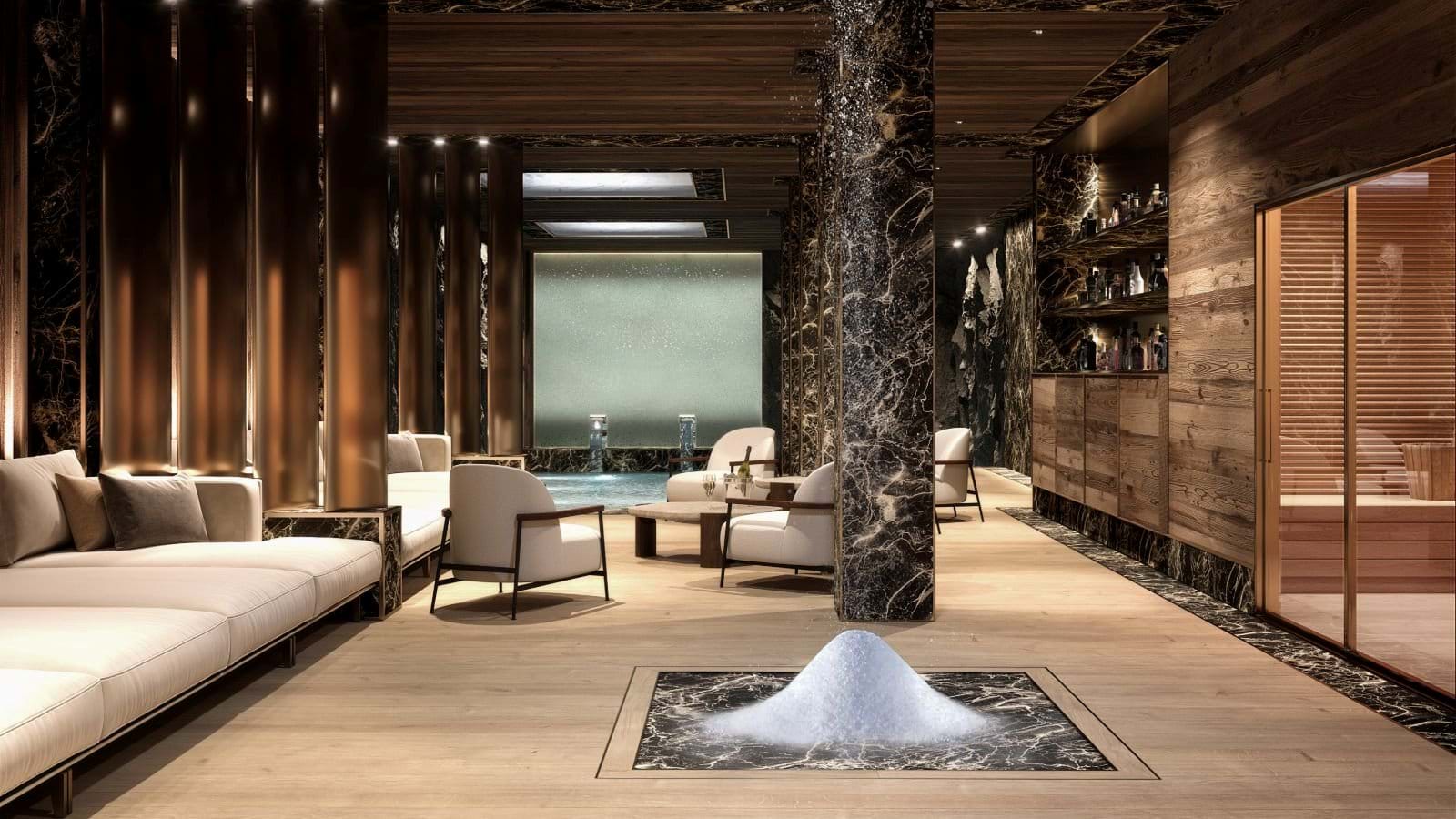
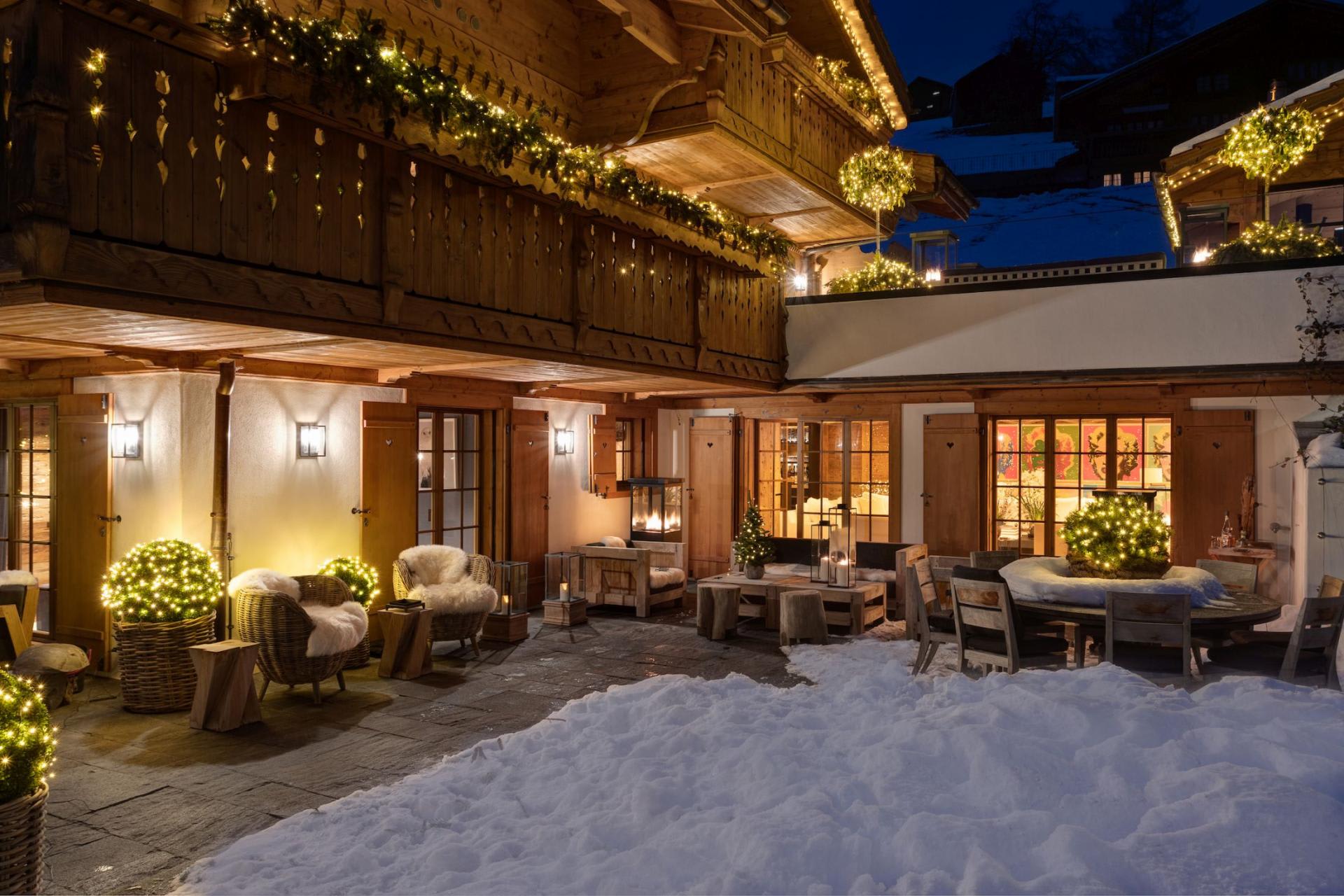
For groups who prefer a self-catered format with more independence, Chalet Colombe offers seven bedrooms for up to 14 guests with ski-in access and the flexibility to set your own rhythm.
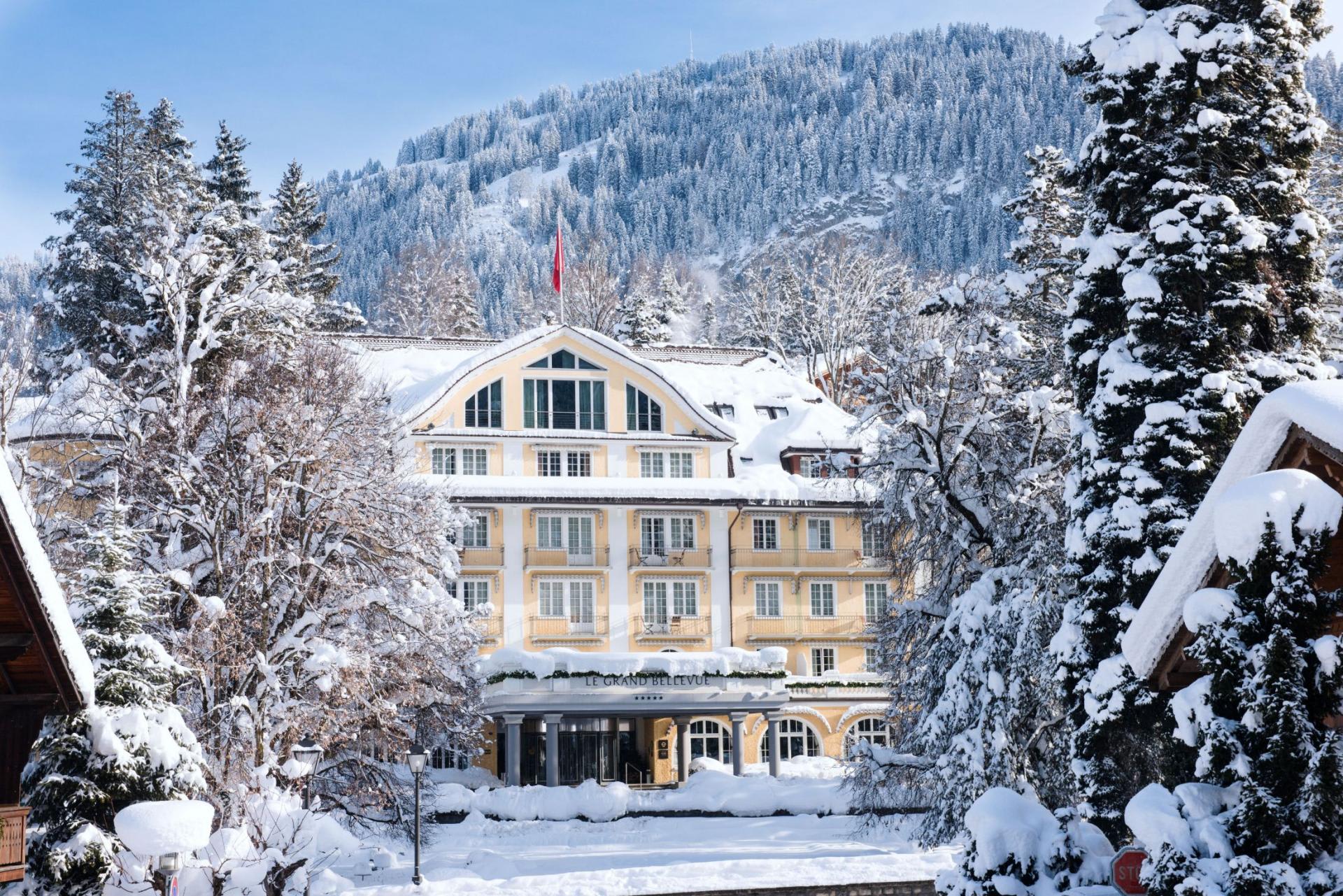
Those drawn to hotel service with the space of a grand property will find Le Grand Bellevue among the most considered options in the village — a property that balances tradition with contemporary wellness facilities.
Pricing Context
Gstaad sits at the upper end of the Swiss rental market. Nightly hotel rates start from under CHF 200 for smaller properties, while private chalets and premium residences range from approximately CHF 20,000 to well above CHF 200,000 per week during peak season. The Ultima residences, in particular, set the ceiling — positioning Gstaad alongside Courchevel 1850 and Verbier at the summit of Alpine accommodation pricing.
Explore Our Gstaad Collection
Powder Edition brings together 23 properties in Gstaad — from intimate hotel suites to fully staffed chalets sleeping 16. Whether you are planning a quiet week for two or a multi-family celebration on snow, the collection is searchable by guest count, amenities, and service level. Browse all Gstaad properties, or explore our full Alpine collection across 40+ resorts.
Frequently Asked Questions
Is Gstaad good for skiing?
Gstaad offers 200 kilometres of pistes across six interconnected sectors, with terrain ranging from gentle beginner meadows to expert-level glacier skiing at 3,000 metres. The ski area is best suited to intermediate skiers, with 60 percent of runs graded red, though advanced skiers will find sustained vertical on the Rinderberg face and at Glacier 3000. Lower visitor density compared to French mega-resorts means shorter lift queues across the board.
How do you get to Gstaad from Geneva?
Geneva Airport is approximately 150 kilometres from Gstaad, with a driving time of around 2 hours via the A9 motorway. By rail, the journey takes about 2 hours 40 minutes, with a scenic connection via the GoldenPass Express from Montreux. Private transfers are widely available and typically cost between CHF 350–500 each way.
What is the best time to ski in Gstaad?
January and February deliver the most reliable snow conditions across all sectors. March offers longer days and milder temperatures, though lower slopes may soften in the afternoons. Glacier 3000 opens as early as November and typically remains skiable through late April, making it the best option for early or late-season visits.
Is Gstaad expensive?
Gstaad is among the most expensive ski resorts in Switzerland. Hotel rooms start from under CHF 200 per night, but the resort's signature accommodation — private chalets and residences — ranges from CHF 20,000 to over CHF 200,000 per week. Dining, lift passes, and services are priced accordingly. The Magic Pass offers a more affordable route to season-long skiing, covering Gstaad alongside 80+ Swiss resorts.
How does Gstaad compare to Verbier?
Gstaad and Verbier both sit at the top of Swiss ski accommodation, but they appeal to different sensibilities. Verbier is larger (over 400 km of terrain in the 4 Vallées), more challenging on its steepest runs, and has a livelier après-ski scene. Gstaad is quieter, more traditionally Swiss in character, and emphasises wellness and village life alongside the skiing. For those who prize discretion and a gentler pace, Gstaad is the stronger fit.
Can you ski from Gstaad to Glacier 3000?
Glacier 3000 is not directly lift-linked to the main Gstaad ski area. It requires a 15-minute drive to Col du Pillon, where the aerial cableway departs. Free shuttle buses run between Gstaad and Col du Pillon during the ski season. The glacier is included on the Gstaad Mountain Rides ski pass and the Magic Pass.