Best Ski Resorts in France: 9 Mountains Worth the Journey

Best Ski Resorts in France: 9 Mountains Worth the Journey
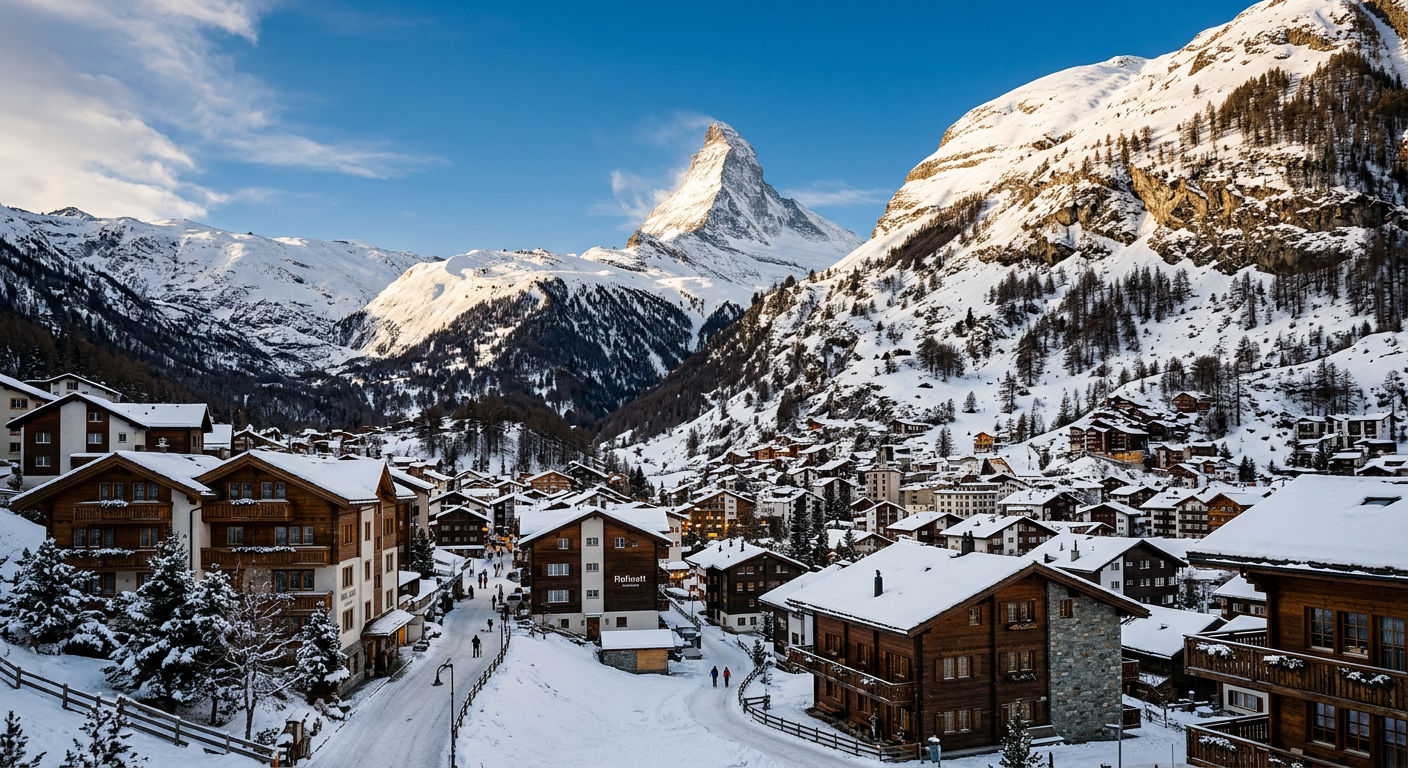
France accounts for six of the ten largest ski areas in the world, receives more skier visits than any country except the United States, and offers a range of resort experiences that no single alpine nation can match. Whether you want a car-free village above 2,000 metres, a Michelin-starred mountain town, or one of the most demanding freeride mountains on Earth, the French Alps deliver without qualification.
This guide compares nine of the best ski resorts in France — evaluated on terrain quality, snow reliability, village character, accommodation, and the kind of skier each one genuinely rewards.
How the French Alps Compare to Other Ski Nations
The French Alps hold a structural advantage over their Swiss, Austrian, and Italian neighbours: altitude. Most major French resorts sit between 1,800 and 2,300 metres, with skiing reaching above 3,000 metres across the Tarentaise valley. This translates to longer seasons, more reliable snow cover, and fewer rain events than lower-altitude alternatives in Austria or the Italian Dolomites.
France also pioneered the linked ski area concept. The Trois Vallées alone encompasses 600 kilometres of marked pistes — more than most countries' entire inventories. The Espace Killy, Paradiski, and Portes du Soleil networks provide similarly vast interconnected terrain.
| Factor | France | Switzerland | Austria | Italy |
|---|---|---|---|---|
| Average resort altitude | 1,800–2,300m | 1,500–1,800m | 1,200–1,700m | 1,400–1,800m |
| Largest linked area | 600km (3 Vallées) | 360km (4 Vallées) | 270km (Ski Amadé) | 175km (Dolomiti) |
| Season length | Late Nov–late Apr | Dec–mid Apr | Dec–mid Apr | Dec–mid Apr |
| Lift system age | Modern (heavily invested) | Modern | Mixed | Mixed |
| Village character | Purpose-built to historic | Historic | Historic | Historic |
The trade-off is village character. France's most convenient ski-in ski-out resorts — Val Thorens, Flaine, Les Arcs — were purpose-built in the 1960s and 70s. They prioritise function over charm. The historic alternatives — Megève, Chamonix, Val d'Isère — offer genuine alpine towns but require more effort to reach the slopes.
Courchevel: The Benchmark for Refined Mountain Living
Courchevel is the reference point against which other luxury ski resorts measure themselves. Spread across five altitude villages — Le Praz (1,300m), Courchevel Village (1,550m), Moriond (1,650m), Courchevel (1,850m), and the summit at 2,740m — it offers 150 kilometres of local pistes and direct access to the full 600-kilometre Trois Vallées network.
The skiing itself is excellent at every level. Beginners benefit from wide, purpose-built greens at 1,850 with snow cannons covering the learner areas. Intermediate skiers can spend a week exploring the linked valleys without repeating a run. Advanced skiers find steep couloirs off La Saulire and the Creux Noirs runs.
What sets Courchevel apart is the infrastructure surrounding the skiing. The 1,850 village has six Michelin-starred restaurants, a level of retail that rivals central Paris, and accommodation ranging from contemporary five-star hotels to architect-designed private chalets.
Explore our curated collection of chalets in Courchevel — including properties in Le Praz, Moriond, and the 1,850 village.

Best for: Discerning skiers who want world-class terrain, dining, and accommodation in a single destination.
Season: Early December to late April. Peak snow reliability mid-January to mid-March.
Val d'Isère: Where Serious Skiing Meets a Genuine Town
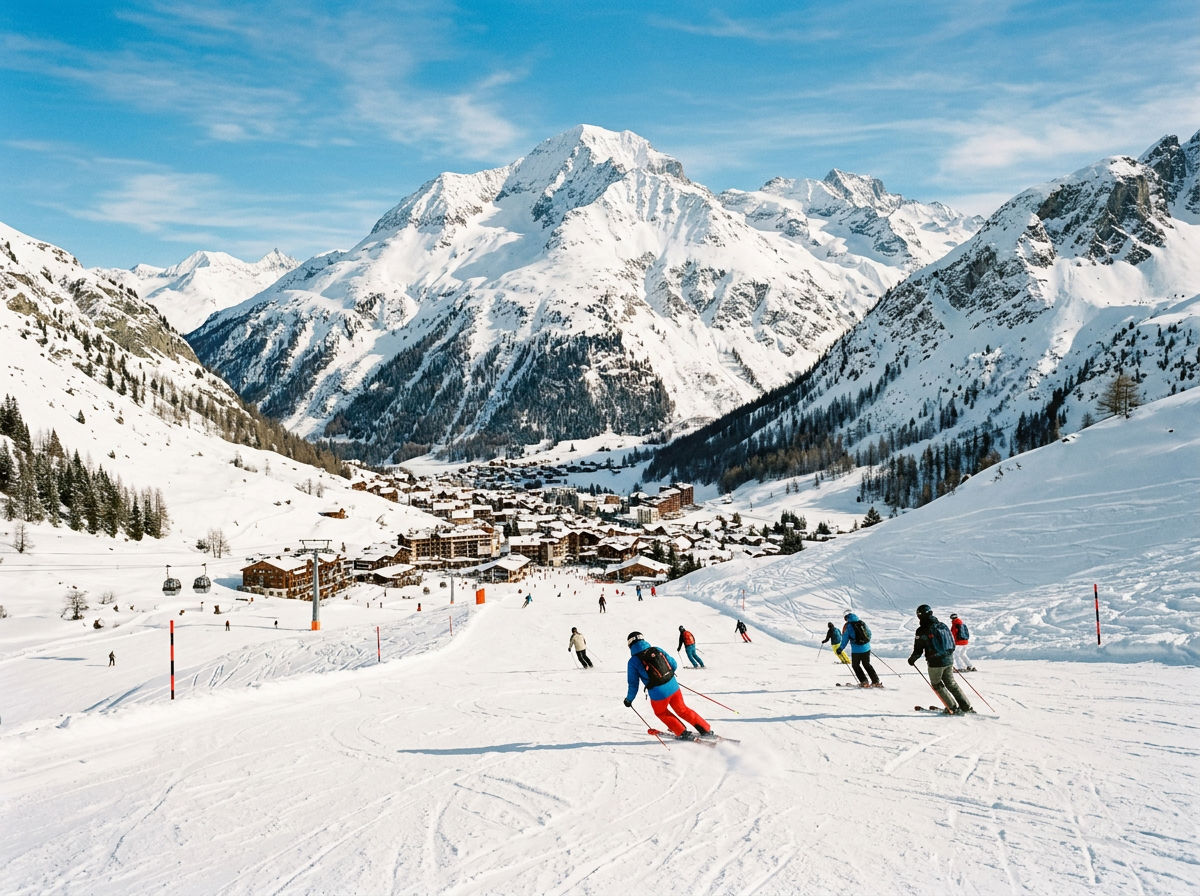
Val d'Isère and neighbouring Tignes form the Espace Killy — 300 kilometres of pistes between 1,550m and 3,456m on the Grande Motte glacier. The resort averages over seven metres of annual snowfall, and glacier access extends the season from late November through early May.
The terrain rewards confident skiers. The Face de Bellevarde — host to the 1992 Olympic downhill — drops 959 vertical metres at gradients exceeding 65%. Off-piste itineraries through the Pisaillas glacier and the Col Pers backcountry offer some of the most demanding lift-accessed freeride in the Alps.
Val d'Isère's village sits at 1,850m in a narrow valley and has evolved from a farming hamlet into a cohesive ski town. The stone-and-timber architecture feels genuine rather than constructed. The main street hosts a concentration of restaurants, bars, and shops that creates a compact social centre — walkable in ten minutes but dense enough to sustain a week's worth of evening variety.
Browse ski-in ski-out properties in Val d'Isère.
Best for: Strong intermediate to advanced skiers who want high-altitude reliability and a lively town.
Season: Late November to early May. Glacier skiing available year-round.
Chamonix Mont-Blanc: The Mountaineer's Ski Town
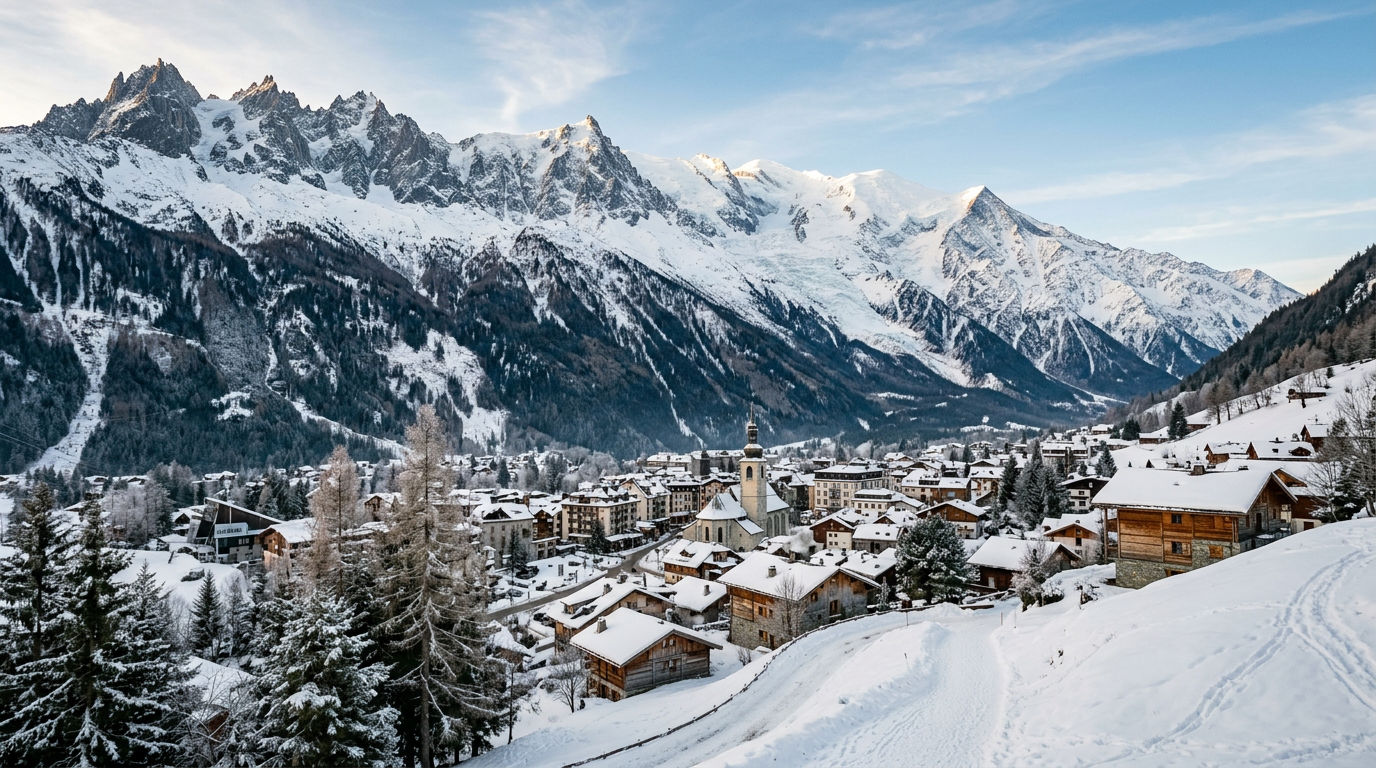
Chamonix sits at 1,035 metres in the shadow of Mont Blanc — Western Europe's highest peak at 4,808 metres. It is not a conventional ski resort. The town functions as a year-round mountaineering capital that happens to have some of the most challenging lift-accessed skiing in the world.
The Grands Montets sector (closed for renovation, partial reopening expected 2026/27) traditionally offered 2,000 metres of vertical descent. The Vallée Blanche — a 20-kilometre off-piste descent from the Aiguille du Midi at 3,842m through glaciated terrain — remains one of skiing's defining experiences. Le Brévent and La Flégère provide more accessible terrain with views that justify the trip alone.
Chamonix itself is a real town with year-round residents, a hospital, schools, and an economy that extends well beyond tourism. Restaurants range from traditional Savoyard to contemporary French. The town has genuine cultural weight — it hosted the first Winter Olympics in 1924.
The accommodation mix skews toward apartments and smaller chalets rather than the mega-chalets found in Courchevel or Megève. Discover properties in Chamonix and the neighbouring village of Argentière.
Best for: Experienced skiers and mountaineers who value authentic alpine culture over manicured convenience.
Season: December to April for resort skiing. Off-piste conditions vary; guide required for glacier routes.
Méribel: The Three Valleys' Best-Balanced Resort
Méribel occupies the central valley of the Trois Vallées, providing the most efficient access to both Courchevel (east) and Val Thorens (west). With 150 kilometres of local runs between 1,450m and 2,952m, the resort offers substantial skiing before you consider the wider network.
The terrain distribution suits intermediate skiers particularly well. Long, rolling blue and red runs descend through tree-lined valleys — a rarity in high-altitude French resorts where treeline often sits below the main ski area. The Saulire ridge provides steeper terrain, while the Altiport sector offers gentle greens for beginners.
Méribel's village was originally developed by a British officer in the 1930s, and the chalet-style architecture was mandated from the outset. The result is the most visually coherent of the Trois Vallées resorts — wood-clad buildings that sit within the landscape rather than imposing upon it. Browse our selection in Méribel.
Best for: Intermediate skiers and families who want the Three Valleys without the intensity of Courchevel or the altitude of Val Thorens.
Season: Early December to late April.
Megève: Alpine Elegance Without the Altitude
Megève invented the luxury ski holiday. In the 1920s, Baroness Noémie de Rothschild commissioned the resort as a French alternative to St. Moritz, and the town has maintained that positioning for a century. The skiing — 400 kilometres across five linked sectors — is pleasant but secondary to the experience of the town itself.
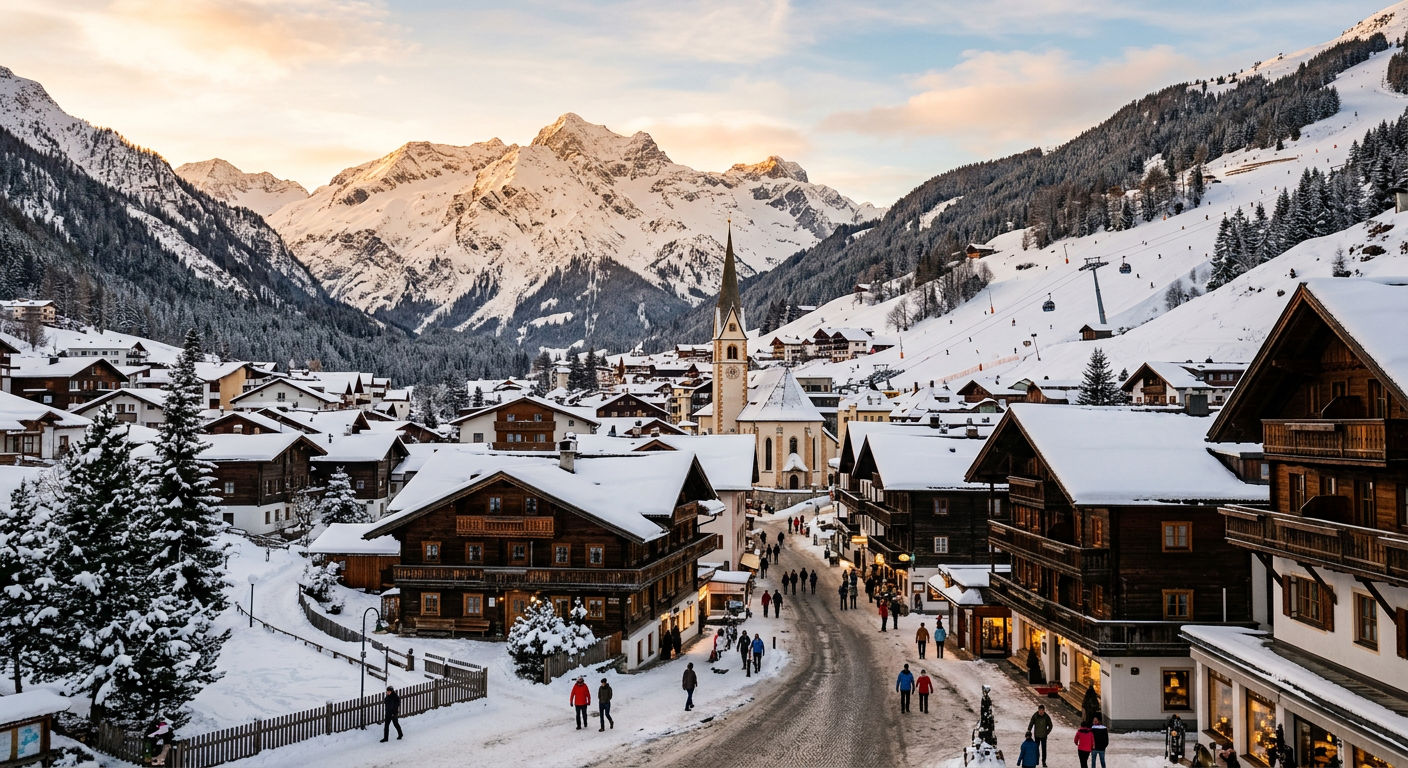
The village is genuinely beautiful. Medieval streets, a central square with a 12th-century church, and an inventory of restaurants that earned Megève four Michelin stars at last count. Horse-drawn carriages replace cars in the pedestrianised centre. The architecture is traditional Savoyard stone and timber, maintained to a standard that few alpine towns achieve.
The terrain sits between 1,113m and 2,353m — lower than the Tarentaise resorts, which means less reliable natural snow but a warmer, more sheltered skiing experience. An extensive snow-making network compensates on the main runs.
Explore chalets in Megève — where village life takes precedence over vertical metres.

Best for: Skiers who prioritise gastronomic and cultural experiences alongside moderate, well-groomed terrain.
Season: December to mid-April. Best conditions January to early March.
Val Thorens: Europe's Highest Ski Resort
Val Thorens is the highest resort in Europe at 2,300 metres, with skiing reaching 3,230m on the Cime de Caron. This altitude guarantees snow reliability from mid-November through early May — one of the longest seasons in the Alps. The resort sits at the head of the Belleville valley and provides direct access to the full Trois Vallées network.
The terrain is vast and varied. 150 kilometres of local pistes include the long Combe de Caron red run — a sustained 1,000-metre descent — alongside wide intermediate motorways and a well-regarded snowpark. Off-piste options are extensive, with accessible couloirs and north-facing powder fields retaining snow long after lower resorts have turned to ice.
The trade-off is the village. Val Thorens was purpose-built in 1971 and the architecture reflects its era — functional concrete blocks that prioritise proximity to lifts over aesthetic pleasure. Recent renovations have softened the edges, and the compact layout means everything is genuinely ski-in ski-out, but this is not a resort you visit for the ambience.
Best for: Snow-obsessed skiers who prioritise conditions and convenience over village character.
Season: Mid-November to early May — one of the longest in Europe.
Les Arcs and La Plagne (Paradiski): 425 Kilometres of Linked Terrain
Paradiski links Les Arcs and La Plagne via the Vanoise Express — one of the world's largest cable cars — creating a 425-kilometre ski area between 1,200m and 3,226m on the Aiguille Rouge. The two resorts have distinct characters but complement each other well.
Les Arcs spans four altitude villages (1,600m, 1,800m, 1,950m, and 2,000m) and is known for its steep terrain, particularly the 2,000-vertical-metre descent from the Aiguille Rouge — one of the longest single runs in Europe. La Plagne offers gentler, wider terrain across eleven linked villages and excels for families and intermediate skiers.
Both resorts were purpose-built but have invested heavily in modernisation. Les Arcs 1,950 has the strongest architectural identity, with recent developments designed by notable architects. La Plagne's villages vary — Plagne Centre is functional; Belle Plagne and Plagne 1800 are more refined.
Best for: Groups with mixed abilities seeking enormous terrain variety at reasonable cost.
Season: Mid-December to late April.
La Clusaz: A Local's Mountain with Character
La Clusaz sits just 30 minutes from Annecy and 90 minutes from Geneva, making it the most accessible quality resort in the French Alps. Five interconnected sectors offer 125 kilometres of pistes between 1,100m and 2,600m — enough for a solid week of skiing without feeling repetitive.
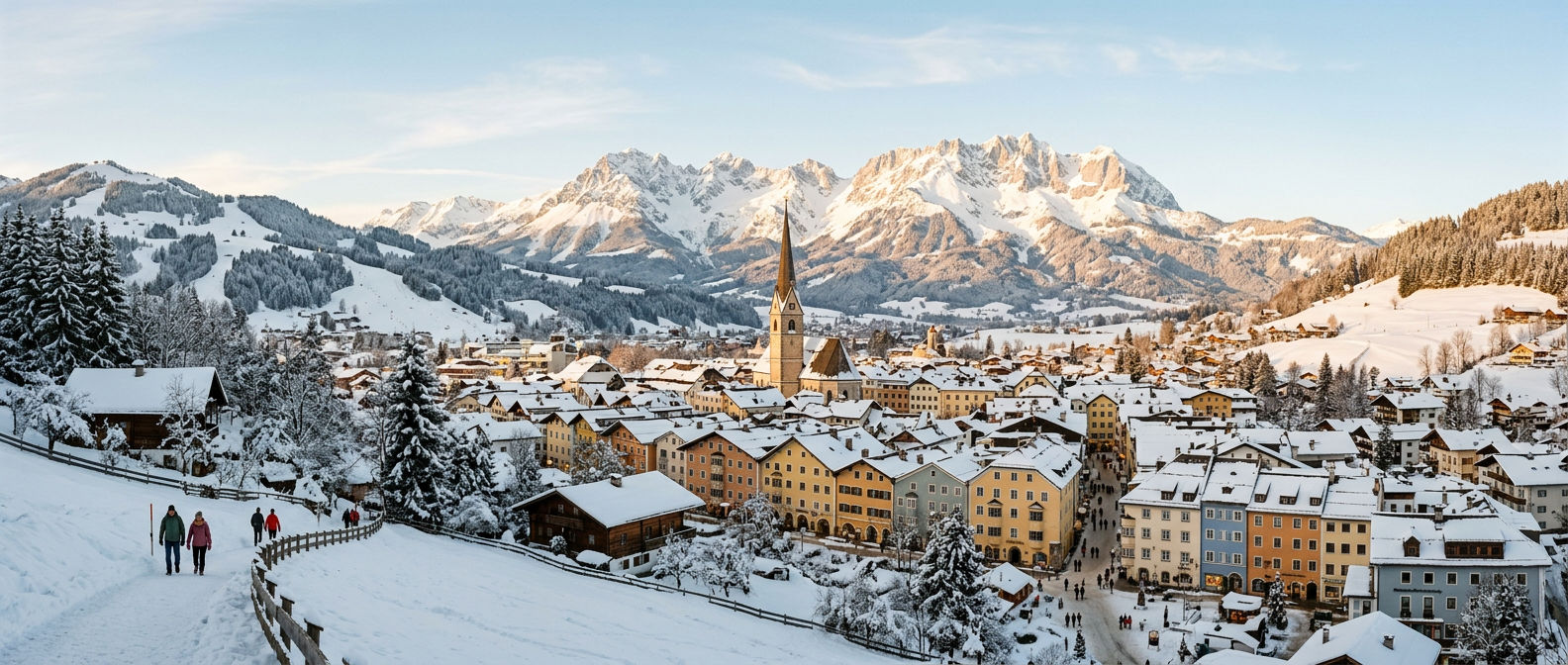
The village predates the ski resort and retains genuine Haute-Savoie character. A compact centre with cafés, a fromagerie, and a church dating to the 16th century provides a counterpoint to the high-altitude resort towns further up the Tarentaise. The Reblochon cheese produced in the surrounding farms is AOC-protected and appears on every restaurant menu.
The terrain includes notably steep off-piste in the Balme sector — a powder playground that often goes untracked while crowds concentrate on the front-facing slopes.
Best for: Skiers based near Geneva seeking a genuine village atmosphere with surprisingly varied terrain.
Season: December to mid-April.
Avoriaz: Ski-In Ski-Out by Design
Avoriaz is entirely car-free and built at 1,800 metres directly on the piste. Every building in the resort connects to the ski area — there are no shuttles, no walks in boots, no transfers. The resort sits within the Portes du Soleil, a 600-kilometre Franco-Swiss ski network linking twelve resorts, though the practical skiable circuit in a day covers roughly 200 kilometres.
The architecture divides opinion. The brutalist cedar-clad towers, designed by Jacques Labro in the 1960s, look nothing like a traditional alpine village. But the urban planning is exceptional — the entire resort functions as a pedestrian zone where horse-drawn sleighs replace cars.
Snow reliability is strong for a non-glacier resort. Avoriaz receives an average of eight metres of snowfall per season — among the highest in the French Alps — thanks to its position catching weather systems from the north-west.
Best for: Families and convenience-seekers who want genuine ski-in ski-out access and a car-free environment.
Season: Mid-December to late April.
How to Choose the Right French Ski Resort
| Resort | Altitude Range | Piste km | Village Type | Best For |
|---|---|---|---|---|
| Courchevel | 1,300–2,740m | 150 (600 3V) | Luxury purpose-built | Refined all-round experience |
| Val d'Isère | 1,550–3,456m | 300 (Espace Killy) | Historic town | Strong skiers, lively nightlife |
| Chamonix | 1,035–3,842m | 170 | Real mountain town | Expert skiers, mountaineers |
| Méribel | 1,450–2,952m | 150 (600 3V) | Chalet village | Intermediates, families |
| Megève | 1,113–2,353m | 400 | Historic village | Gastronomy, gentle skiing |
| Val Thorens | 2,300–3,230m | 150 (600 3V) | Purpose-built | Snow reliability, long season |
| Paradiski | 1,200–3,226m | 425 | Purpose-built villages | Mixed groups, value |
| La Clusaz | 1,100–2,600m | 125 | Historic village | Geneva access, authenticity |
| Avoriaz | 1,800–2,466m | 600 (PdS) | Car-free purpose-built | Families, ski-in ski-out |
The decision often comes down to a trade-off between altitude (snow reliability) and village character (cultural experience). Purpose-built resorts above 2,000 metres — Val Thorens, Avoriaz, Les Arcs — deliver the most consistent conditions. Historic towns — Chamonix, Megève, La Clusaz — offer the richest off-slope experience. Courchevel, Val d'Isère, and Méribel sit in the middle ground, balancing both.
Find Your Chalet in the French Alps
Powder Edition brings together a curated selection of ski properties across the French Alps — from slope-side apartments in Val Thorens to architect-designed chalets in Courchevel 1850. Explore our collection in France's finest resorts, or browse all destinations to discover your next mountain trip.
Frequently Asked Questions
What is the best ski resort in France for beginners?
Méribel and La Plagne (within Paradiski) are the strongest options for beginners in France. Méribel offers wide, tree-lined blues with gentle gradients and efficient lift connections to the Trois Vallées. La Plagne's altitude villages provide sheltered green runs with snow cannons, dedicated beginner areas, and ESF ski schools with English-speaking instructors at every level.
When is the best time to ski in France?
The optimal window for skiing in France runs from mid-January to mid-March, when snowpack is deepest and daylight hours are increasing. High-altitude resorts like Val Thorens and Val d'Isère open in late November and remain skiable into early May. Megève and La Clusaz — sitting below 2,500 metres — are most reliable from January to early March.
How do French ski resorts compare to Swiss resorts?
French resorts generally offer larger linked ski areas, higher base altitudes, and lower prices than their Swiss equivalents. A six-day lift pass in the Trois Vallées costs roughly €340, compared to €420+ for Verbier's 4 Vallées. Swiss resorts counter with more historic village character, superior rail access, and a dining culture that extends further beyond hotel restaurants.
Is Chamonix good for intermediate skiers?
Chamonix can work for confident intermediates, though it requires more planning than purpose-built resorts. Le Brévent and La Flégère offer scenic red runs with manageable gradients. The Vallée Blanche, while off-piste, is suitable for strong intermediates with a mountain guide. However, the ski areas are not linked — reaching different sectors involves bus transfers — which adds complexity to the day.
Which French ski resort has the most reliable snow?
Val Thorens holds the most reliable natural snow record among major French resorts, combining an altitude of 2,300–3,230 metres with a north-facing orientation that preserves snowpack. Avoriaz receives the highest average snowfall — approximately eight metres per season — due to its position catching north-westerly weather systems. Both resorts consistently ski well into late April.
How far are French ski resorts from Geneva airport?
Geneva is the primary international gateway to the French Alps. Transfer times: La Clusaz (1 hour), Avoriaz/Morzine (1.5 hours), Megève (1.5 hours), Chamonix (1.5 hours), Méribel (2.5 hours), Courchevel (2.5 hours), Val d'Isère (3 hours), Val Thorens (3 hours). Lyon airport offers shorter transfers to the Tarentaise valley — Courchevel and Méribel in under 2 hours.