Zermatt Skiing: A Complete Guide to the Matterhorn Ski Paradise
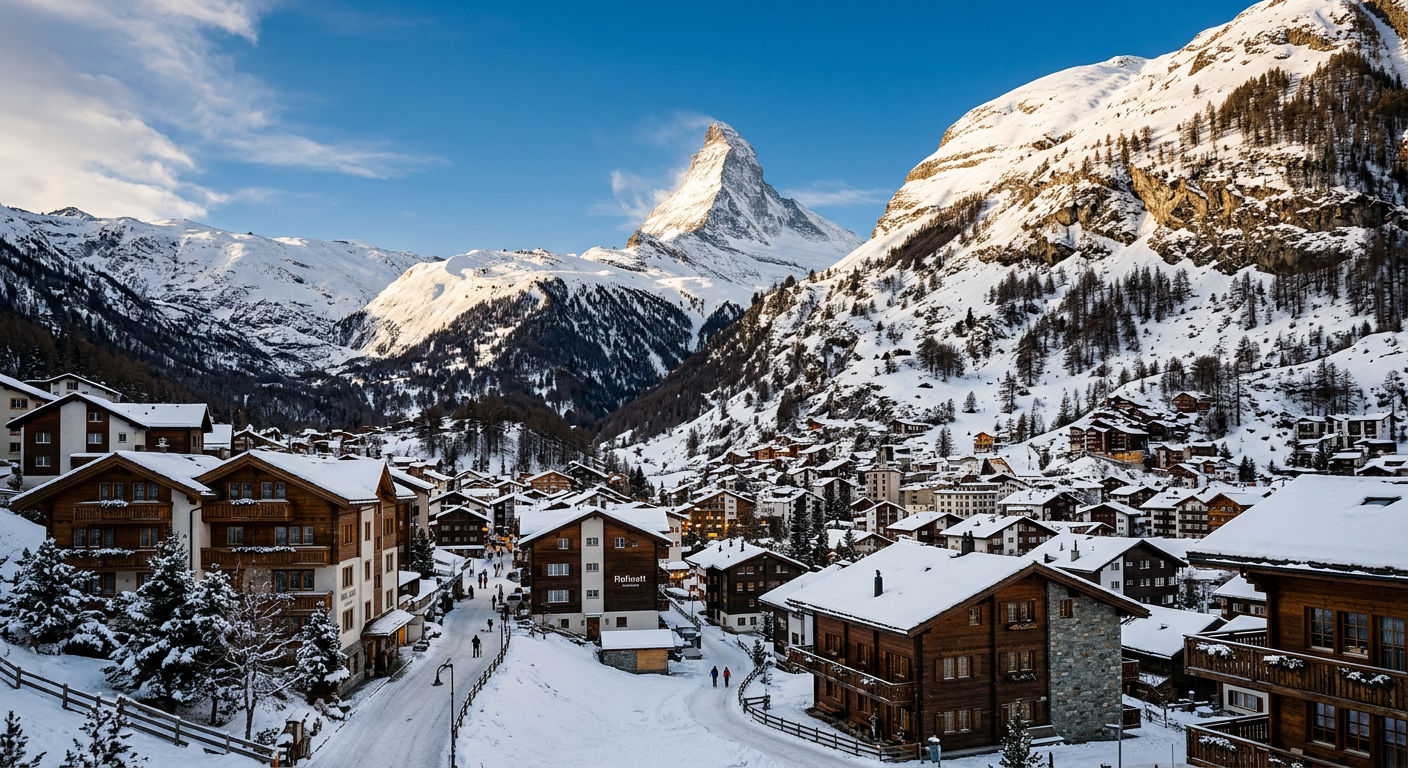
Zermatt is a car-free village at 1,620 metres in the Swiss canton of Valais, sitting directly beneath the Matterhorn — the most recognisable peak in the Alps. The Matterhorn ski paradise spans 360 kilometres of pistes across three interconnected ski areas, reaching altitudes of 3,883 metres on the Klein Matterhorn glacier. It is one of the few resorts in the world that offers skiing every month of the year.
What sets Zermatt apart from other elite Alpine resorts is the combination of scale, altitude, and village character. The terrain extends across the Swiss-Italian border into Cervinia, the village bans combustion-engine vehicles, and the skiing ranges from gentle nursery slopes above the town to steep couloirs and glacier descents that challenge the most experienced skiers. For those weighing Zermatt against other leading Swiss ski resorts, this guide covers what you need to know.
Three Ski Areas, One Lift Pass
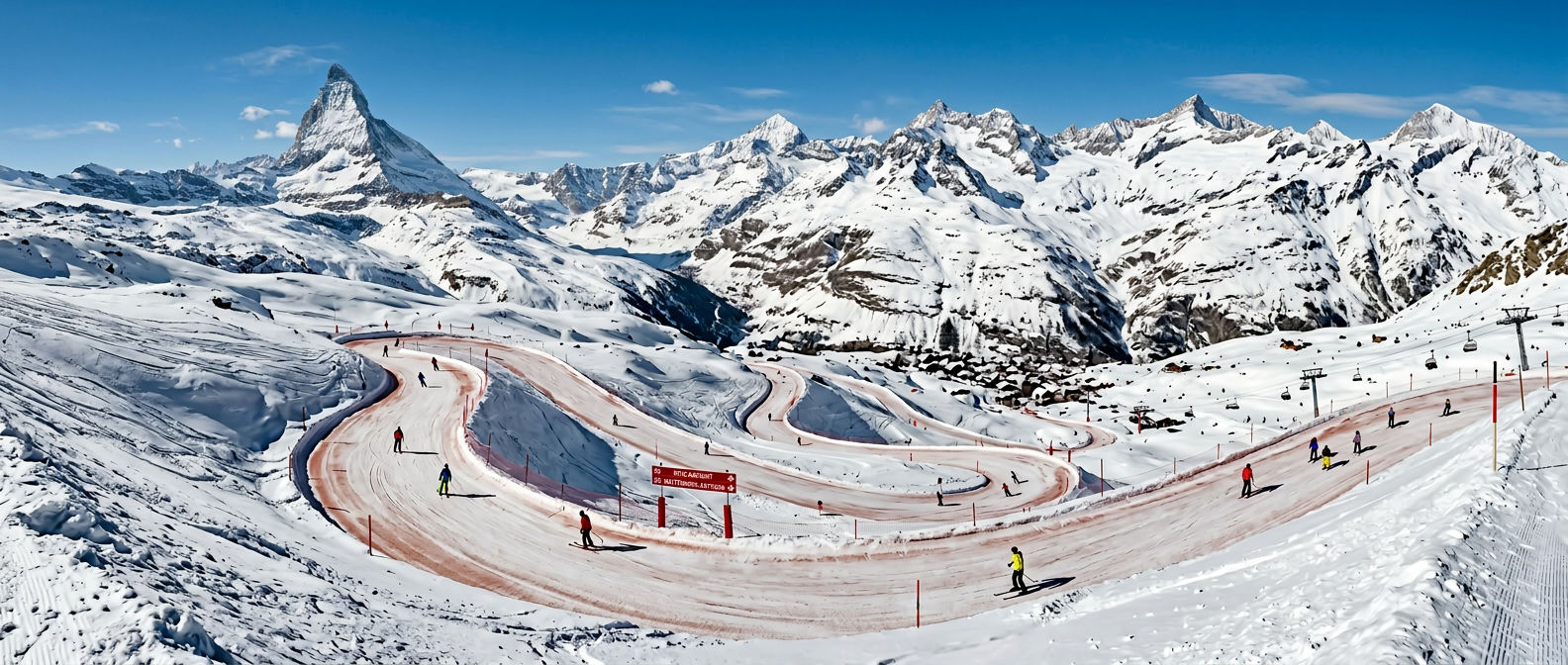
Zermatt's 360 kilometres of marked runs divide into three distinct ski areas — Sunnegga-Rothorn, Gornergrat, and Matterhorn glacier paradise — all accessible on a single lift pass. Together they offer 74 lifts, a vertical drop of over 2,200 metres, and runs rated roughly 30% blue, 40% red, and 30% black.
Sunnegga-Rothorn (2,288m–3,103m) is the sunniest sector, accessed by an underground funicular from the village in three minutes. The wide cruising runs above Sunnegga suit intermediates, while the Rothorn summit opens up steeper north-facing pitches.
Gornergrat (2,288m–3,089m) is reached by the Gornergrat Bahn, a cogwheel railway that climbs from the village to a panoramic ridge with views of 29 peaks above 4,000 metres. The skiing here mixes long red runs with some of Zermatt's best off-piste itinerary routes.
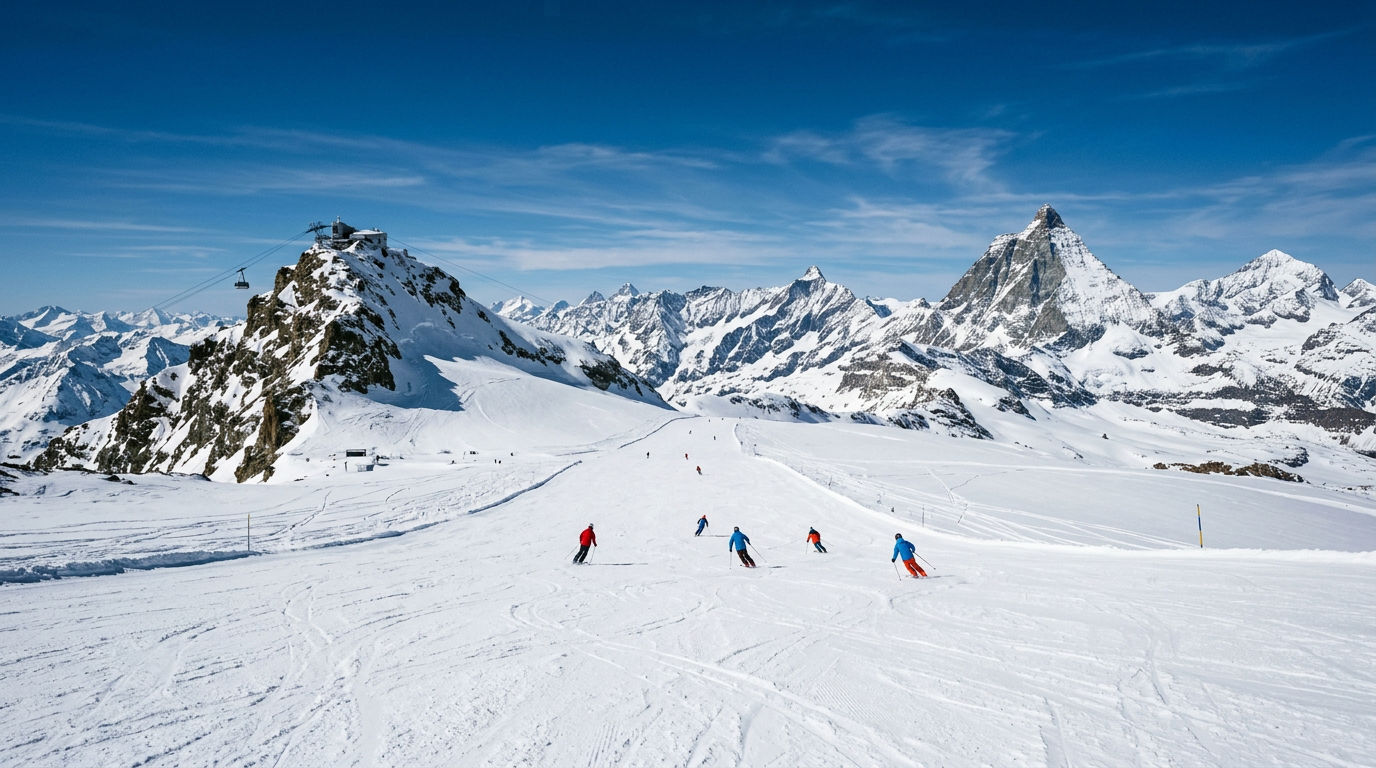
Matterhorn glacier paradise (2,939m–3,883m) is the highest ski area in the Alps. The Klein Matterhorn cable car delivers skiers to year-round glacier terrain and, since the Matterhorn Alpine Crossing gondola opened, directly into Cervinia on the Italian side. This is where Zermatt's season never ends — summer skiing runs from June through September on maintained glacier pistes.
| Ski Area | Summit | Base | Highlighted Runs |
|---|---|---|---|
| Sunnegga-Rothorn | 3,103m | 2,288m | Wide intermediate cruisers, sunny aspect |
| Gornergrat | 3,089m | 2,288m | Long red runs, panoramic itinerary routes |
| Matterhorn glacier paradise | 3,883m | 2,939m | Year-round glacier, cross-border to Cervinia |
The Matterhorn Ski Pass: What It Covers
The Zermatt ski pass — marketed as the Matterhorn ski paradise pass — covers all three Swiss ski areas plus the linked terrain in Cervinia and Valtournenche on the Italian side. A six-day adult pass for the 2025/26 season costs approximately CHF 450, with discounts for advance purchase online.
The international pass unlocks a single cross-border ski area of 360 kilometres, making it one of the most comprehensive lift tickets in the Alps. Skiers who purchase a Zermatt-only pass (excluding the Italian side) pay roughly 15% less but miss the long, sun-drenched descents into Cervinia — a worthwhile addition for intermediate and advanced skiers spending four or more days.
Children under nine ski free with an accompanying adult. Youth and senior passes offer graduated discounts. Multi-day passes include free use of the Zermatt village bus network.
When to Visit Zermatt
Zermatt's high altitude and glacier access make it one of the most snow-reliable resorts in Europe, with a season running from mid-November through late April for full resort operations, and year-round skiing on the Klein Matterhorn glacier.
Peak season (late December through mid-February) delivers the most consistent conditions across all three areas, though temperatures at altitude can drop below -20°C. Expect higher prices and busier lifts during Swiss and UK school holidays.
Early season (November to mid-December) sees the glacier and upper Rothorn sectors open, with lower pistes filling in as natural snow accumulates. This period suits committed skiers comfortable with limited terrain.
Late season (March through April) is often the sweet spot: longer days, warmer temperatures, stable snowpack at altitude, and noticeably quieter pistes. Spring skiing in Zermatt benefits from the resort's north-facing aspects, which hold snow well into April.
Summer skiing (June to September) runs exclusively on the glacier above 3,000 metres, with a handful of lifts serving maintained runs. Conditions are best in the early morning before afternoon warmth softens the surface.
The Village: Car-Free and Compact
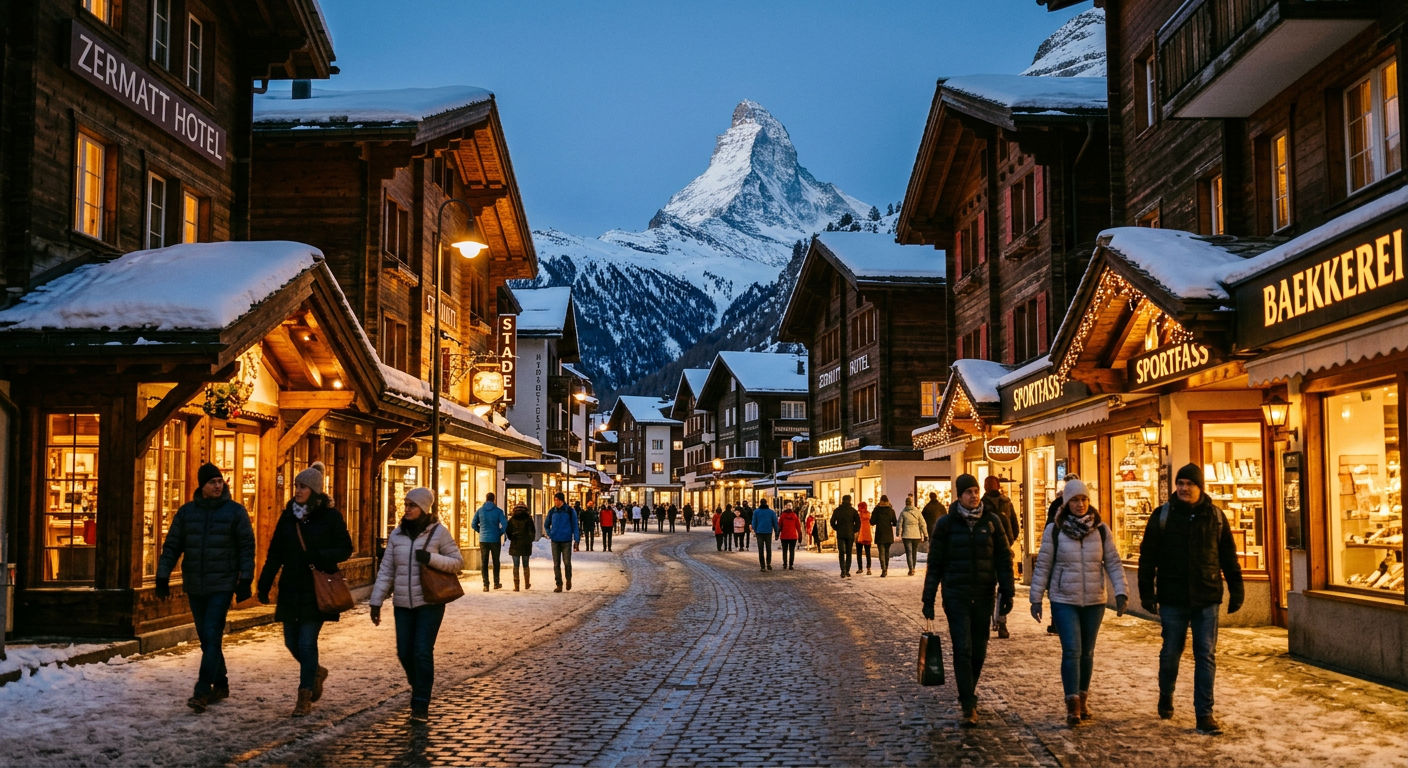
Zermatt has been car-free since the 1930s — private vehicles are parked in Täsch, five kilometres down the valley, and visitors arrive by shuttle train. The village operates on electric taxis, horse-drawn carriages, and on foot. This absence of traffic gives Zermatt a quietness rare among resorts of its stature, where the dominant sounds on the Bahnhofstrasse are conversation and boot-on-snow.
The village itself is compact enough to walk end to end in twenty minutes. The main street runs from the train station to the church square, lined with a mix of watch shops, sport retailers, and restaurants ranging from CHF 25 pizza to multi-course tasting menus. The side streets climb steeply into residential neighbourhoods where traditional Walliser timber granaries — raised on stone mushroom pillars — stand alongside contemporary chalet builds.
Dining in Zermatt spans the full range. The village holds a Michelin-starred restaurant (After Seven, in the Backstage Hotel), several long-established Swiss restaurants serving raclette and fondue, and a handful of mountain restaurants accessible only on skis — Chez Vrony above Findeln being the most celebrated.
Where to Stay: Accommodation in Zermatt
In our current collection, Zermatt offers over 110 properties spanning chalets, apartments, hotels, and lodges. The accommodation mix reflects the resort's range — from intimate two-person apartments to large catered chalets accommodating groups of 14 or more.
The amenity density across our Zermatt portfolio is notably high. In our current collection, roughly 84% of properties include a private hot tub, 82% have a sauna, and around two-thirds offer a pool or wellness facility. For a resort of this calibre, these numbers reflect the standard of build quality in Zermatt — wellness amenities are the norm rather than the exception.
Ski-in ski-out access is another defining feature. In our current collection, the majority of Zermatt properties sit within a short walk of a lift station, with over 90% offering genuine proximity to the slopes. The compact, car-free village layout means that even properties a few streets back from the main lifts involve a five-minute walk rather than a shuttle-bus dependency.
Service levels across our Zermatt collection break down roughly equally between self-catered, flexible, and bed-and-breakfast options, with a smaller selection of fully catered chalets for groups seeking a staffed experience.
For groups of 10 or more, around half the Zermatt portfolio accommodates larger parties — a strong figure compared to most Swiss resorts, where intimate chalets dominate. Browse our full Zermatt collection to compare availability.
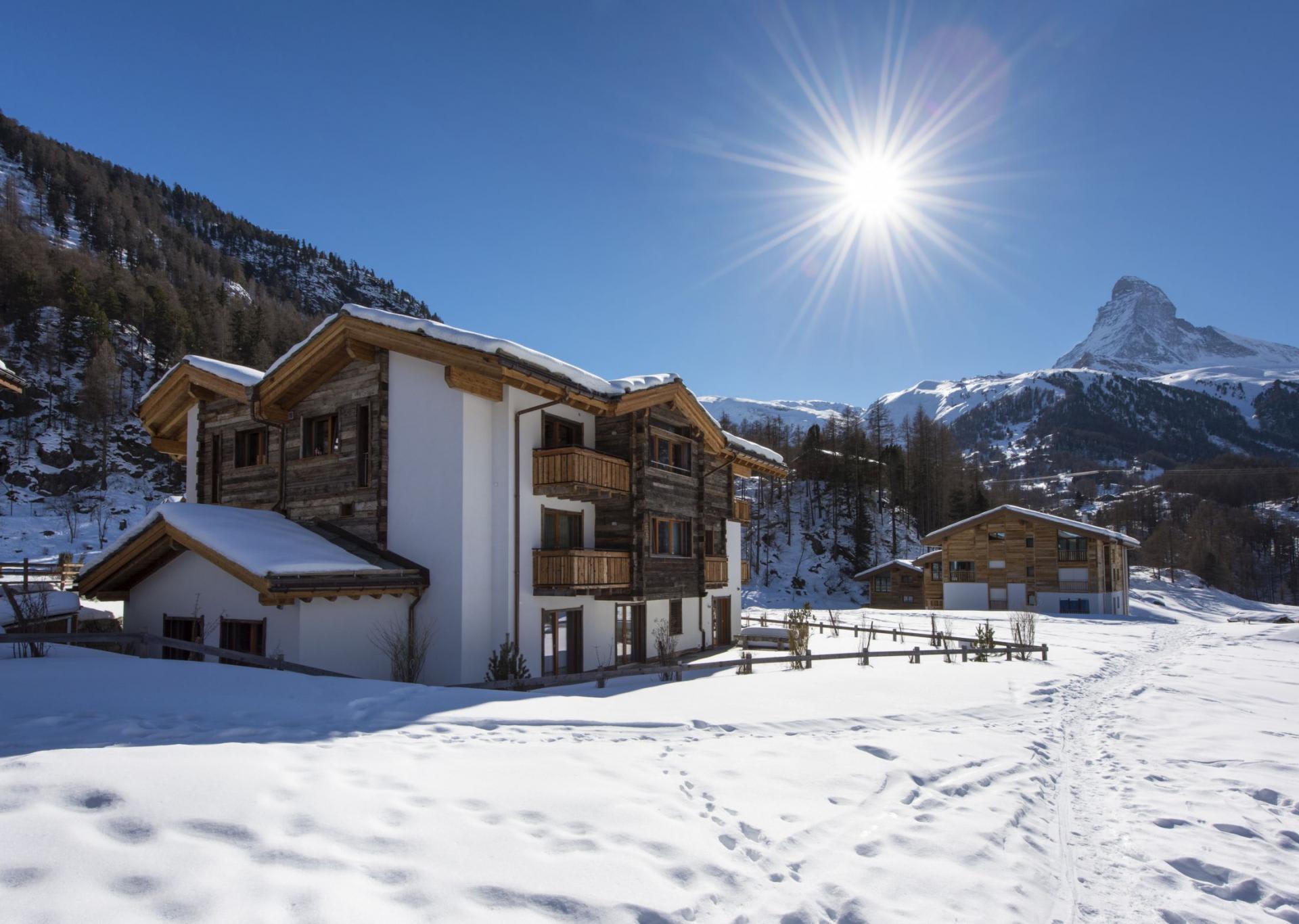
Among the flexible-service properties in Zermatt, Chalet Alex offers six bedrooms for up to 12 guests with ski-in/ski-out access and a private hot tub — a solid choice for groups wanting independence with proximity to the slopes.
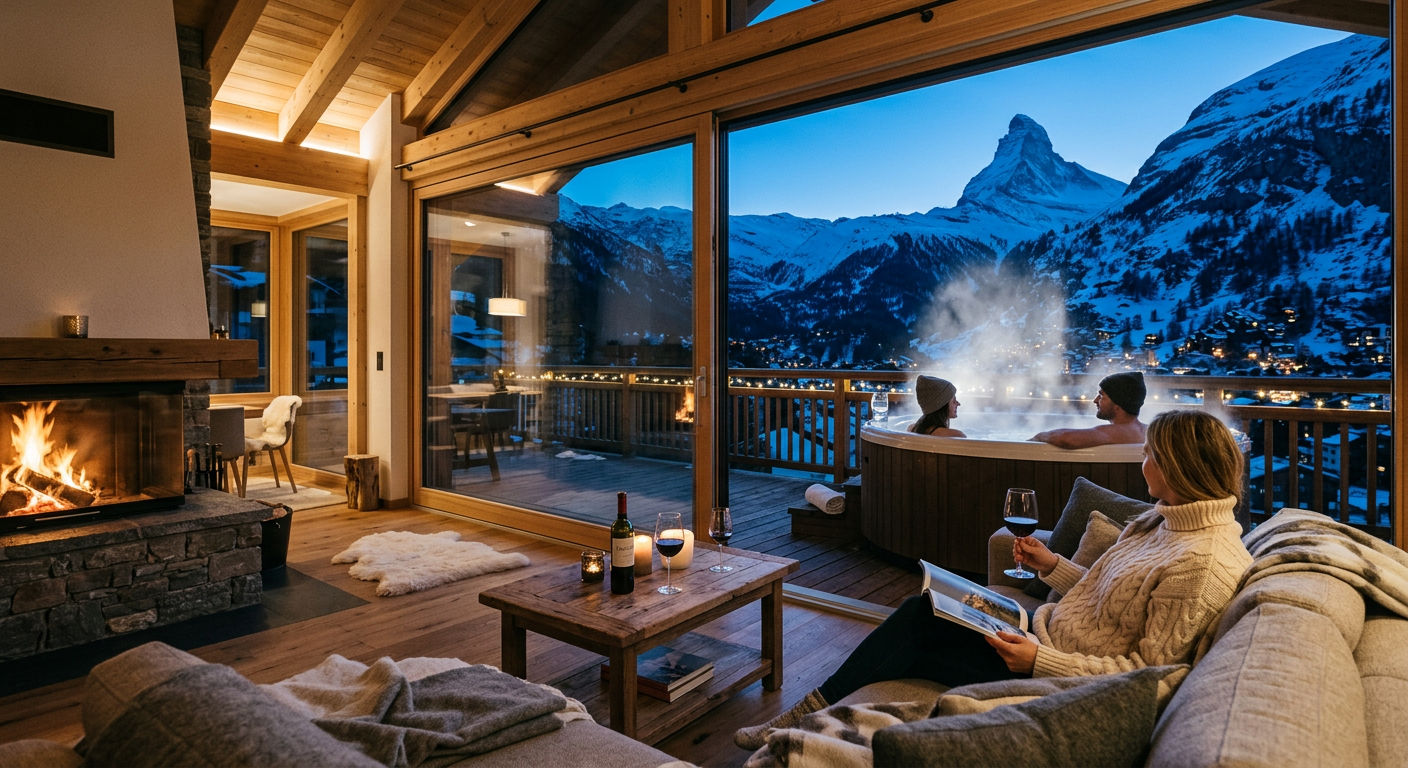
Chalets with Wellness and Ski-In Access
For skiers who prioritise both slope access and post-ski wellness, Zermatt is unusually well-suited. The combination of a compact car-free village and high build standards means that finding a chalet with both ski-in/ski-out access and a hot tub or sauna is straightforward rather than exceptional.
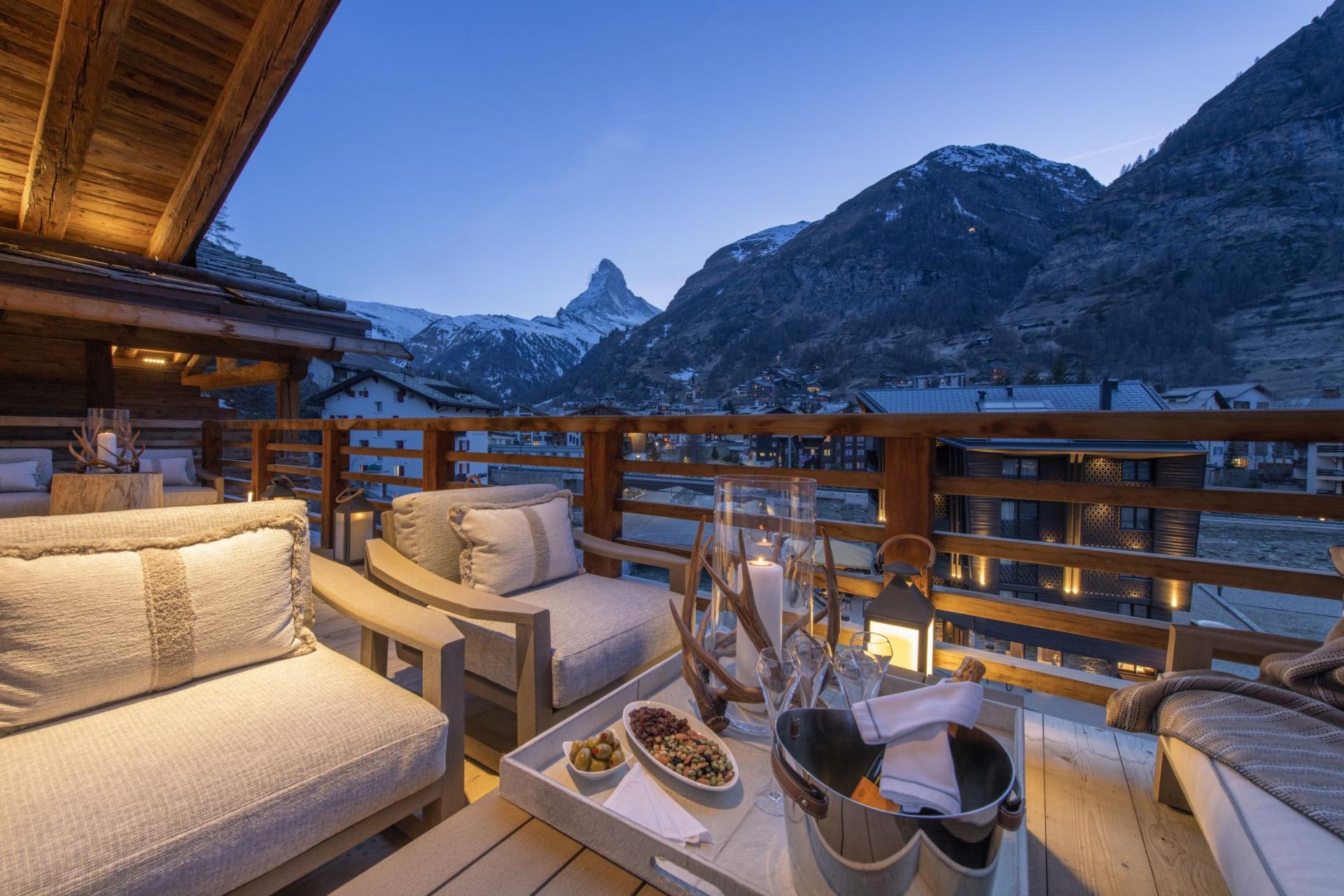
Chalet Elbrus exemplifies the catered Zermatt experience — five bedrooms, ski-in/ski-out access, a private hot tub, and full concierge service. For those seeking a fully staffed week where the only decisions are which ski area to explore and what time to sit down for dinner, this calibre of property is what Zermatt does well.
Explore Zermatt chalets with hot tubs — in our current collection, over 90 properties match this combination.
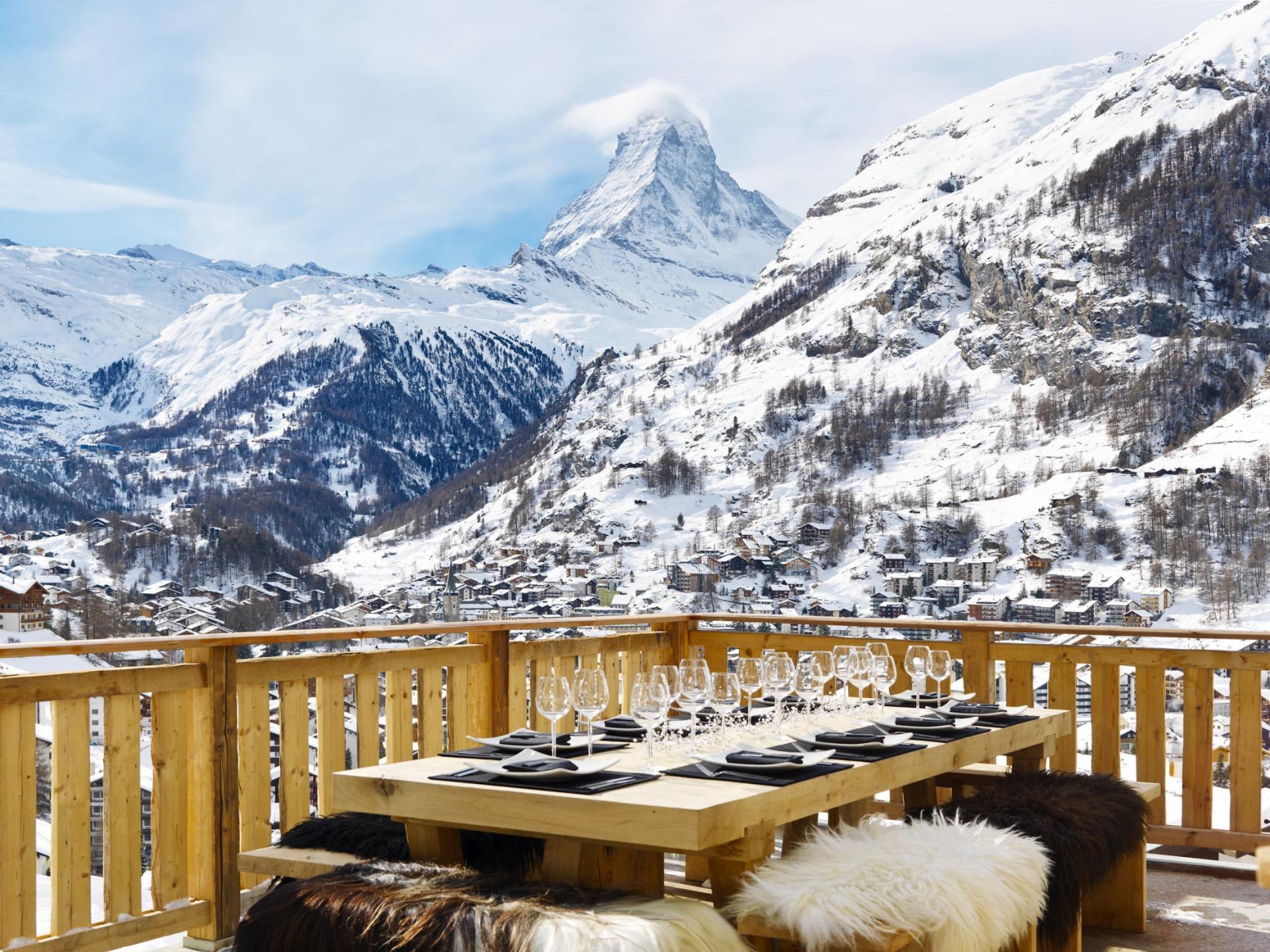
At the top end, Chalet Les Anges accommodates 14 guests across seven bedrooms with full catered service and ski-in/ski-out positioning — representative of the kind of large-format chalet that Zermatt offers for multi-family groups or milestone celebrations.
Getting to Zermatt
Zermatt is accessible from three airports, each involving a train journey for the final leg since no road reaches the village directly.
Geneva Airport is the most common arrival point for international visitors. The journey takes approximately 3.5 hours by train, with a change in Visp. Direct trains run frequently, and the final section on the Matterhorn Gotthard Bahn follows the valley floor with views of the surrounding peaks.
Zurich Airport involves a similar journey time of around 3.5 hours, again changing in Visp. This route suits travellers arriving from northern Europe or connecting through Zurich.
Sion Airport (seasonal) is the closest option at roughly 90 minutes by car to Täsch plus the shuttle train. Some operators offer helicopter transfers from Sion directly to Zermatt — a 15-minute flight.
By car, drive to Täsch (5km from Zermatt) and park in the terminal car park. Shuttle trains depart every 20 minutes and reach Zermatt in 12 minutes. This is the only way to arrive by road. Budget approximately CHF 16 per day for parking.
| Airport | Distance | Transfer Time | Route |
|---|---|---|---|
| Geneva (GVA) | 235 km | ~3.5 hours | Train via Visp |
| Zurich (ZRH) | 250 km | ~3.5 hours | Train via Visp |
| Sion (SIR) | 75 km | ~1.5 hours | Car to Täsch + shuttle train |
Zermatt for Different Skier Types
Advanced and expert skiers will find Zermatt's terrain compelling across all three areas. The Triftji mogul field, Stockhorn off-piste descents, and glacier itinerary routes provide sustained challenge. The cross-border descent into Cervinia — starting from 3,883 metres and dropping over 2,000 vertical metres — is one of the longest runs in the Alps.
Intermediate skiers benefit from the wide, well-groomed runs on Sunnegga and the long cruising descents from the Gornergrat. The Matterhorn ski paradise's red run network is extensive, and the Italian side adds variety with its sunnier, mellower gradients.
Beginners should note that while Zermatt has nursery areas near the village and above Sunnegga, it is not primarily a beginner's resort. The terrain is steep, the altitude is demanding, and the lift system assumes a degree of confidence. Families with first-timers may find resorts like Megeve or the best ski resorts for beginners a gentler starting point.
Families with skiing children will appreciate the Wolli Park on Sunnegga, the compact village layout, and the absence of traffic. The six-and-under free ski pass policy and reliable snow record reduce the logistical friction that makes family ski trips stressful elsewhere.
Destination CTA
Powder Edition brings together over 110 chalets, apartments, and lodges in Zermatt — from self-catered apartments for couples to catered chalets for groups of 14 or more, most with ski-in/ski-out access and private wellness facilities. Explore our Zermatt collection, filter by ski-in ski-out access, or browse all Alpine destinations.
Frequently Asked Questions
How many kilometres of skiing does Zermatt have?
The Matterhorn ski paradise offers 360 kilometres of marked pistes across the Swiss and Italian sides, served by 74 lifts. The Swiss side alone — Sunnegga-Rothorn, Gornergrat, and the Matterhorn glacier paradise — accounts for roughly 200 kilometres. The remainder is in Cervinia and Valtournenche, accessible on the international ski pass.
Can you ski in Zermatt in summer?
Yes. Zermatt operates summer skiing on the Klein Matterhorn glacier from June through September, typically between 3,000 metres and 3,883 metres altitude. A handful of lifts and maintained pistes serve the area, with conditions best in the early morning. Summer skiing is included in the standard glacier pass.
How much does a Zermatt ski pass cost?
A six-day adult pass for the full Matterhorn ski paradise (Swiss + Italian sides) costs approximately CHF 450 for the 2025/26 season. A Swiss-only pass is roughly 15% less. Children under nine ski free. Multi-day passes include the village bus network.
Is Zermatt good for beginners?
Zermatt has nursery slopes and a children's ski area on Sunnegga, but it is not primarily a beginner-friendly resort. The terrain is predominantly intermediate and advanced, the altitude is demanding, and the lift system is better suited to skiers with some experience. First-time adults may find the initial learning curve steeper than at purpose-built resorts.
How do you get to Zermatt without a car?
Zermatt is car-free, so even drivers must park in Täsch and take the 12-minute shuttle train. The most common route for international visitors is by train from Geneva or Zurich airports, each approximately 3.5 hours with a change in Visp. The Swiss rail network runs frequent, reliable services, and the final section through the Nikolaital valley is one of the finest train journeys in the Alps.
When is the best time to ski in Zermatt?
March and early April offer the best balance of conditions, daylight, and value. Snow remains reliable at Zermatt's altitude, temperatures are more comfortable than mid-winter, and lift queues shorten noticeably after the February school holidays. For guaranteed top-to-bottom skiing across all sectors, late December through February delivers the most complete conditions.