Best Ski Towns in Austria: 8 Alpine Villages Worth the Trip
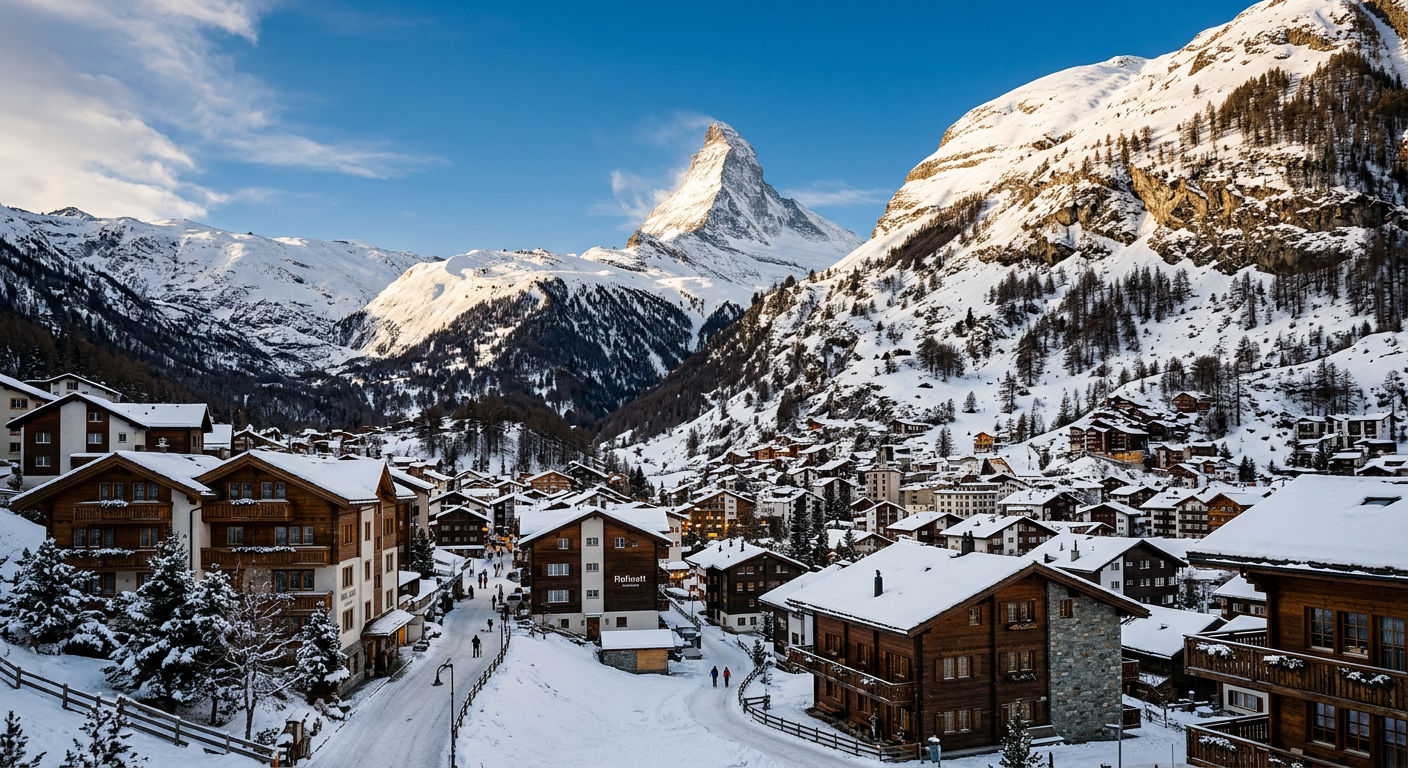
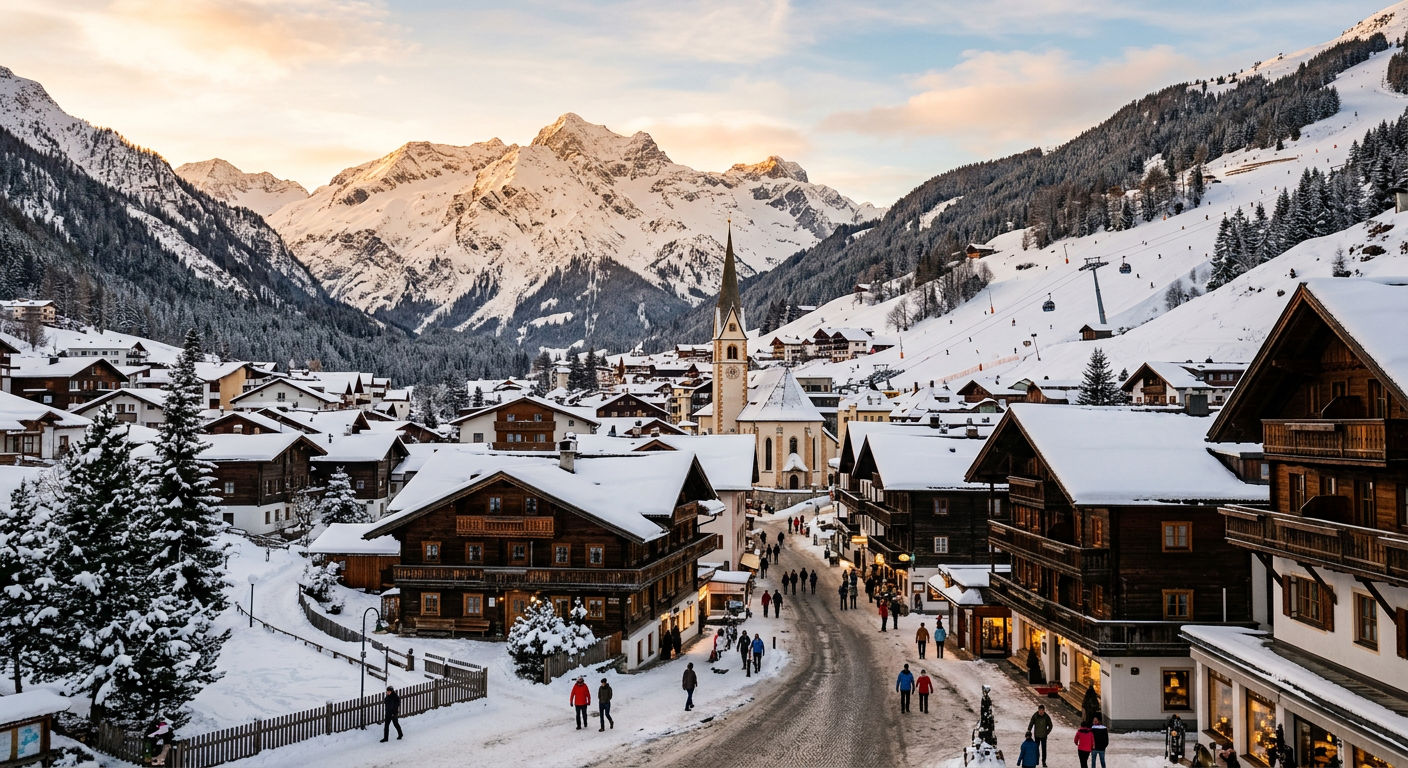
Austria does not build ski resorts. It builds ski towns — places where the church spire predates the first chairlift by centuries, where the bakery opens before the gondola, and where the rhythm of mountain life continues whether or not you brought your skis. Of the eight towns in this guide, the newest has existed since the 14th century. The skiing is a continuation of the culture, not an addition to it.
Kitzbuhel: The Town That Invented Alpine Glamour
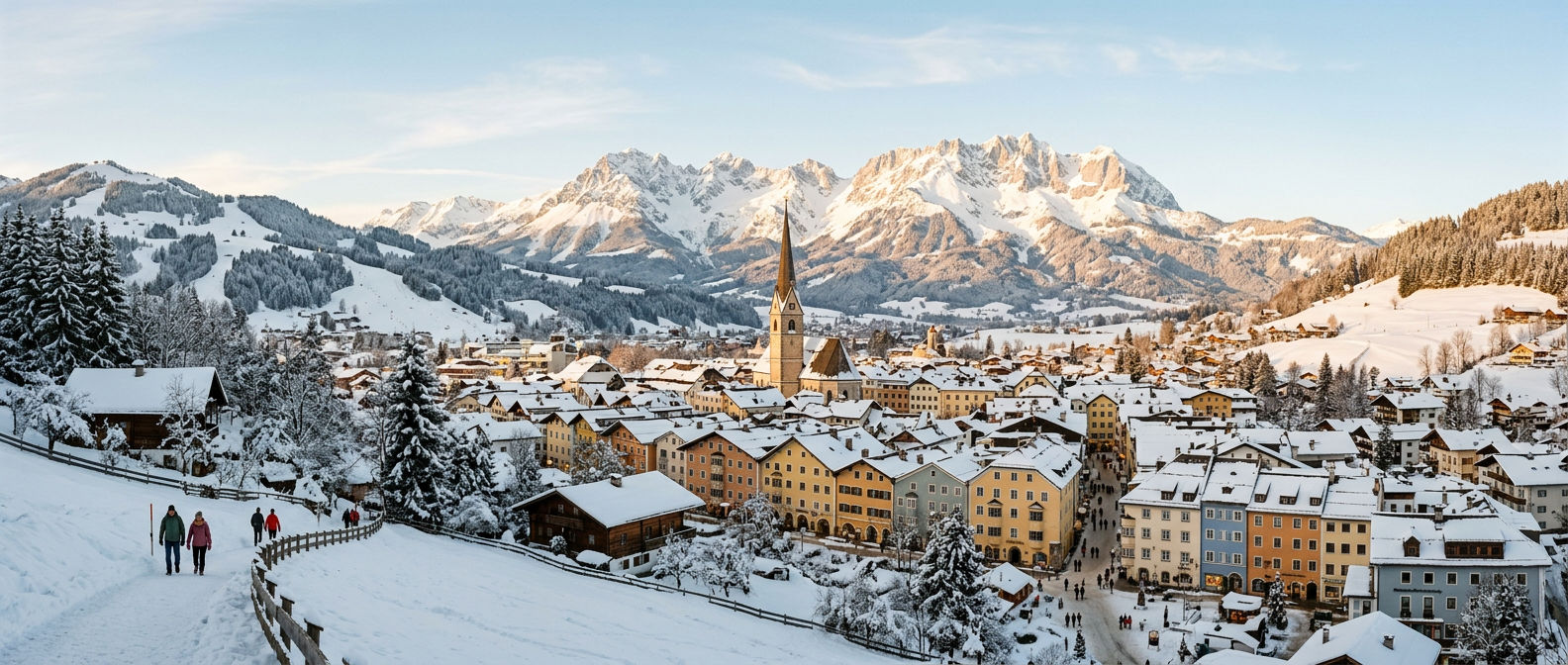
Kitzbuhel is arguably the most recognisable ski town in the world — a medieval walled settlement where cobblestone lanes lined with fashion boutiques meet 170 kilometres of skiable terrain across the KitzSki area. The Hahnenkamm downhill, held annually since 1931, remains the most watched event in alpine ski racing and defines the town's identity as deeply as any building in its centre.
The town sits at 762 metres — low by Alpine standards — but the KitzSki area climbs to just above 2,000 metres, delivering a mix of groomed cruising runs and more demanding terrain on the Hahnenkamm face itself. Snowmaking covers over 50% of pistes, compensating for the relatively modest altitude.
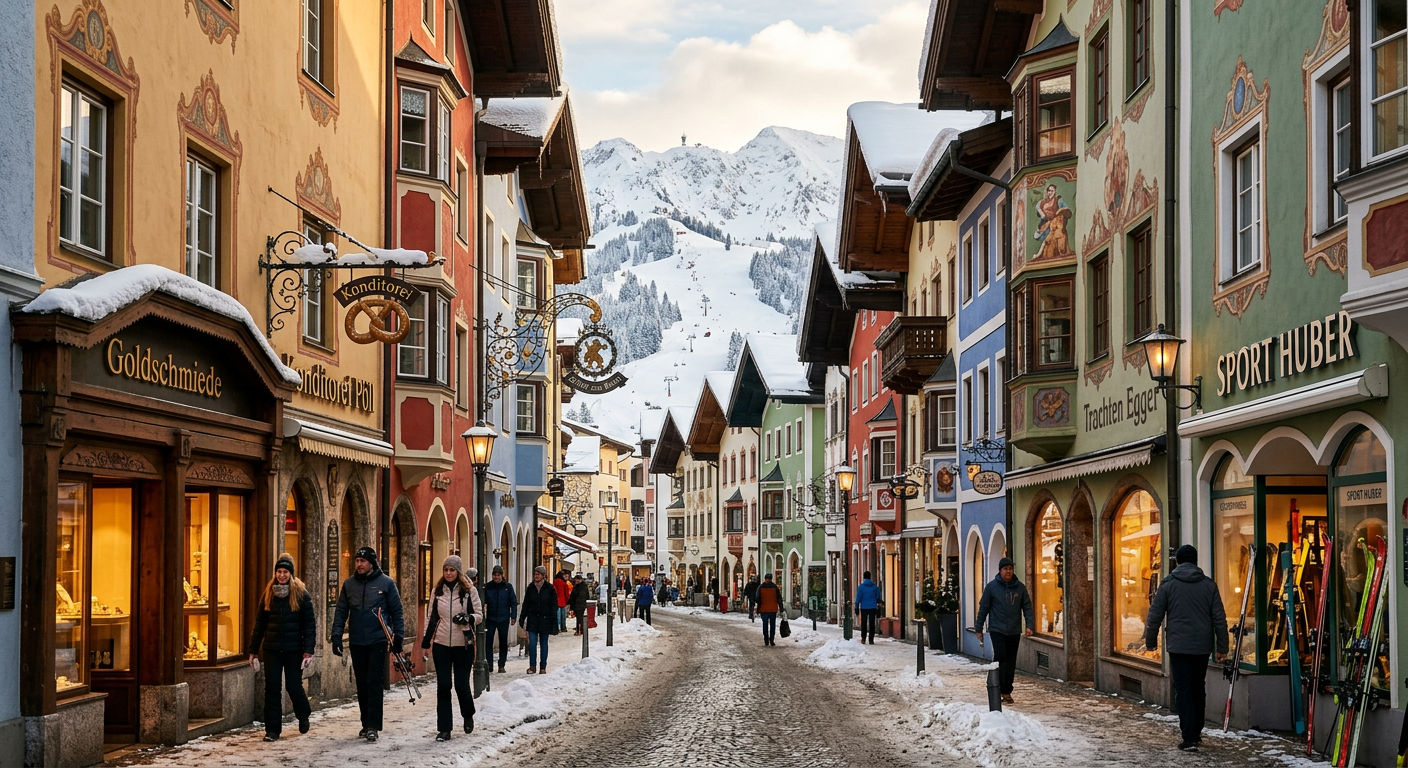
What distinguishes Kitzbuhel from purpose-built resorts is the town itself. The medieval centre, enclosed within remnants of its original walls, is walkable in fifteen minutes. Restaurants range from Michelin-starred dining to wood-panelled Gasthauser that have served Tyrolean dumplings for generations. Browse chalets in Kitzbuhel and you will find properties that reflect the town's architectural heritage — traditional Tyrolean timber paired with contemporary interiors.
For a town of 8,000 residents, Kitzbuhel punches well above its weight in dining, shopping, and cultural life. It skews cosmopolitan, especially during race week in January when the town swells with spectators, athletes, and a particular species of European socialite.
St. Anton and the Arlberg: Where Alpine Skiing Began
St. Anton am Arlberg is where modern alpine skiing was developed. Hannes Schneider codified the Arlberg technique here in the 1920s, and the village has operated as a serious ski town ever since. Today, Ski Arlberg connects St. Anton with Lech, Zurs, St. Christoph, Stuben, and Warth-Schrocken to form one of the world's largest linked ski areas: 305 kilometres of marked runs and over 200 kilometres of documented off-piste routes.
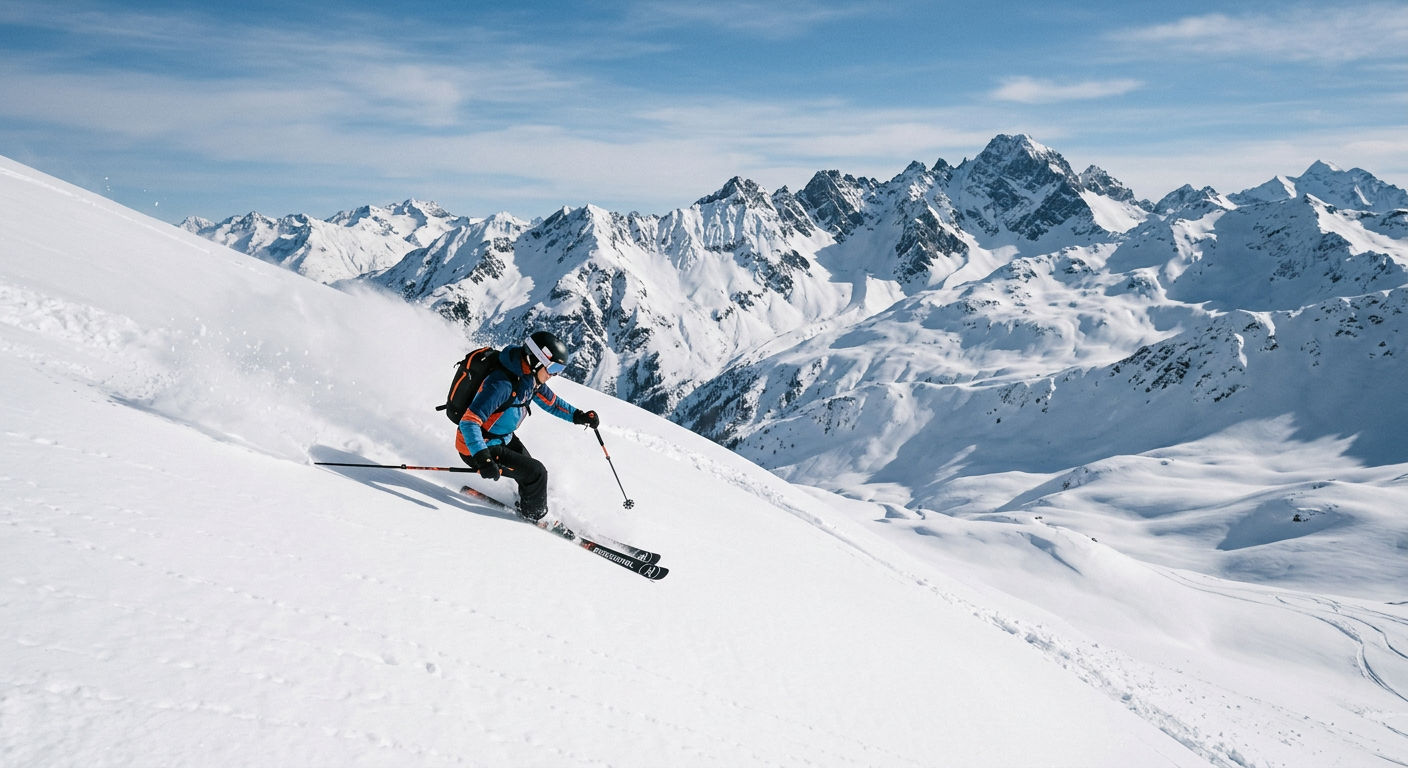
The skiing is demanding by European standards. St. Anton's reputation rests on its off-piste terrain — the Valluga, the runs into Zurs, the itinerary routes that require a guide and genuine competence. Intermediates will find excellent groomed terrain across the broader Arlberg, but the village attracts skiers who want to be tested.
The apres ski in St. Anton is among the most storied in the Alps. The Mooserwirt and Krazy Kanguruh have been fuelling post-ski celebrations for decades, and the atmosphere is distinctly more energetic than in neighbouring Lech.
Lech and Zurs: The Quieter Side of the Arlberg
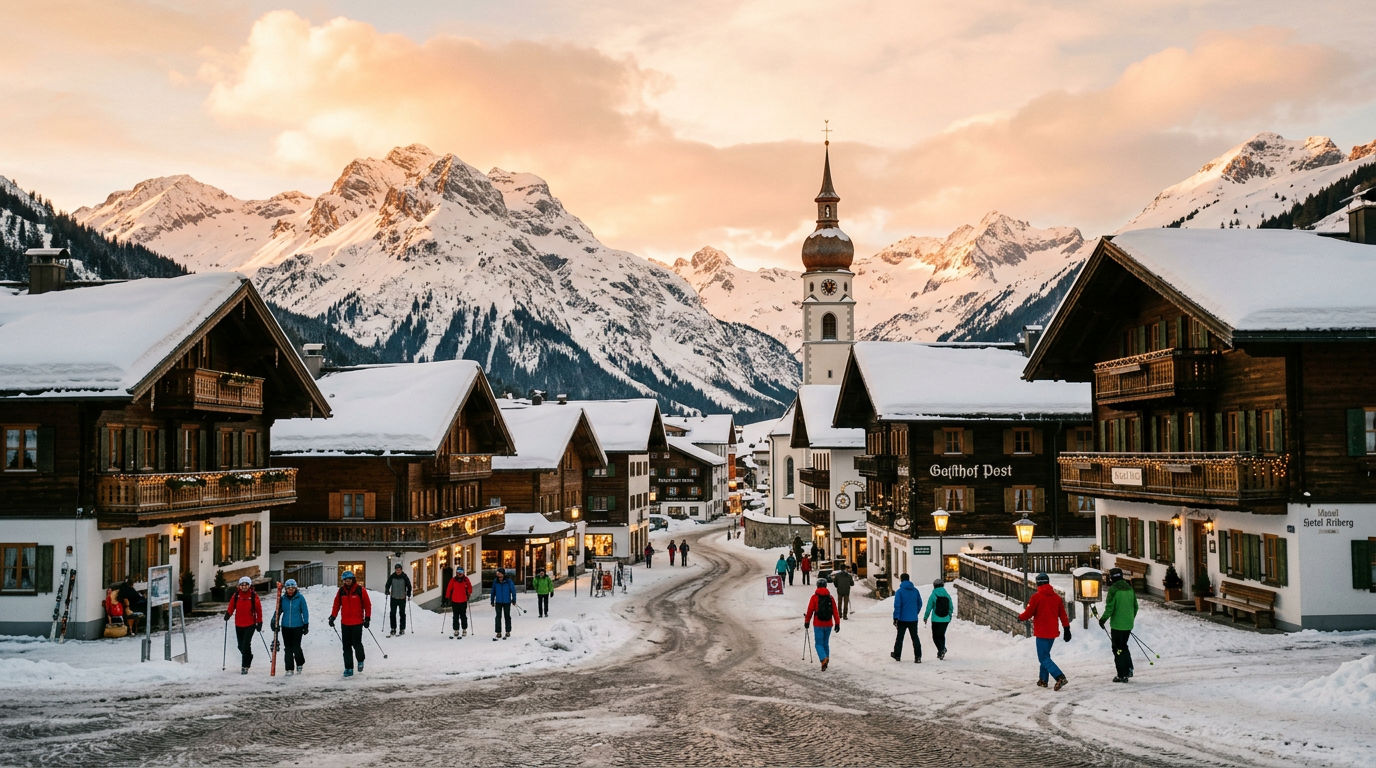
Lech and Zurs sit on the opposite side of the Arlberg pass from St. Anton and share the same ski area but deliver a markedly different experience. Lech is refined and unhurried — a favourite of European royalty, where the Dutch royal family has holidayed for decades. Zurs, at 1,717 metres, is smaller still: a handful of hotels clustered around the lifts with no village centre to speak of, which is precisely the point.
Both Lech and Zurs are snow-reliable, with the Arlberg's position on the northern edge of the Alps catching heavy snowfall from Atlantic weather systems. Average annual snowfall exceeds 7 metres in the upper reaches.
If St. Anton is the Arlberg for skiers, Lech and Zurs are the Arlberg for those who want the mountain without the crowds.
Mayrhofen and the Zillertal Valley
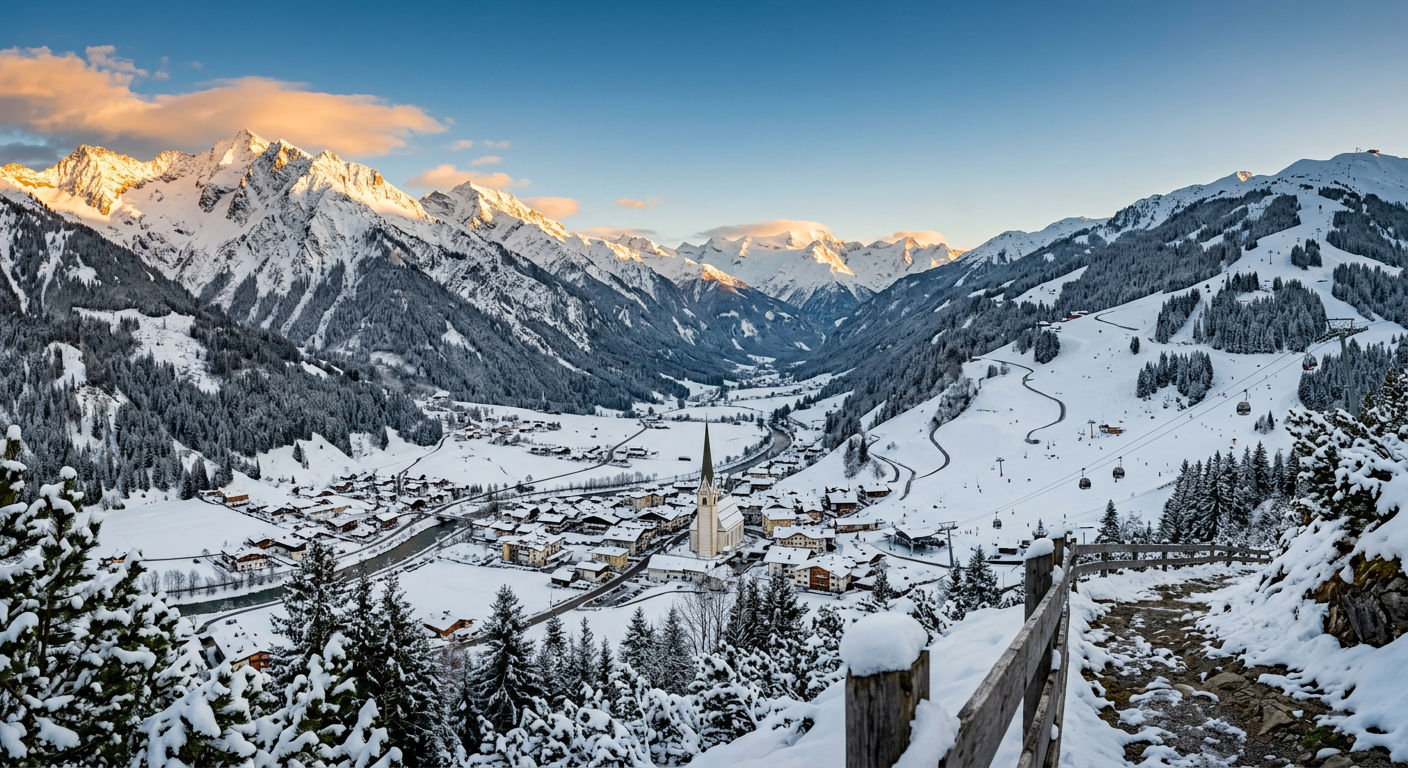
Mayrhofen anchors the Zillertal, one of Austria's most accessible ski valleys — 60 kilometres from Innsbruck airport, with a valley train connecting nine ski areas under a single pass. The Zillertal Superskipass covers 530 kilometres of terrain, making it one of the largest ski networks in the Alps by any measure.
The town sits at 630 metres in the valley floor, with the Penken and Ahorn ski areas rising above. Penken reaches 2,500 metres and includes the Harakiri — Austria's steepest groomed run at a 78% gradient, a useful metric for the kind of terrain the mountain favours.
The Zillertal's strongest asset is the Hintertux Glacier, 20 minutes up the valley, which offers skiing to 3,250 metres and operates year-round. For a late-season trip or early-season shake-out, chalets in Mayrhofen provide a practical base with glacier access.
Who Mayrhofen Suits
Mayrhofen works well for mixed-ability groups. Ahorn is gentle and wide, well suited to beginners and families. Penken is steep and varied, with a well-designed park for freestyle skiers. The town's apres ski scene — anchored by a handful of lively bars along the main street — is more energetic than refined, drawing a younger crowd than Kitzbuhel or Lech.
Saalbach-Hinterglemm and the Skicircus
Saalbach-Hinterglemm operates one of Austria's most impressive linked ski circuits: the Skicircus connects 270 kilometres of pistes across Saalbach, Hinterglemm, Leogang, and Fieberbrunn via 70 lifts. The system is designed so that a competent skier can complete a full circuit — skiing from village to village and back — in a single day, a format that rewards exploration over repetition.
| Resort | Piste km | Top Altitude | Village Altitude | Best For |
|---|---|---|---|---|
| Kitzbuhel | 170 km | 2,000 m | 762 m | Town character, cosmopolitan atmosphere |
| Ski Arlberg | 305 km | 2,811 m | 1,304 m | Off-piste, serious terrain |
| Zillertal (Mayrhofen) | 530 km | 3,250 m | 630 m | Valley network, glacier access |
| Saalbach Skicircus | 270 km | 2,096 m | 1,003 m | Linked circuit, intermediate terrain |
| Obergurgl-Solden | 256 km | 3,340 m | 1,368–1,930 m | Snow reliability, altitude |
The terrain skews intermediate — wide, well-groomed runs through open bowls and larch forests — which makes Saalbach one of the most rewarding Austrian ski towns for groups with mixed abilities. Explore properties in Saalbach-Hinterglemm for direct access to the circuit.
Hinterglemm, the quieter twin village, sits deeper in the valley and offers a slightly more relaxed atmosphere. Leogang, added to the circuit in recent years, brings forested terrain and a more family-oriented character.
Obergurgl and Solden: The High-Altitude Guarantee
Obergurgl is the highest parish in Austria at 1,930 metres — a distinction that translates directly into snow reliability. The village receives consistent natural snowfall from November through early May, and its 112 kilometres of pistes rarely suffer from the warm spells that can affect lower resorts by March.
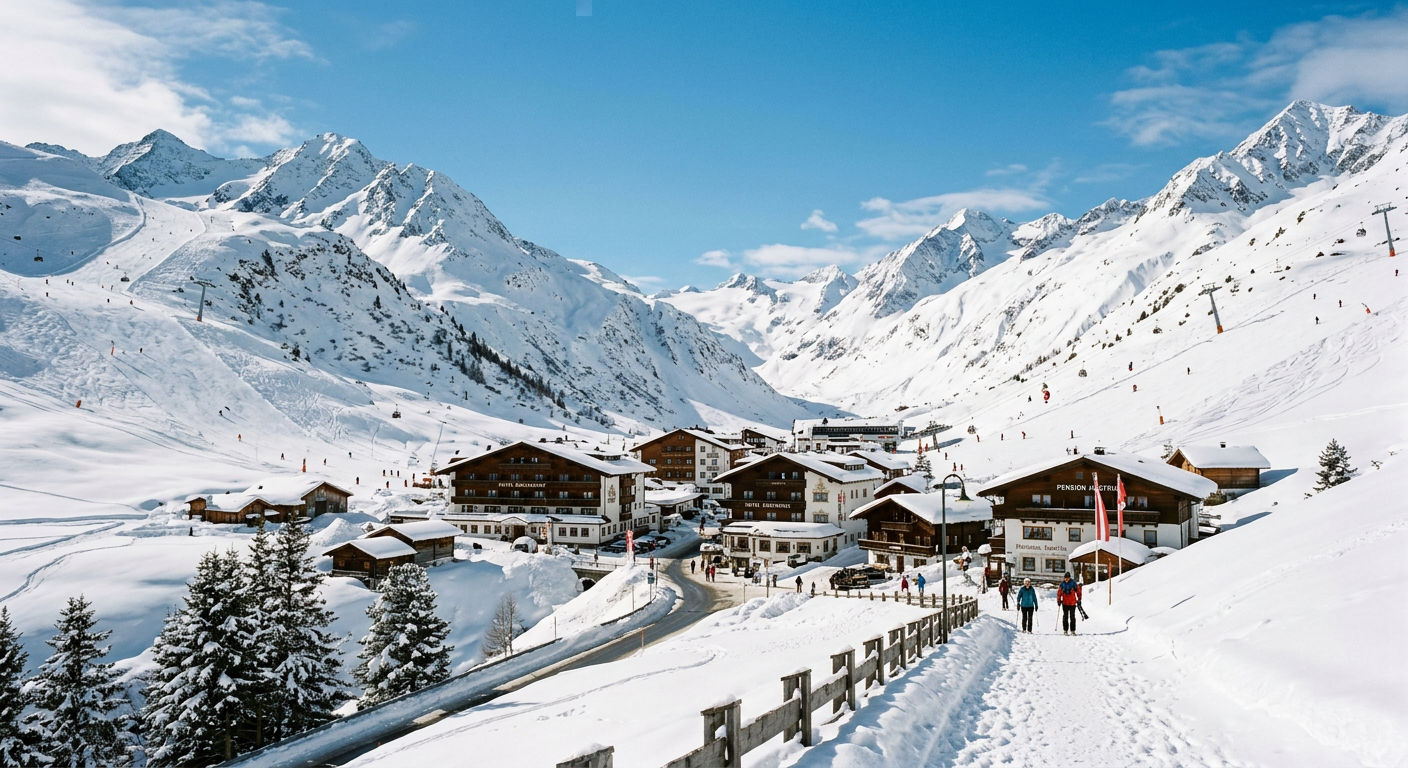
The village is deliberately small: a single street, a church, a handful of four- and five-star hotels, and no nightclub. This is the Austrian ski town for travellers who want the mountain and nothing else. The lift system across Obergurgl-Hochgurgl is modern and efficient, with minimal queuing even during peak weeks.
Solden: Glaciers and Scale
Solden, 15 minutes down the Otztal valley, is Obergurgl's louder, more ambitious neighbour. Two glaciers — Rettenbach and Tiefenbach — extend the ski season from October to May and push the top altitude to 3,340 metres. The resort gained international visibility as a filming location for the James Bond film Spectre in 2015, and has leaned into the association since.
With 144 kilometres of pistes, a terrain park, and a more developed apres scene than Obergurgl, Solden suits skiers who want serious vertical with a social element. The BIG 3 concept — three peaks above 3,000 metres, each with a panoramic platform — gives the resort a scale that smaller Otztal villages cannot match.
How to Choose the Right Austrian Ski Town
Austria's strength is variety within a compact geography. Innsbruck airport puts most of these towns within 90 minutes by transfer, and Salzburg serves the eastern resorts equally well.
For terrain seekers: St. Anton and the Arlberg — 305 km of linked skiing with serious off-piste.
For town character: Kitzbuhel — medieval streets, dining, and a cosmopolitan edge.
For snow reliability: Obergurgl — highest village, longest season, fewest compromises.
For families and mixed groups: Saalbach-Hinterglemm — linked circuit with accessible terrain.
For value: Mayrhofen — 530 km on one pass, valley train access, glacier included.
For altitude and scale: Solden — glacier skiing to 3,340 m, season from October to May.
Each of these towns rewards a week's stay. Austria does not do drive-by ski tourism well — the culture, the food, and the rhythms of the village are as much part of the experience as the skiing itself.
Find Your Austrian Ski Town
Powder Edition brings together the finest chalets and apartments across Austria's most storied ski towns. Explore properties in Kitzbuhel, the Arlberg, Mayrhofen, or browse all Austrian destinations.
Frequently Asked Questions
What is the best ski town in Austria for beginners?
Saalbach-Hinterglemm offers the most beginner-friendly terrain among Austria's leading ski towns. The Skicircus has wide, well-groomed blue runs across sheltered valleys, and the circuit format means beginners can progress to longer runs without encountering steep terrain. Obergurgl is another strong choice — compact, snow-sure, and with gentle slopes directly above the village.
When is the best time to ski in Austria?
The core Austrian ski season runs from early December through mid-April. January and February deliver the most reliable snow conditions and coldest temperatures. March offers longer days and softer snow, well suited to cruising. For the longest season, glacier resorts like Solden and Hintertux (near Mayrhofen) open as early as October and operate into May.
How much does a ski holiday in Austria cost?
A week-long ski holiday in Austria typically ranges from EUR 1,500 to EUR 4,000 per person, depending on resort and accommodation level. Lift passes cost between EUR 55 and EUR 75 per day for the 2025/26 season. Kitzbuhel and Lech command the highest accommodation premiums. The Zillertal and Saalbach regions offer stronger value without compromising on terrain quality.
Is Austria better than France for skiing?
Austria and France offer fundamentally different ski experiences. Austrian ski towns — Kitzbuhel, St. Anton, Lech — are historic villages with a focus on Gasthaus culture, efficient lift systems, and integrated town-and-mountain experiences. French resorts tend to offer larger connected ski areas (the Trois Vallees reaches 600 km) but frequently operate from purpose-built base stations. Austria generally wins on village atmosphere and dining; France on raw piste kilometres.
Do you need a car to ski in Austria?
Most Austrian ski towns are well served by airport transfers and resort shuttles, making a car unnecessary for the typical ski holiday. Innsbruck airport connects to St. Anton, Obergurgl, Solden, and Mayrhofen within 60 to 90 minutes by transfer. Salzburg serves Kitzbuhel and Saalbach. Valley bus networks are efficient and often included with the lift pass. A car adds flexibility for multi-resort exploration but is not essential.
What makes Austrian ski towns different from Swiss ski towns?
Austrian ski towns tend to be more affordable, livelier in the evenings, and more centred on traditional Tyrolean hospitality than their Swiss counterparts. Swiss towns like Zermatt and Verbier are often quieter and more architecturally formal. Austrian apres ski — particularly in St. Anton and Ischgl — has a social energy that Swiss resorts typically avoid. Both offer world-class skiing, but the off-slope culture differs meaningfully.