Chamonix France Skiing: A Complete Guide to the Mont Blanc Valley
Chamonix France Skiing: A Complete Guide to the Mont Blanc Valley
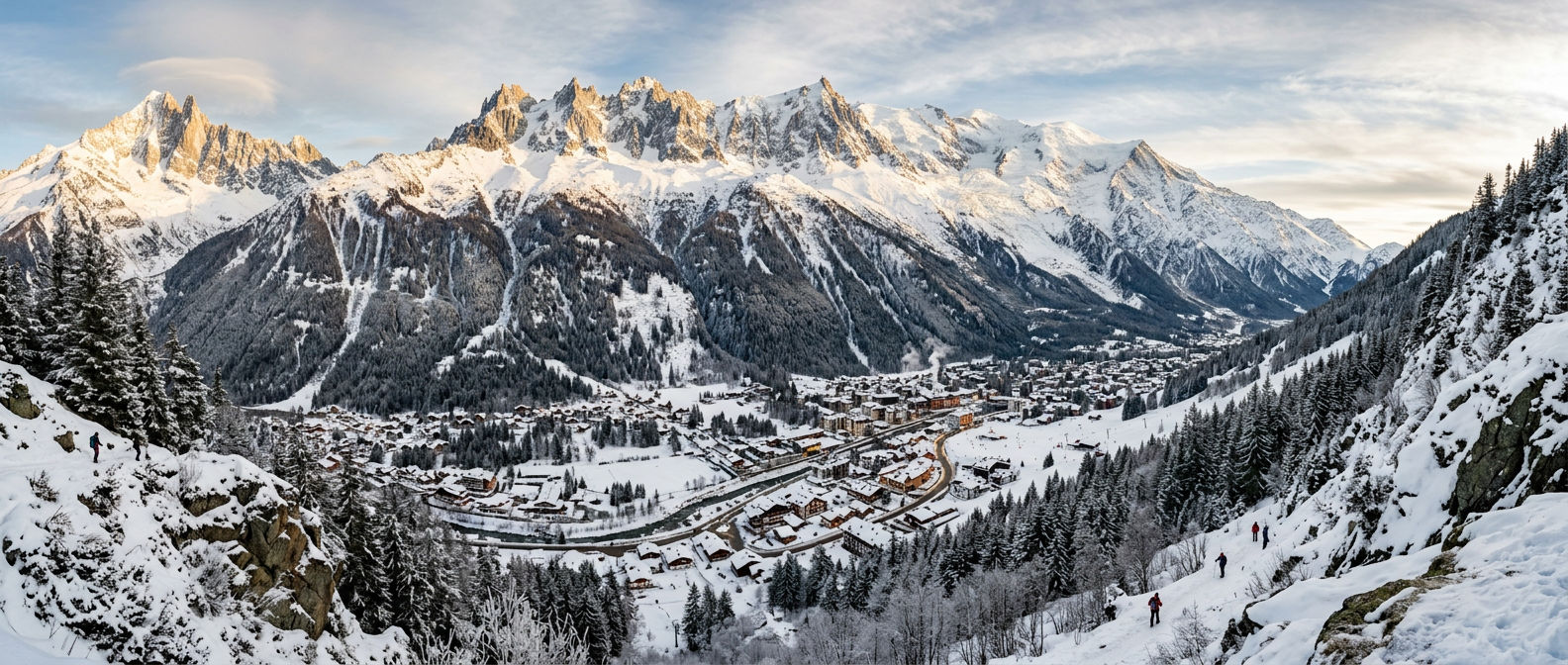
Chamonix sits at 1,035 metres in the narrow valley beneath Mont Blanc, Europe's highest peak at 4,808 metres. Unlike purpose-built resorts such as Courchevel or Val Thorens, this is a real working town — storied, slightly wild, and home to some of the most demanding ski terrain in the Alps. Five distinct ski areas spread across the valley, connected by a free shuttle bus rather than linked lifts. It rewards those who come prepared.
Five Ski Areas, Five Different Characters
Chamonix's skiing is split across five separate domains totalling roughly 155 kilometres of marked piste, each with a distinct personality. This dispersed layout is part of what makes the valley unique — and what catches first-timers off guard.
Brévent-Flégère faces Mont Blanc directly and offers the broadest intermediate terrain. At 2,525 metres, Brévent delivers long, sun-drenched runs with panoramic views that justify the trip alone. Flégère connects via cable car and adds tree-lined descents sheltered from wind.
Les Grands Montets (1,235–3,275 m) is the draw for advanced skiers. Steep couloirs, sustained off-piste terrain, and a vertical drop of over 2,000 metres make this the most serious area in the valley. A cable car rebuild completed in recent seasons has modernised access without taming the mountain.
Les Houches sits at the valley's western end — a family-oriented area with gentle, wooded runs between 1,000 and 1,900 metres. It hosts World Cup downhill races, but the general piste network suits confident beginners and intermediates well.
Le Tour / Balme (1,453–2,270 m) at the valley's northeastern edge offers open, above-treeline bowls and reliable snow. Less crowded than the other areas, it's a favourite among locals for relaxed cruising and gentle off-piste exploration.
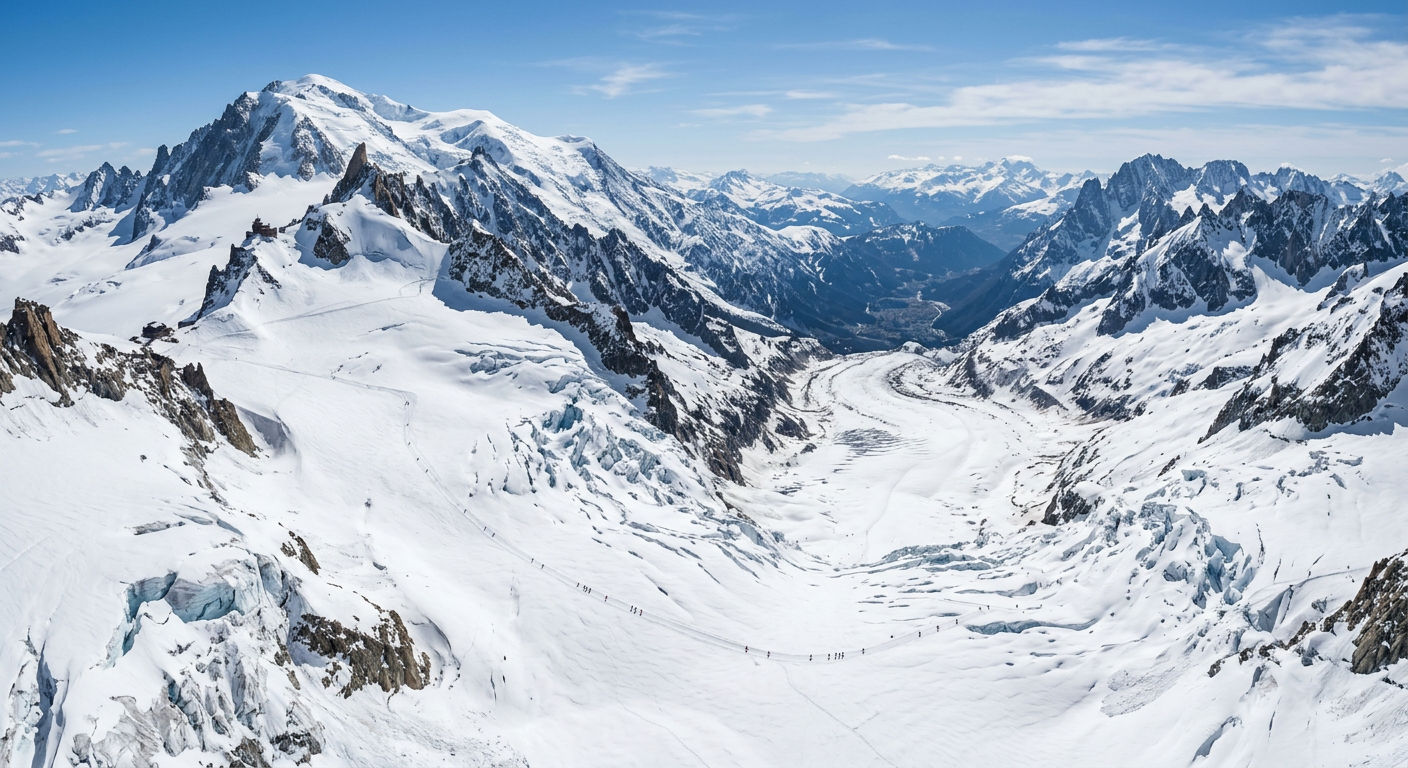
La Vallée Blanche is not a ski area in the conventional sense. This legendary 20-kilometre descent from the Aiguille du Midi (3,842 m) through glacial terrain to Chamonix is one of skiing's great experiences — but it requires a mountain guide, proper equipment, and respect for the conditions.
| Ski Area | Altitude | Best For | Piste km |
|---|---|---|---|
| Brévent-Flégère | 1,030–2,525 m | Intermediates, views | ~60 km |
| Grands Montets | 1,235–3,275 m | Advanced, off-piste | ~30 km |
| Les Houches | 1,000–1,900 m | Families, beginners | ~55 km |
| Le Tour / Balme | 1,453–2,270 m | Relaxed cruising | ~30 km |
| Vallée Blanche | 3,842–1,035 m | Off-piste, bucket-list | 20 km (off-piste) |
In our current collection of 89 Chamonix properties, guests have the flexibility to explore all five areas using the Mont Blanc Unlimited lift pass, which also covers Courmayeur in Italy and Verbier in Switzerland — over 400 kilometres of skiing in total.

Who Chamonix Is Best For
Chamonix consistently ranks among the top ski destinations in the French Alps for experienced skiers and those who value alpine authenticity over manicured convenience. The terrain here is steep, the town is real, and the mountain culture runs deep.
Advanced and expert skiers will find more sustained, challenging terrain here than almost anywhere else in Europe. Grands Montets, the Vallée Blanche, and dozens of off-piste itineraries accessible by lift or short hike make Chamonix a natural pilgrimage.
Families with older children (confident on red runs) can base at Les Houches or in Chamonix centre and find a week's worth of varied skiing. Younger families or complete beginners should consider whether the dispersed layout and steep terrain profile suits them — resorts like Méribel or Les Gets may be more forgiving for first-timers.
Groups mixing abilities are well served by the valley layout. Stronger skiers can tackle Grands Montets in the morning while others enjoy Brévent-Flégère, then everyone meets in town for the afternoon. Of our Chamonix collection, 56 properties accommodate 10 or more guests — making group trips a particular strength.
Summer visitors should note that Chamonix is a year-round mountain town. Hiking, trail running, mountaineering, and the Mont Blanc Ultra-Trail ensure the valley never fully empties, and many of our properties are available outside ski season.
Where to Stay in the Chamonix Valley
The valley stretches roughly 16 kilometres from Les Houches in the west to Le Tour in the northeast. Where you stay shapes your daily routine more than in a compact resort.
Chamonix centre (around Place Balmat and Rue du Docteur Paccard) puts you within walking distance of restaurants, shops, and the Aiguille du Midi cable car. Most properties in our collection are based here or in the immediate surrounds — a natural base for accessing all five ski areas by the free Chamonix Bus.
Les Praz and Flégère sit a few minutes north of centre, directly beneath the Flégère cable car. Quieter, with a village feel and direct access to Brévent-Flégère skiing.
Argentière, 8 kilometres up-valley from Chamonix, is the gateway to Les Grands Montets. It has its own small-town atmosphere and appeals to those who prioritise serious skiing over nightlife. We currently list 16 properties in Argentière alongside the 89 in Chamonix proper.
Les Houches, at the valley's western end, suits families with its gentler terrain and self-contained village. Transfer times from Geneva are marginally shorter.
Across our current Chamonix portfolio, 78 properties feature fireplaces and 86 include saunas — a reflection of the valley's wellness culture after hard days in the mountains. For those seeking the full après recovery experience, explore Chamonix properties with hot tubs or browse our collection with private pools.
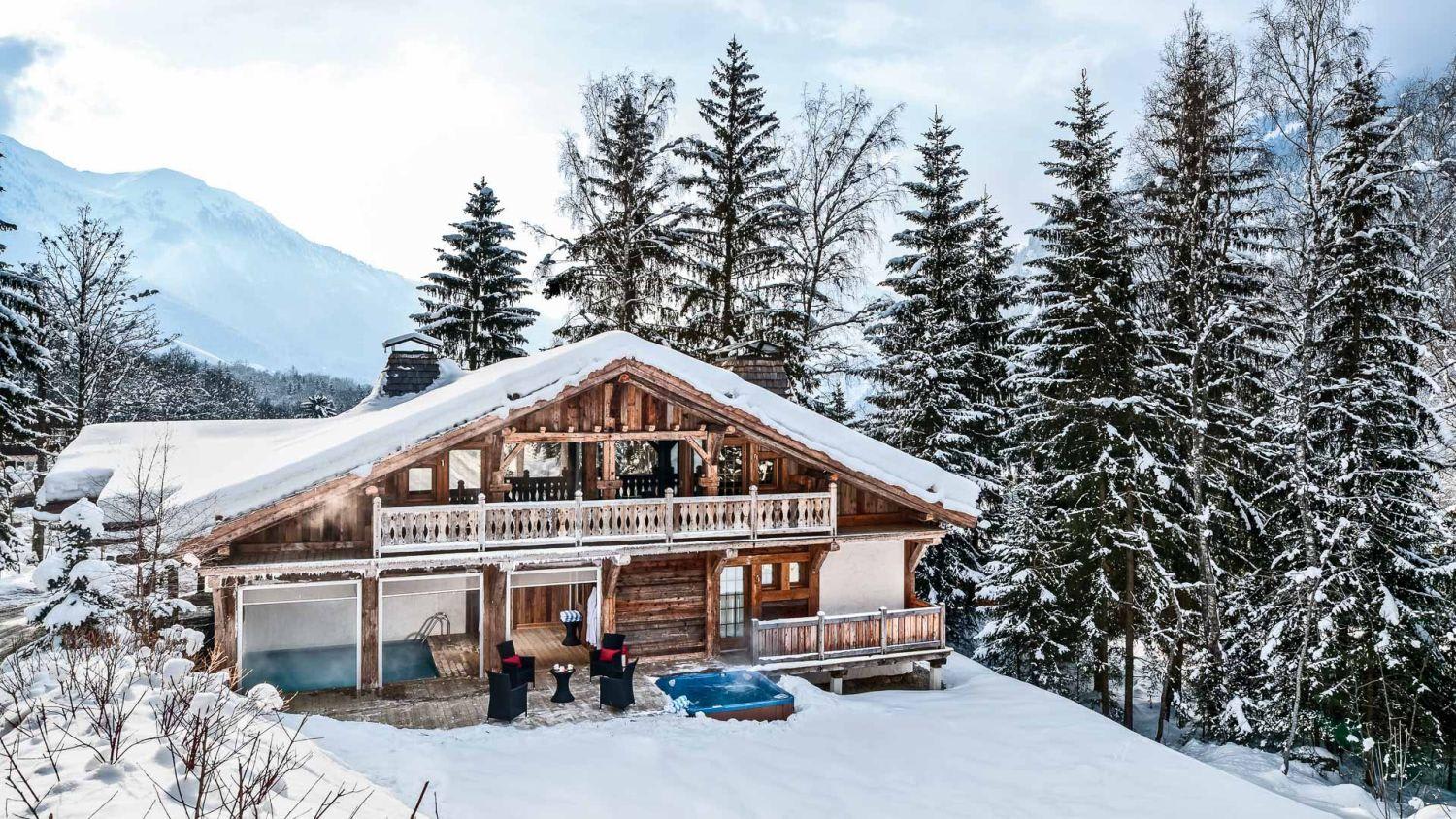
Among the well-appointed chalets in our Chamonix collection, Chalet Chouca in the heart of the valley combines a hot tub and mountain views with a practical four-bedroom layout for groups of eight.
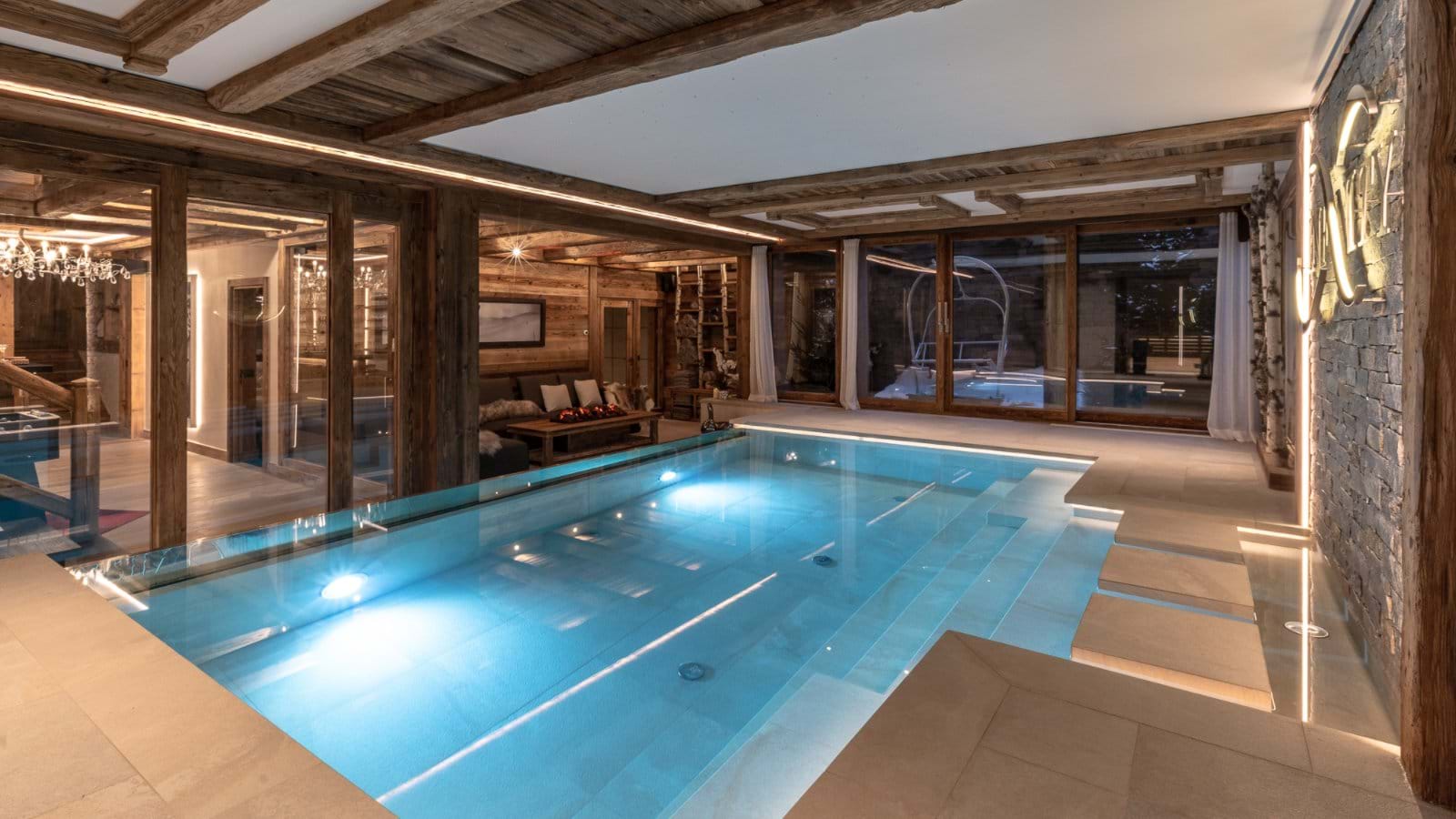
For larger parties, Chalet Baloo offers six bedrooms for up to 12 guests, with a private pool, sauna, and hammam built into what feels more like an alpine wellness retreat than a rental property.
When to Go: Season Timing and Snow Conditions
Chamonix's ski season typically runs from early December through late April, though high-altitude areas like Grands Montets and the Vallée Blanche can extend into May when conditions allow.
Peak season (late December through mid-March) delivers the most reliable snow cover across all five areas. Chamonix's north-facing slopes and high altitude help preserve conditions, but the valley's relatively low base altitude (1,035 m) means early and late season can bring rain rather than snow at town level.
January and February offer the coldest, most consistent conditions and the best powder windows. These are also the busiest months, particularly during French school holidays (usually the last two weeks of February).
March often represents the best balance: longer days, warmer temperatures in town, still-reliable snow above 2,000 metres, and thinner crowds on weekdays.
Late season (April) suits those targeting the Vallée Blanche or spring touring conditions. Town-level skiing on Les Houches and lower Brévent runs becomes inconsistent.
| Month | Conditions | Crowds | Best For |
|---|---|---|---|
| December | Variable, building base | Low–moderate | Early season, holiday weeks |
| January | Cold, reliable powder | Moderate | Serious skiing, off-piste |
| February | Peak conditions | High | Families (half-term), groups |
| March | Warming, spring snow above 2,000 m | Moderate | Value, long days |
| April | Variable, high-altitude only | Low | Vallée Blanche, touring |
Getting to Chamonix
Chamonix benefits from one of the shortest airport-to-resort transfers in the Alps. Geneva Airport sits roughly 90 kilometres away — a 75-minute drive in good conditions, or closer to 90 minutes during peak Saturday transfers.
Geneva (GVA) is the primary gateway, served by direct flights from most major European cities and seasonal routes from North America. Private transfers typically cost €200–€350 per vehicle each way; shared shuttle services run from €35 per person.
Lyon (LYS) is an alternative at roughly 220 kilometres (2.5–3 hours by road), sometimes offering cheaper flights or better connections from southern Europe.
By train, the Mont Blanc Express runs from Saint-Gervais (connected to the French TGV network via Paris) to Chamonix in about 40 minutes — a scenic, practical option if you're travelling from within France.
The Mont Blanc Tunnel connects Chamonix to Courmayeur, Italy, in 15 minutes, opening up day trips to the Italian side of the massif and making it possible to ski two countries in a single holiday.
For groups of 10 or more, several properties in our collection include concierge services that arrange airport transfers as part of the booking. Browse Chamonix chalets with concierge service to simplify the logistics.
At the higher end of the valley's accommodation, Chalet Infinity brings together a private pool, hammam, sauna, and gym with five bedrooms for up to 10 guests — the kind of property where the chalet itself becomes part of the holiday.
Beyond the Pistes: Chamonix's Mountain Culture
Chamonix is not a resort that exists solely for skiing. It is the birthplace of alpinism — the site of the first Winter Olympics in 1924 — and this heritage permeates the town in ways that shape the visitor experience.
The Aiguille du Midi cable car, even for non-skiers, delivers one of the most dramatic viewpoints in the Alps: a glass-floored observation platform at 3,842 metres overlooking the Mont Blanc massif, the Matterhorn, and on clear days, the distant Jura.
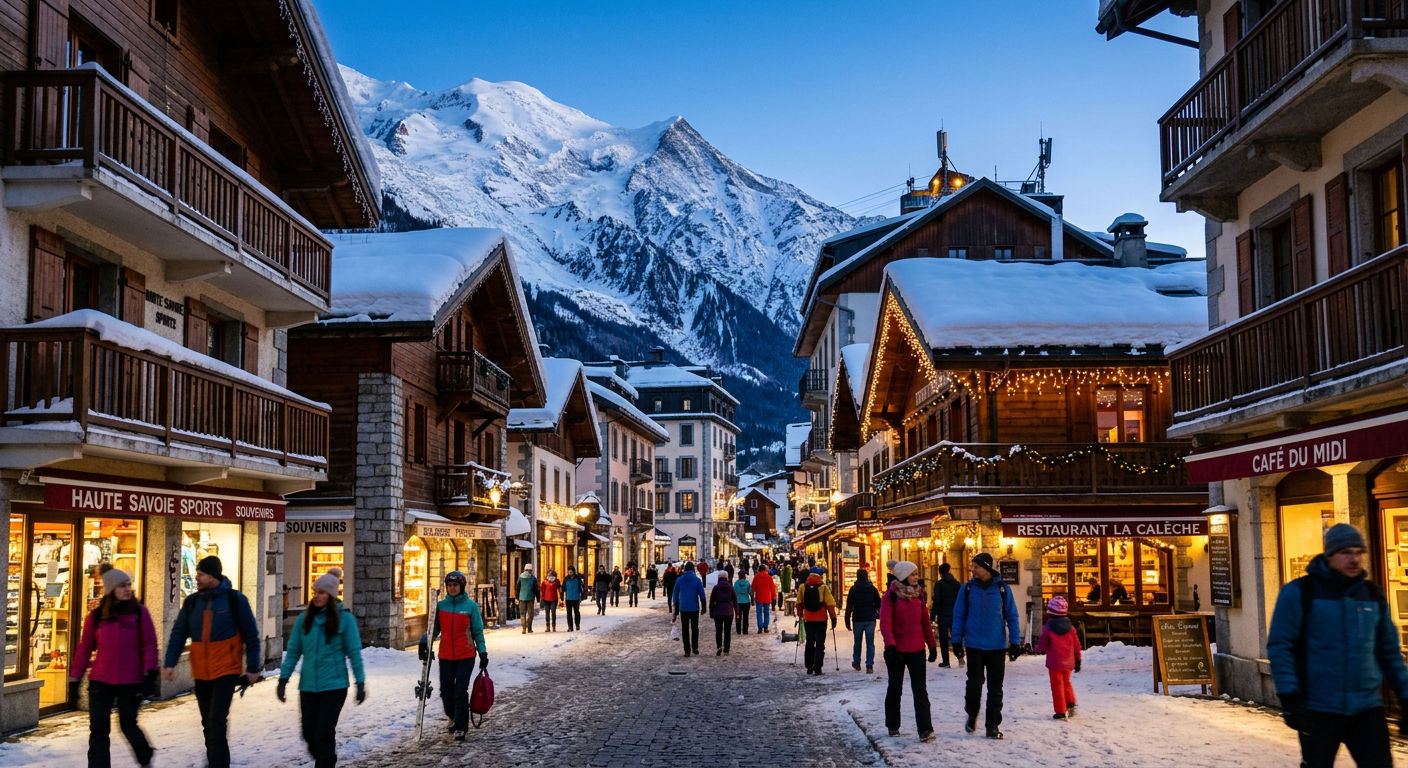
The town centre holds its own. Chamonix has a year-round population of around 9,000 and a genuine high street — independent bookshops, mountain-equipment stores with heritage, bakeries that have survived the tourist cycle. Dining ranges from Michelin-recognised restaurants to Savoyard fondues served in wood-panelled rooms that haven't changed in decades.
Après-ski in Chamonix is less about champagne-spraying terrace bars and more about craft beer at Micro Brasserie de Chamonix, a vin chaud at a piste-side café, or an early dinner before the mountain takes hold again. It is considered rather than performative.
For those drawn to Chamonix's particular blend of serious terrain and authentic mountain culture, explore our full collection of Chamonix properties — from intimate two-bedroom apartments to grand chalets accommodating 28 guests, with weekly rates starting from around €4,000 for a private chalet.
Frequently Asked Questions
Is Chamonix good for beginner skiers?
Chamonix can work for beginners, but it is not the most natural choice. Les Houches and Le Tour offer gentle, well-groomed runs suitable for learning, and ski schools operate across the valley. However, the dispersed layout means beginners may spend more time on shuttle buses than on snow, and the overall terrain profile leans intermediate to advanced. First-timers with flexible expectations will enjoy it; those wanting a seamless learn-to-ski experience may prefer a purpose-built resort.
How many ski areas does Chamonix have?
Chamonix has five distinct ski areas: Brévent-Flégère, Les Grands Montets, Les Houches, Le Tour/Balme, and the off-piste Vallée Blanche descent. These are not lift-linked — you travel between them by free shuttle bus or car. Together they offer roughly 155 kilometres of marked piste plus extensive off-piste terrain, all covered by the Mont Blanc Unlimited lift pass.
When is the best time to ski in Chamonix?
January through early March delivers the most reliable snow and widest range of open terrain. February is peak season (and priced accordingly, especially during French school holidays). March offers a compelling balance of good snow above 2,000 metres, longer days, and slightly lower prices. Late April suits those targeting the Vallée Blanche or spring touring conditions, though lower-altitude areas become unreliable.
How far is Chamonix from Geneva Airport?
Geneva Airport is approximately 90 kilometres from Chamonix — roughly 75 minutes by car in standard conditions. This is one of the shortest airport-to-resort transfers in the Alps. Private transfers run €200–€350 per vehicle; shared shuttles cost around €35 per person. Weekend changeover days (particularly Saturday mornings) can add 15–30 minutes to the journey.
Do you need a guide for the Vallée Blanche?
Yes. The Vallée Blanche is an unmarked, unpatrolled glacial descent from 3,842 metres to 1,035 metres. It crosses crevassed terrain, and conditions change daily. A certified mountain guide (available through the Compagnie des Guides de Chamonix, founded in 1821) is essential for safety and navigation. Expect to pay €80–€120 per person in a group, or €400–€500 for a private guide.
What lift pass do you need for Chamonix?
The Chamonix Le Pass covers all five local ski areas and costs approximately €310 for six days (2025/26 season). The Mont Blanc Unlimited pass extends coverage to Courmayeur (Italy), Verbier (Switzerland), and several smaller areas — roughly €370 for six days. For those staying a full week and wanting maximum flexibility, the Mont Blanc Unlimited pass offers the better value.