Skiing in the Dolomites: A Complete Guide to Italy's Most Distinctive Ski Region
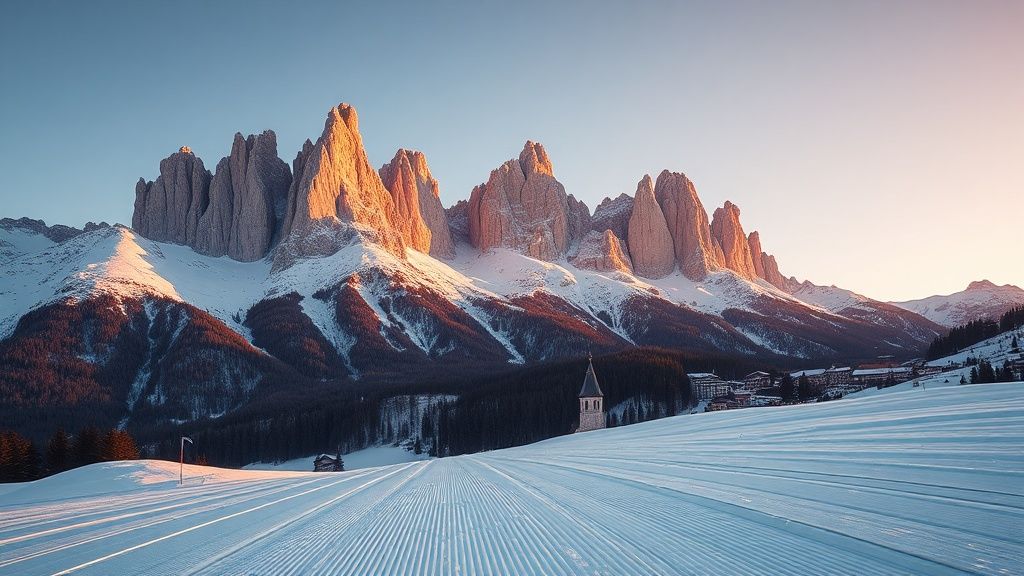
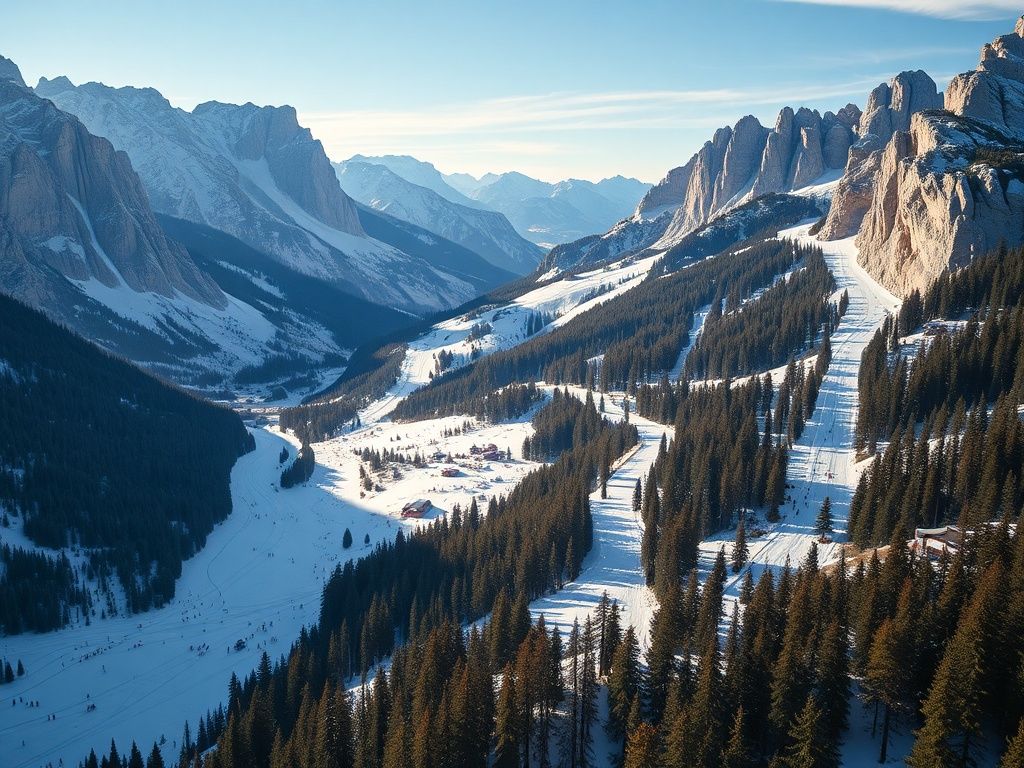
The Dolomites are the most visually arresting ski region in the Alps. Pale limestone towers — some rising over 3,000 metres — frame every piste, every village, and every terrace where you pause for a long Italian lunch. The skiing here is connected by the Dolomiti Superski pass, which covers 1,200 kilometres of pistes across 12 interlinked ski areas, making it the largest ski carousel in the world. It is also a UNESCO World Heritage site, a distinction no other major ski region can claim.
What sets the Dolomites apart from the French mega-resorts or Swiss classics is the combination: immaculate grooming, a ski safari culture built around the legendary Sella Ronda circuit, and an approach to hospitality that treats food, wine, and wellness not as afterthoughts but as essential parts of the mountain day. In our current collection, we list over 110 properties across eight Dolomite resort areas — and the amenity profile tells the story. Where a French resort might lead with ski-in access, the Dolomites lead with saunas, hammams, and wood-fired kitchens.
Why the Dolomites Stand Apart
The Dolomites offer a fundamentally different ski proposition to the French or Swiss Alps. The terrain is predominantly intermediate — wide, immaculately groomed pistes that sweep through valleys beneath vertical rock walls — with enough steep terrain and off-piste to keep advanced skiers engaged for a week.
Three things define the experience.
The Sella Ronda circuit. A 40-kilometre loop connecting four valleys — Val Gardena, Val di Fassa (Canazei), Arabba, and Alta Badia — that you can ski in either direction in a single day. It is the most celebrated ski safari in the Alps, and nothing in Courchevel or Verbier replicates the sense of covering genuine geographic distance on skis.
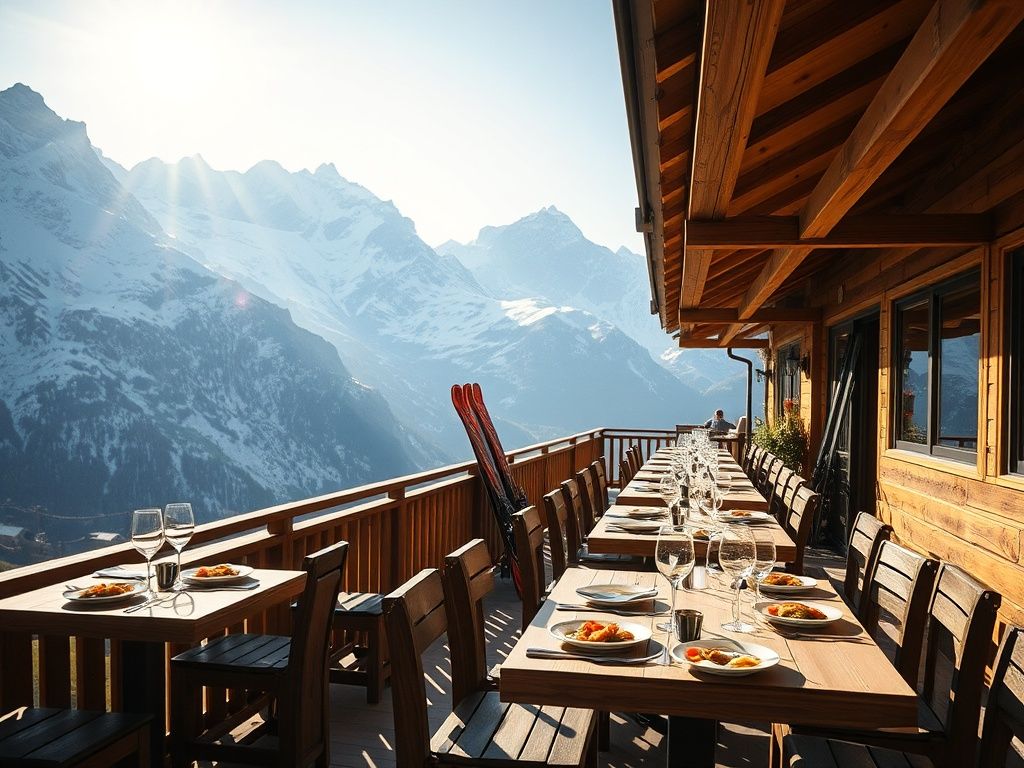
The food. Rifugio culture in the Dolomites is in a different category to the French mountain restaurant. Expect hand-rolled canederli, venison ragù, fresh pasta, and local wines from Alto Adige — one of Italy's most distinguished wine regions — served on sun-drenched terraces with views that justify every euro.
The wellness tradition. Across our Dolomites portfolio, in our current collection, 94% of properties include a sauna and 80% offer a private hot tub. This is not an add-on — it reflects a South Tyrolean culture where thermal wellness is woven into daily life. By comparison, hot tub rates in our French Alps properties typically hover around 40–50%.
Best Dolomites Ski Resorts Compared
The Dolomites are not a single resort but a constellation of distinct villages and ski areas. Here is how the main areas compare for the 2025/26 season.
| Resort | Piste km | Altitude (m) | Best For | Nearest Airport | Transfer |
|---|---|---|---|---|---|
| Cortina d'Ampezzo | 120 | 1,224–2,930 | Scenery, glamour, 2026 Olympics legacy | Venice (VCE) | 2h |
| Val Gardena (Selva) | 175 | 1,236–2,518 | Sella Ronda access, groomed cruising | Innsbruck (INN) | 1h 45m |
| Alta Badia (Corvara) | 130 | 1,324–2,778 | Gourmet skiing, families | Innsbruck (INN) | 2h |
| Canazei (Val di Fassa) | 210 | 1,460–3,265 | Altitude, Marmolada glacier | Verona (VRN) | 2h 30m |
| Arabba | 63 | 1,602–3,269 | Advanced terrain, Marmolada access | Venice (VCE) | 2h 15m |
| Madonna di Campiglio | 150 | 1,522–2,504 | All-round resort, Brenta Dolomites | Verona (VRN) | 2h |
| Kronplatz | 119 | 835–2,275 | Families, modern lifts, architecture | Innsbruck (INN) | 1h 30m |
Cortina d'Ampezzo
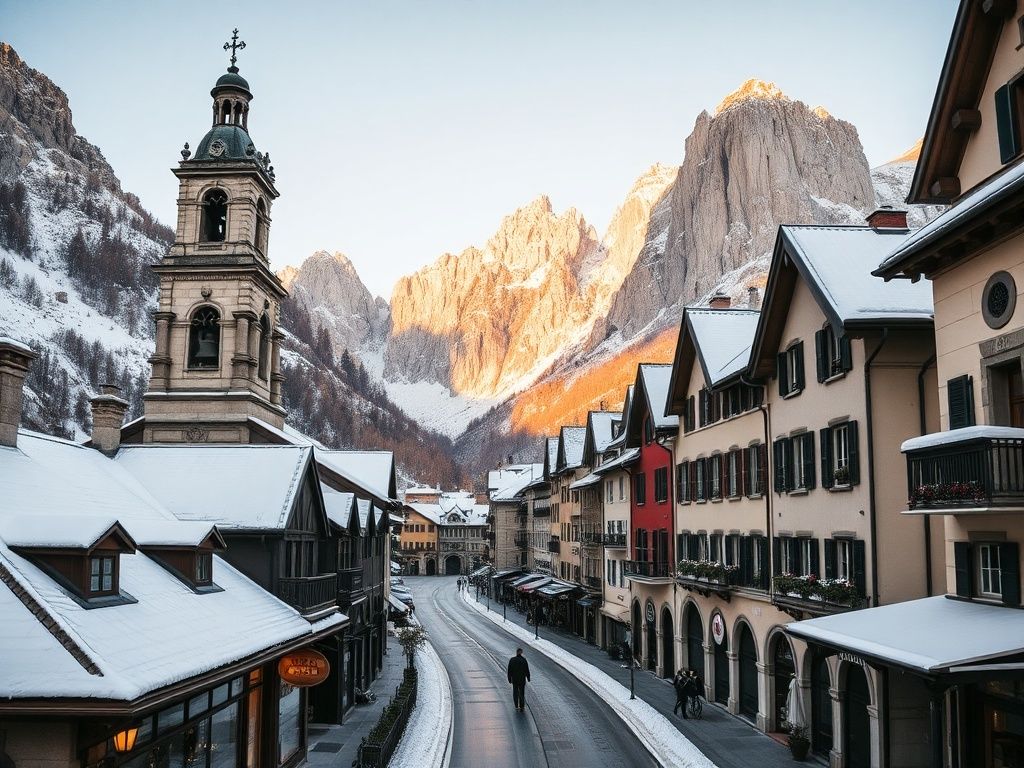
Cortina is the most storied resort in the Dolomites and the host of the 2026 Winter Olympics alpine events. The town sits in a wide amphitheatre surrounded by the Tofane, Cristallo, and Cinque Torri peaks — a panorama that has drawn skiers and mountaineers since the 1920s. The skiing spans five interconnected areas, with the new Olimpia gondola and improved links to the wider Dolomiti Superski network adding capacity for 2025/26.
In our current collection, we list 19 Cortina properties, with 15 offering spa facilities and 10 featuring a private hot tub. The accommodation here leans toward refined hotels and residence-style chalets rather than the standalone chalet model common in France. Browse our Cortina collection.
Val Gardena and the Sella Ronda
Selva di Val Gardena is the most efficient base for the Sella Ronda. Lifts from the village connect directly to the circuit in both directions, and the local ski area — part of the 175-kilometre Val Gardena network — includes the famous Saslong World Cup downhill course.
The Ladin culture here is distinct from the rest of Italy — a trilingual community (Ladin, German, Italian) with its own architectural traditions and cuisine. In our current collection, every one of our 18 Selva Gardena properties includes a sauna, and 83% offer a hot tub — a reflection of the South Tyrolean wellness tradition that pervades this valley. Explore properties in Selva Gardena.
Alta Badia
Alta Badia — centred on the villages of Corvara, Colfosco, San Cassiano, and La Villa — is where the Dolomites' food culture reaches its peak. The Gourmet Ski Safari, a network of rifugi offering Michelin-calibre mountain dining, runs through this valley. Skiing is predominantly intermediate, with wide pistes and reliable snow cover above 2,000 metres.
Every property in our Alta Badia collection features a hot tub, and 90% include a fireplace — the highest fireplace rate of any resort in our portfolio. The mix here includes traditional chalets alongside design-forward hotels, with five properties offering wine cellars.
Madonna di Campiglio
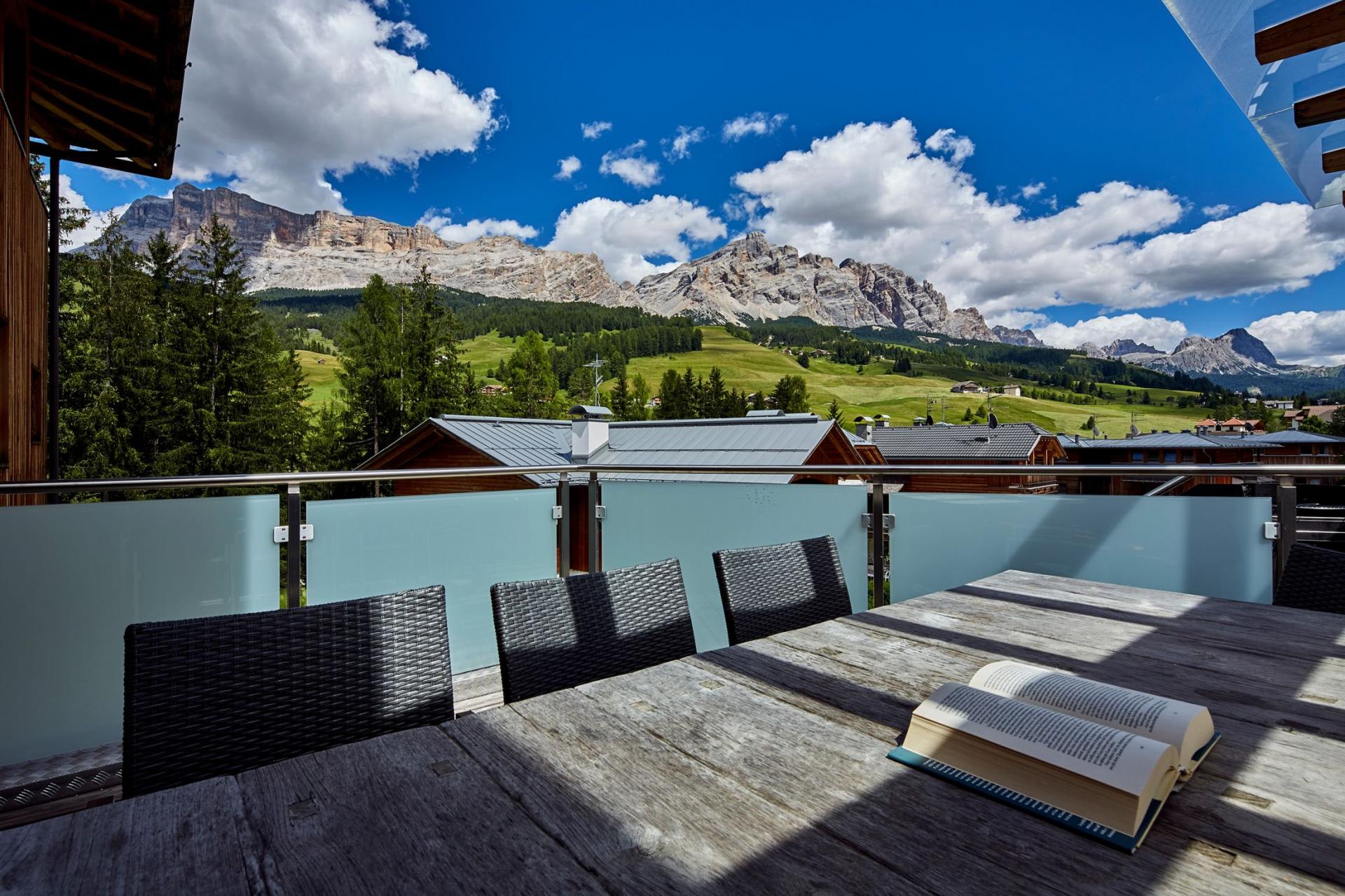
Set in the Brenta Dolomites — geographically separate from the main Dolomite range but equally dramatic — Madonna di Campiglio is the most complete all-round resort in the Italian Alps. The 150-kilometre ski area connects to Pinzolo and Folgarida-Marilleva, and the town has a lively evening scene centred on its pedestrianised centre.
With 30 properties in our current collection, Madonna di Campiglio is our deepest Italian resort. The wellness stats are striking: 93% have a sauna, 87% a pool, and 80% a hot tub. This is a resort where the post-ski ritual is as considered as the skiing itself. Browse our Madonna di Campiglio collection.
Arabba and the Marmolada
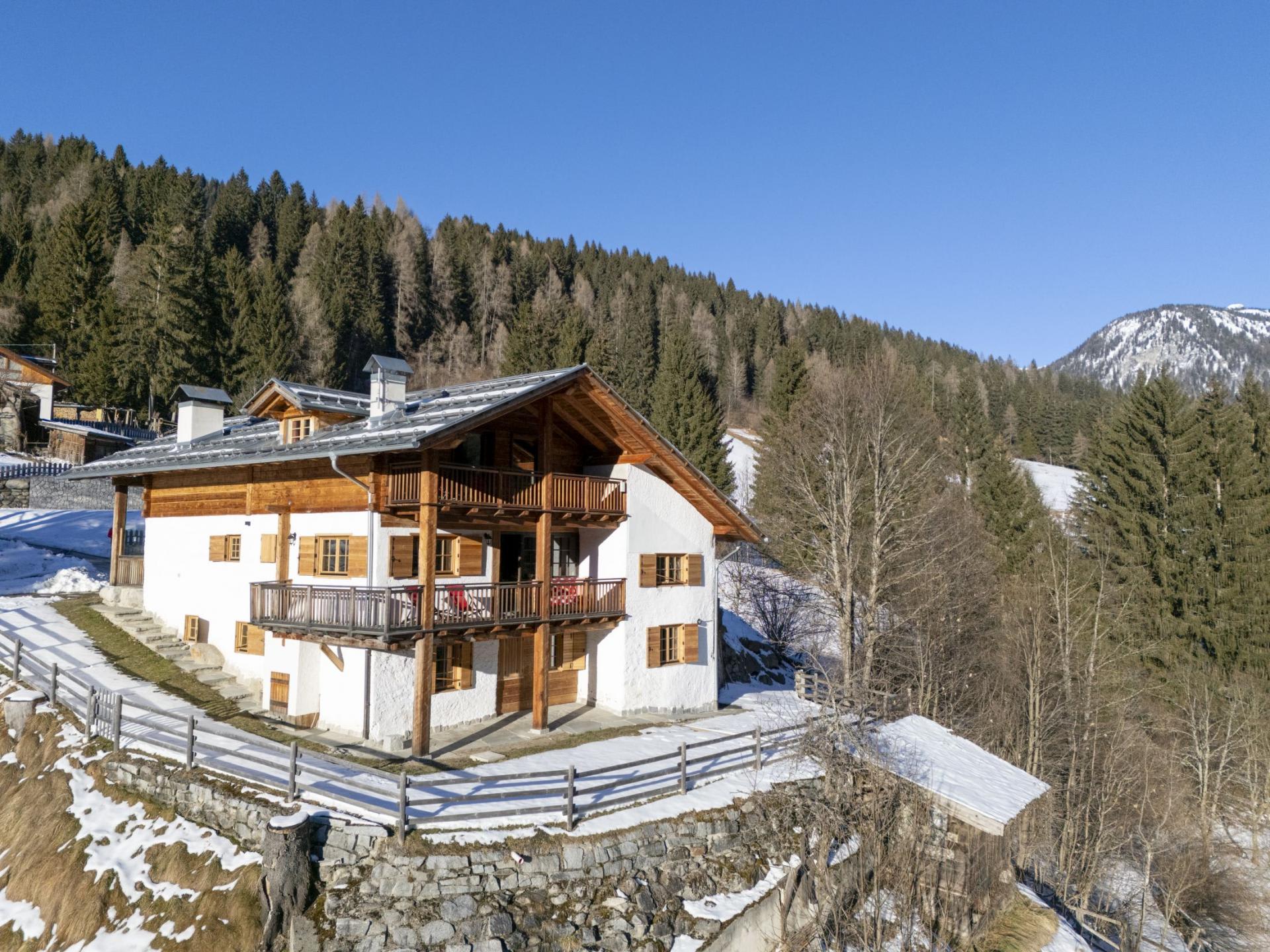
Arabba is the choice for strong skiers. The village is small and unpretentious, but the skiing is serious: direct access to the Marmolada glacier (3,265 metres, the highest point in the Dolomites) and steep north-facing pistes that hold snow well into April. Arabba is also the most challenging leg of the Sella Ronda circuit.
In our collection, all nine Arabba properties include both a sauna and hammam — a 100% wellness rate that reflects the village's Austrian-influenced traditions.
Kronplatz
Kronplatz (Plan de Corones) is the most family-oriented resort in the Dolomites, with wide beginner areas at altitude and a modern lift system that moves skiers efficiently. The summit plateau features architectural installations by Zaha Hadid (the Messner Mountain Museum) and a 360-degree panorama across the entire Dolomite range. The village of Brunico, at the base, is one of the most attractive small towns in South Tyrol.
When to Ski the Dolomites
The Dolomites ski season typically runs from early December to mid-April, with the Marmolada glacier extending into late spring in favourable years.
| Period | Conditions | Crowds | Value |
|---|---|---|---|
| Early Dec | Fresh snow, limited terrain open | Low | Good |
| Christmas–New Year | Full terrain, festive atmosphere | Peak | Premium |
| January | Best snow, cold temperatures | Moderate | Excellent |
| Feb half-term | Reliable cover, longer days | Peak | Premium |
| March | Spring snow, warm terraces, long days | Moderate | Good |
| Easter/April | Corn snow, glacier skiing | Low–moderate | Good |
January and March offer the best balance of conditions, daylight, and value. The Italian school holidays (settimana bianca, typically in February or March depending on region) create localised peaks — worth checking before booking.
The altitude advantage matters here. Canazei and Arabba both access terrain above 3,000 metres, providing snow security that lower-altitude resorts like Kronplatz (topping out at 2,275 metres) cannot match in a low-snow year.
Where to Stay in the Dolomites
Accommodation in the Dolomites skews toward hotels and apart-hotels rather than the standalone chalet model dominant in France. This reflects Italian mountain culture — the emphasis is on service, dining, and communal wellness facilities rather than private living space.
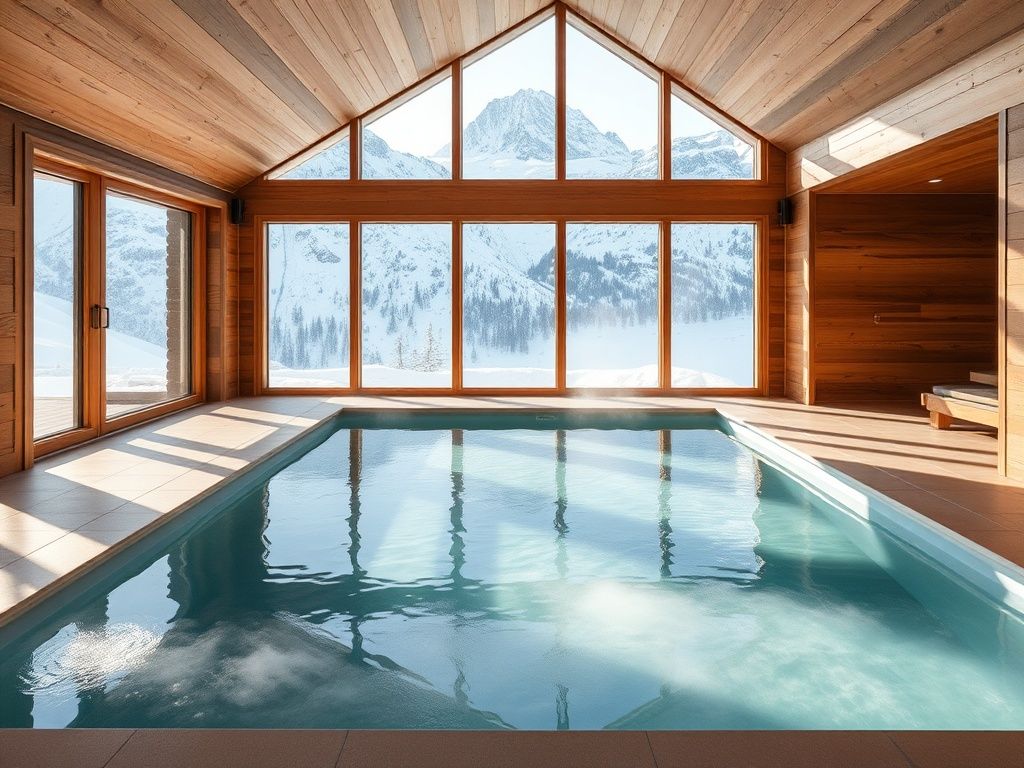
Across our Dolomites portfolio of over 110 properties, the amenity profile is distinctive. Sauna and spa access are near-universal. Pools appear in 73% of properties. Wine cellars, heated boot rooms, and hammams appear at rates well above the Alps-wide average.
For travellers who prefer a private chalet, Alta Badia and Arabba offer the strongest selection, with a combined 8 chalets featuring private hot tubs, fireplaces, and mountain views.
| Resort | Properties | With Sauna | With Hot Tub | With Pool |
|---|---|---|---|---|
| Madonna di Campiglio | 30 | 93% | 80% | 87% |
| Cortina | 19 | 79% | 53% | 42% |
| Selva Gardena | 18 | 100% | 83% | 78% |
| Canazei | 12 | 100% | 92% | 67% |
| Alta Badia | 10 | 90% | 100% | 80% |
| Arabba | 9 | 100% | 89% | 67% |
| Corvara | 9 | 100% | 89% | 89% |
| Kronplatz | 9 | 100% | 67% | 78% |
For families, Kronplatz and Madonna di Campiglio offer the widest range of accommodation with gentle ski areas nearby. For couples or small groups seeking a chalet with character, Alta Badia's collection — where every property has a hot tub and nearly all have a fireplace — is the most considered option in the region.
Getting to the Dolomites
The Dolomites are served by three airports, each with trade-offs.
Innsbruck (INN) — the closest for Val Gardena, Alta Badia, and Kronplatz. Transfer times of 90 minutes to 2 hours. Limited flight routes but efficient for those connecting via Munich or Vienna.
Venice Marco Polo (VCE) — the most common arrival point for Cortina and Arabba. Wide range of international flights. Transfer is 2 to 2.5 hours via the A27 motorway, with the final stretch through dramatic Dolomite passes.
Verona (VRN) — best for Madonna di Campiglio and the western Dolomites. Transfer around 2 to 2.5 hours. Good European low-cost carrier connections.
Munich (MUC) — a viable option for northern Dolomite resorts (Kronplatz, Val Gardena) at 3 to 3.5 hours. The drive south through the Brenner Pass is scenic and well-maintained year-round.
A car is more useful in the Dolomites than in a single mega-resort like the Three Valleys. While the Dolomiti Superski pass links everything on snow, exploring different valleys and villages — especially for non-skiers — is easier with your own transport.
Discover Skiing in the Dolomites
Powder Edition brings together over 110 properties across the Dolomites, from design-forward hotels in Cortina to traditional chalets in Alta Badia with fireplaces and wine cellars. Explore our Cortina collection, browse Madonna di Campiglio, or view all Dolomites properties.
Frequently Asked Questions
Is the Dolomiti Superski pass worth it?
The Dolomiti Superski pass covers 1,200 kilometres of pistes across 12 interlinked ski areas, including the Sella Ronda circuit, Cortina, Kronplatz, and Madonna di Campiglio. For skiers staying more than three days or planning to explore multiple valleys, the pass offers significantly better value than buying individual area tickets. A six-day adult pass costs approximately €350 for the 2025/26 season.
What is the Sella Ronda and how long does it take?
The Sella Ronda is a 40-kilometre circular ski route connecting four Dolomite valleys — Val Gardena, Val di Fassa, Arabba, and Alta Badia — around the Sella massif. Skied at a comfortable pace with lunch stops, it takes five to six hours to complete. Strong skiers can finish in under four hours. The circuit runs in both clockwise (orange) and counter-clockwise (green) directions, each offering different terrain perspectives.
When is the best time to ski the Dolomites?
January offers the most reliable snow with moderate crowds, while March provides longer days, warm terrace lunches, and spring snow conditions. Late December is festive but crowded and expensive. For budget-conscious travellers, early December and mid-January offer the best value with good snow conditions. The Marmolada glacier above Arabba extends the season into late April in favourable years.
How does skiing in the Dolomites compare to the French Alps?
The Dolomites favour wide, impeccably groomed intermediate pistes through some of the most dramatic scenery in the Alps, while French mega-resorts like the Three Valleys offer higher total piste kilometres and more aggressive off-piste terrain. The Dolomites excel in food, wellness amenities, and scenic variety. The French Alps typically offer more standalone chalets and self-catered options, whereas Dolomite accommodation centres on hotels and apart-hotels with extensive communal facilities.
Do I need a car in the Dolomites?
A car is recommended for exploring multiple valleys, visiting different restaurants, and accessing villages beyond the ski lift network. The Dolomiti Superski bus service connects major resorts, but schedules can be limited in the evening. For single-resort stays in well-connected areas like Selva Gardena or Madonna di Campiglio, a car is not essential — local shuttles and ski lifts cover the main terrain.
Is the Dolomites good for beginners?
Kronplatz and Alta Badia are the strongest beginner resorts in the Dolomites, with wide nursery slopes at altitude, gentle blue runs, and modern lift systems designed for ease of use. Madonna di Campiglio also offers excellent beginner terrain with a dedicated learner area near the town centre. The quality of grooming across the Dolomites is exceptional — arguably the best in the Alps — which benefits less experienced skiers significantly.