Val Thorens Skiing: A Complete Guide to Europe's Highest Ski Resort
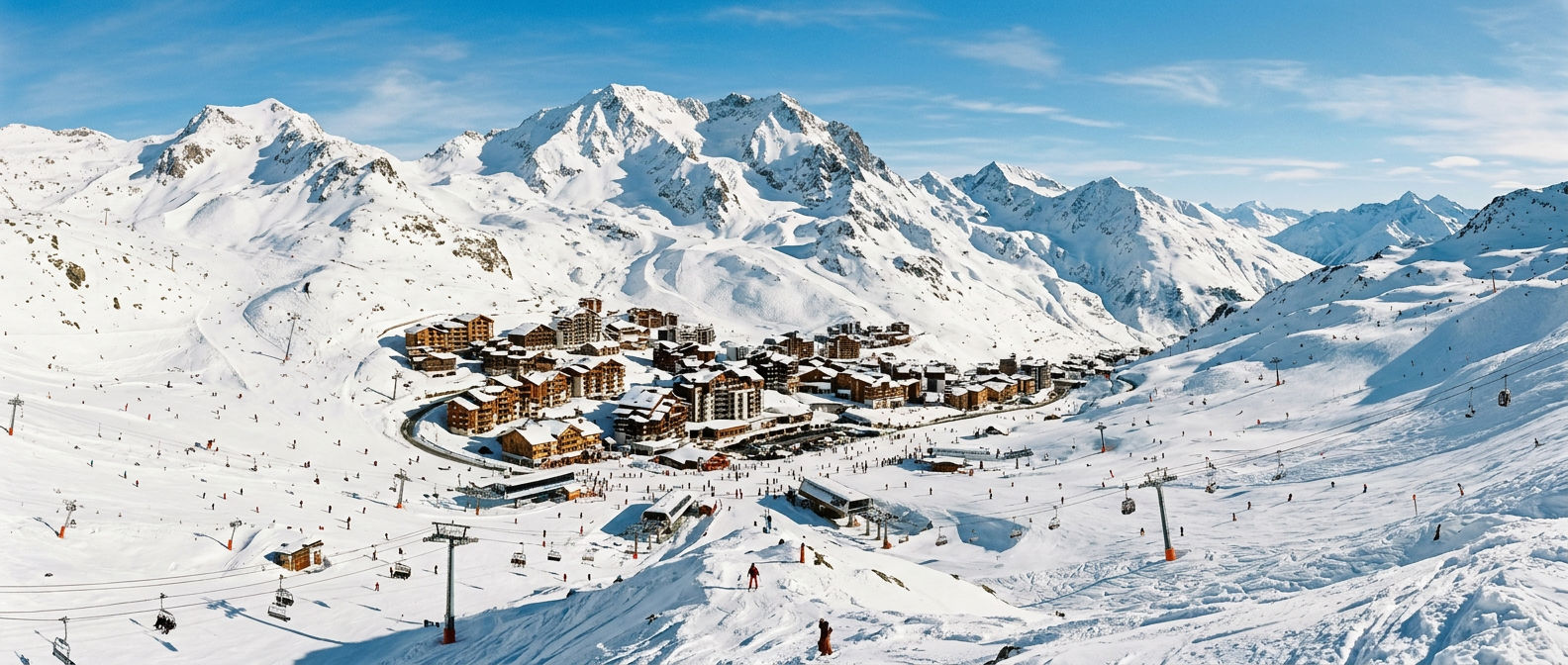
Val Thorens is Europe's highest ski resort, sitting at 2,300m in the Belleville Valley at the head of the Three Valleys — the world's largest linked ski area. That altitude translates into the most reliable snow record in the Alps, a season that stretches from late November to early May, and terrain that climbs to 3,230m at the summit of the Cime de Caron. For skiers who prioritise snow quality and vertical range over village charm, Val Thorens delivers in ways that lower-altitude resorts simply cannot match.
The Ski Area: 150km of High-Altitude Terrain
Val Thorens and its linked Orelle sector offer 150km of marked pistes served by 33 lifts, with the highest point at 3,230m on the Cime de Caron. The terrain is split roughly 20% beginner, 45% intermediate, and 35% advanced, with the majority of runs sitting above 2,000m — a distinction that matters when lower resorts are dealing with thin cover in early or late season.
The Cime de Caron cable car is the centrepiece. From the summit, a panorama stretches from Mont Blanc to the Écrins massif, and several long red and black runs descend over 1,400m of vertical back to the resort. The Glacier de Péclet, accessible from the 3,000m mark, offers north-facing slopes that hold powder days after the rest of the mountain has been tracked out.
| Terrain Level | Percentage | Notable Runs |
|---|---|---|
| Beginner (green) | 20% | Plein Sud, Moraine |
| Intermediate (blue/red) | 45% | Cime de Caron red, Col de l'Audzin, Dalles |
| Advanced (black) | 35% | Combe de Caron, Glacier runs, Couloir du Borgne |
For intermediates, the long cruising runs from Pointe de la Masse (2,804m) across to the Orelle sector are among the finest in France — wide, well-groomed, and rarely crowded on weekdays. The snowpark at the base of the Plateau lift is consistently ranked among the top three in France.
Beyond the Val Thorens domain, a single Three Valleys lift pass grants access to Méribel, Courchevel, Les Menuires, and St Martin de Belleville — 600km of pistes in total. Strong skiers can reach Courchevel 1850 within 90 minutes of lift-linked skiing.
Snow Reliability: Why Altitude Changes Everything
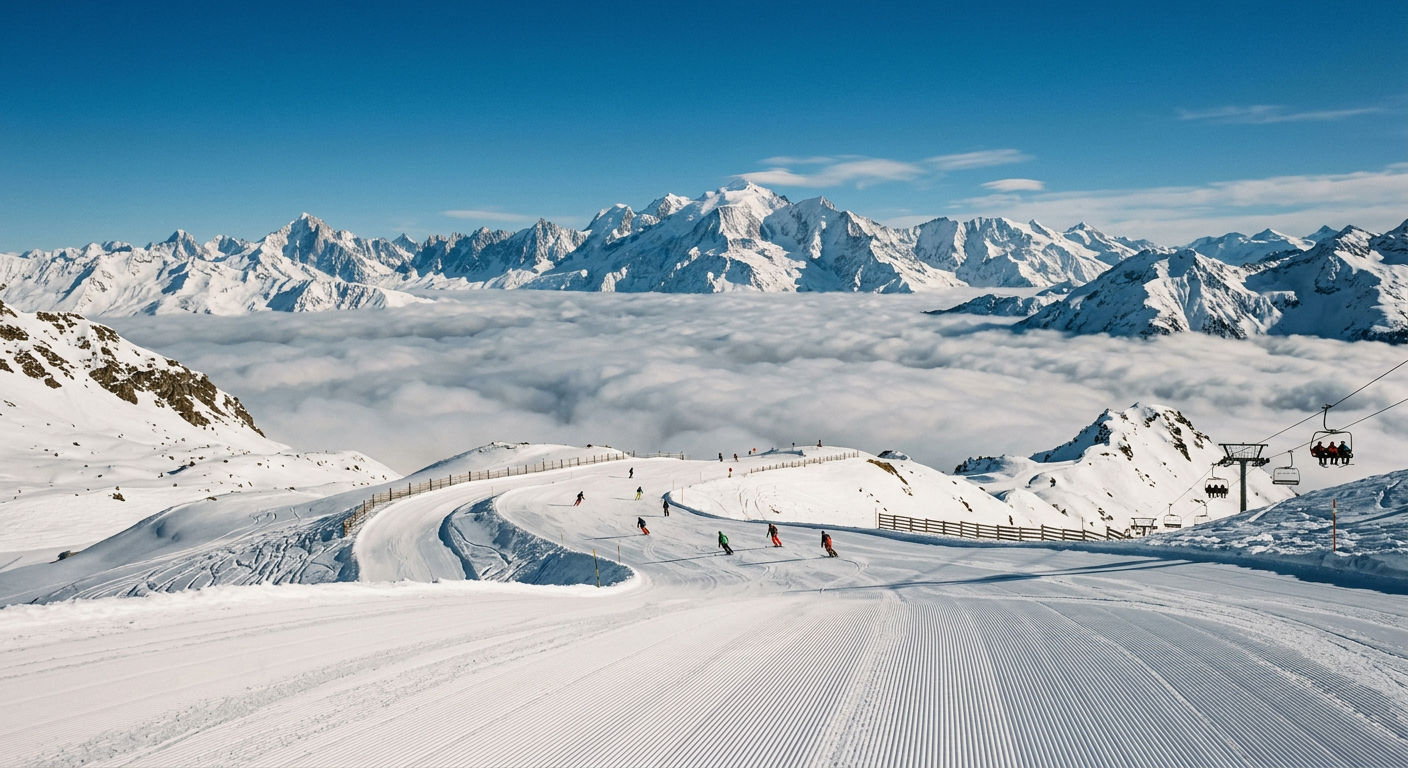
Val Thorens averages over 6m of natural snowfall per season, and its high altitude means that precipitation falls as snow rather than rain well into April. The resort's north-facing orientation above 2,500m preserves snow quality long after south-facing resorts have turned to slush.
The combination of altitude and aspect gives Val Thorens one of the longest reliable seasons in the Alps — typically late November through early May, with glacier terrain sometimes extending into June. For context, the average snow depth at resort level (2,300m) in March sits above 2m in most seasons.
| Month | Avg. Snow Depth (resort) | Conditions |
|---|---|---|
| December | 80–120cm | Early season; upper runs excellent, lower runs building |
| January | 120–180cm | Peak powder month; cold temperatures preserve quality |
| February | 150–220cm | Deepest snowpack; busiest period |
| March | 160–250cm | Often the snowiest month; warm sun, cold snow above 2,500m |
| April | 100–180cm | Spring skiing; mornings firm, afternoons soft |
Snowmaking covers 45% of the pistes, primarily on the lower runs back to the village and the beginner areas. Above 2,500m, it is rarely needed.
The Village: Purpose-Built but Evolving
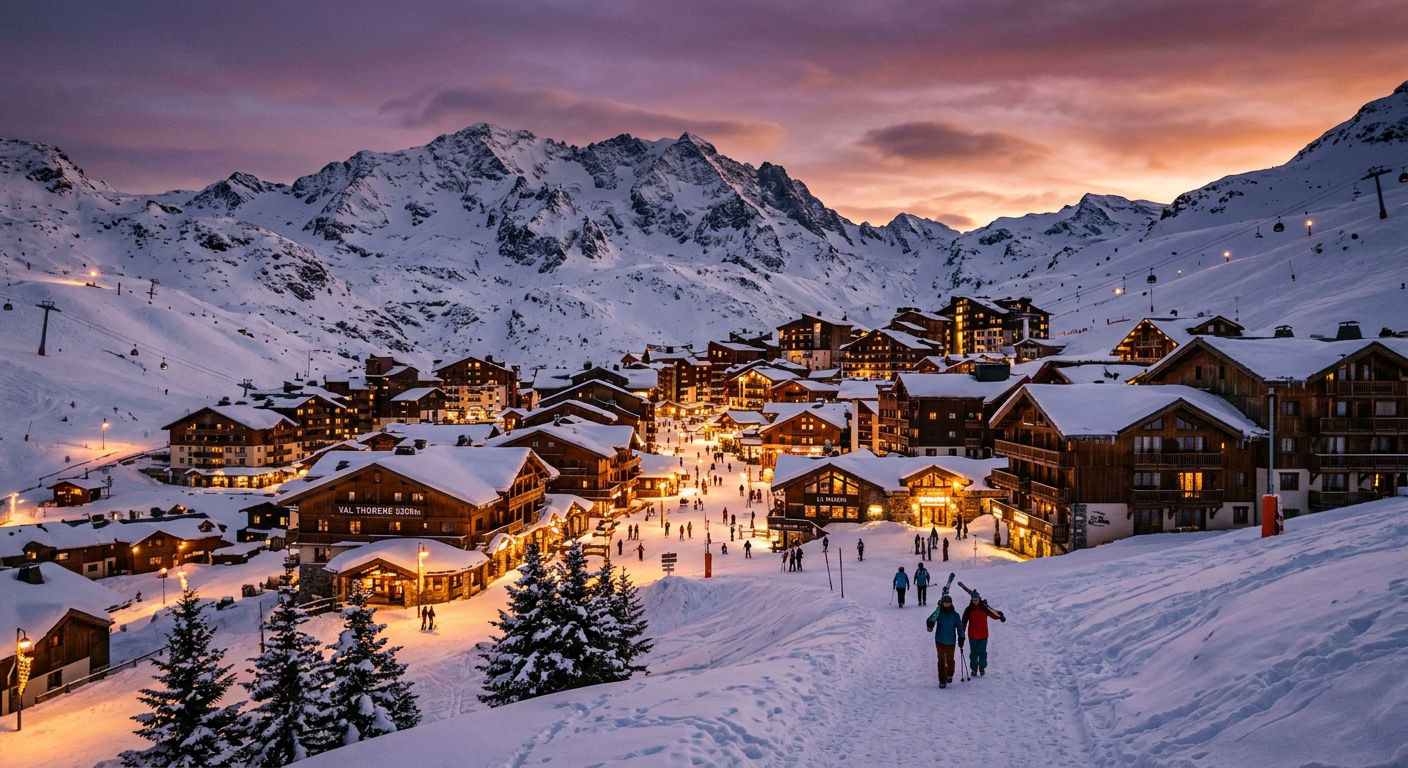
Val Thorens is a purpose-built resort, developed in 1971 with ski access as the primary design principle. The architecture is functional rather than picturesque — concrete and glass rather than carved wood — but the village has matured considerably over the past decade. Recent redevelopment has added warmer facades, pedestrianised squares, and a growing number of independent restaurants alongside the expected resort-town amenities.
The compact layout is a genuine advantage. The entire village is ski-in ski-out by design: nearly every building sits directly on or within a few steps of a piste. There are no shuttle buses, no long walks in ski boots, no transfers between accommodation and lifts. You step outside, clip in, and ski.
Après-ski is more energetic here than in Méribel or Courchevel. The Folie Douce at the top of the Plein Sud lift draws crowds from mid-afternoon, and bars like the Malaysia and the Frog & Roastbeef keep the village lively into the evening. It is not St Anton's all-night intensity, but it has more pulse than the quieter Three Valleys villages.
Where to Stay: Chalets, Hotels, and Apartments
Val Thorens offers a broader accommodation mix than many purpose-built resorts. In our current collection of 25 Val Thorens properties, every single one provides ski-in ski-out access — a direct result of the resort's design philosophy. All 25 also include a sauna, and 15 feature a private hot tub.
The portfolio spans three distinct tiers.
Hotels with Altitude
Fourteen of our Val Thorens properties are hotels, ranging from the five-star Hôtel Pashmina — a member of the Leading Hotels of the World with a 1,500m² spa — to the more accessible Altapura and Fahrenheit Seven. Hotel stays suit couples or smaller groups who want full-service convenience: concierge, on-site dining, and spa access without the commitment of a full chalet booking.
Private Chalets
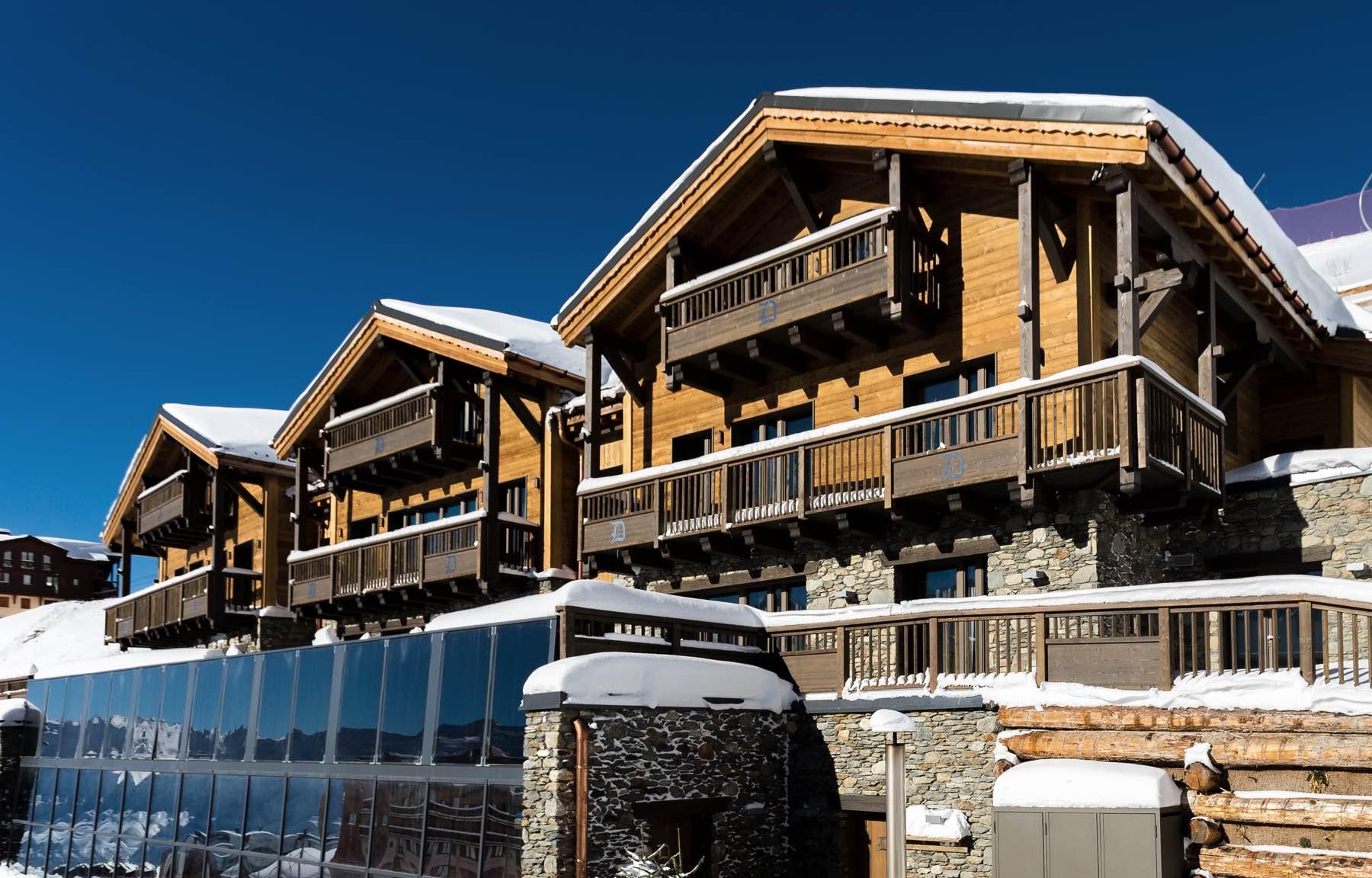
Seven chalets in our collection range from €15,200 to €155,000 per week, with capacities from 8 to 15 guests. At the accessible end, Chalet Mathilde offers four bedrooms with catered service and a location under five minutes from the nearest lift.
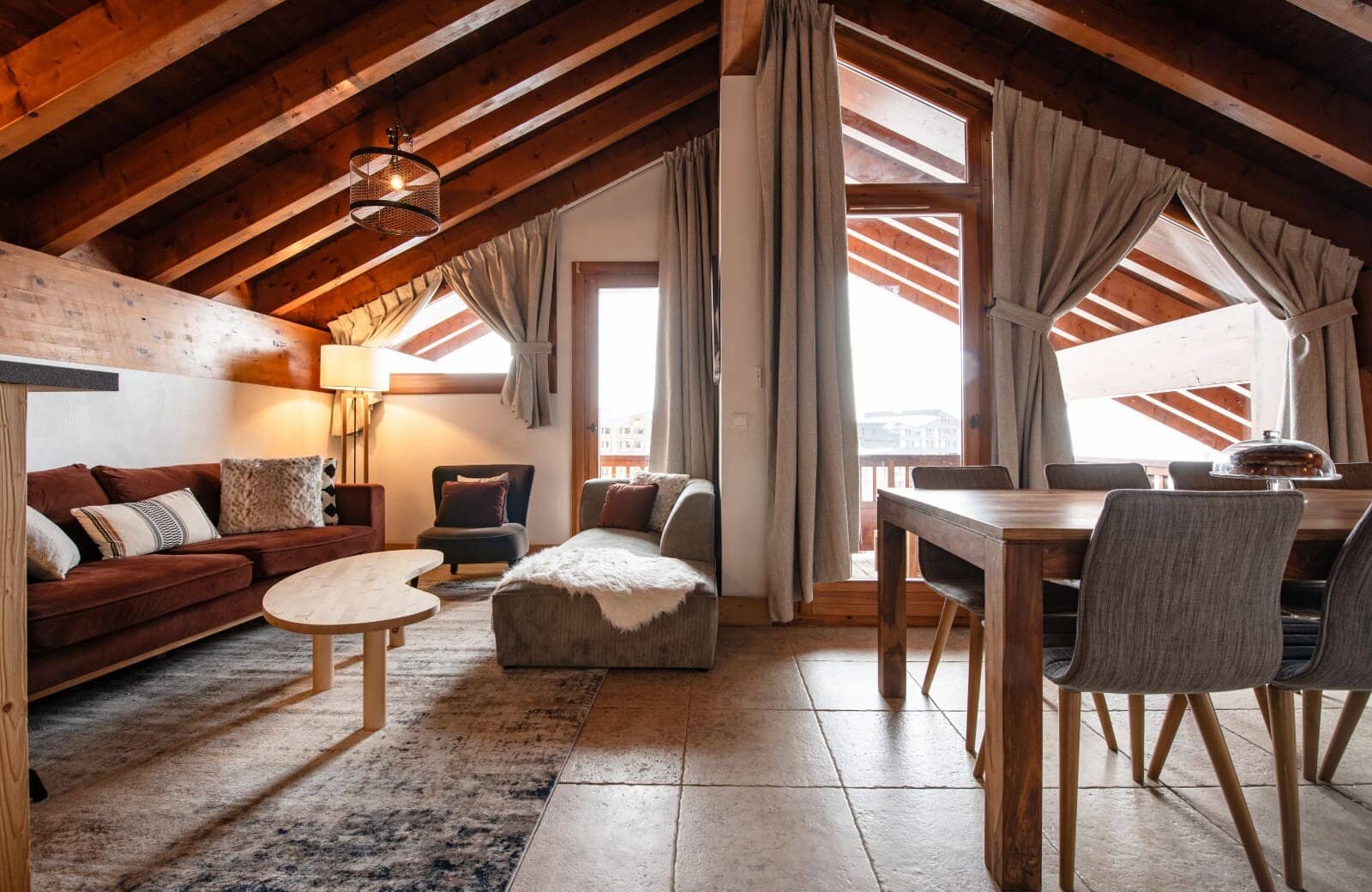
For groups seeking more space, Chalet Cullinan delivers six bedrooms accommodating 10 guests with full ski-in ski-out access, cinema room, and spa facilities.
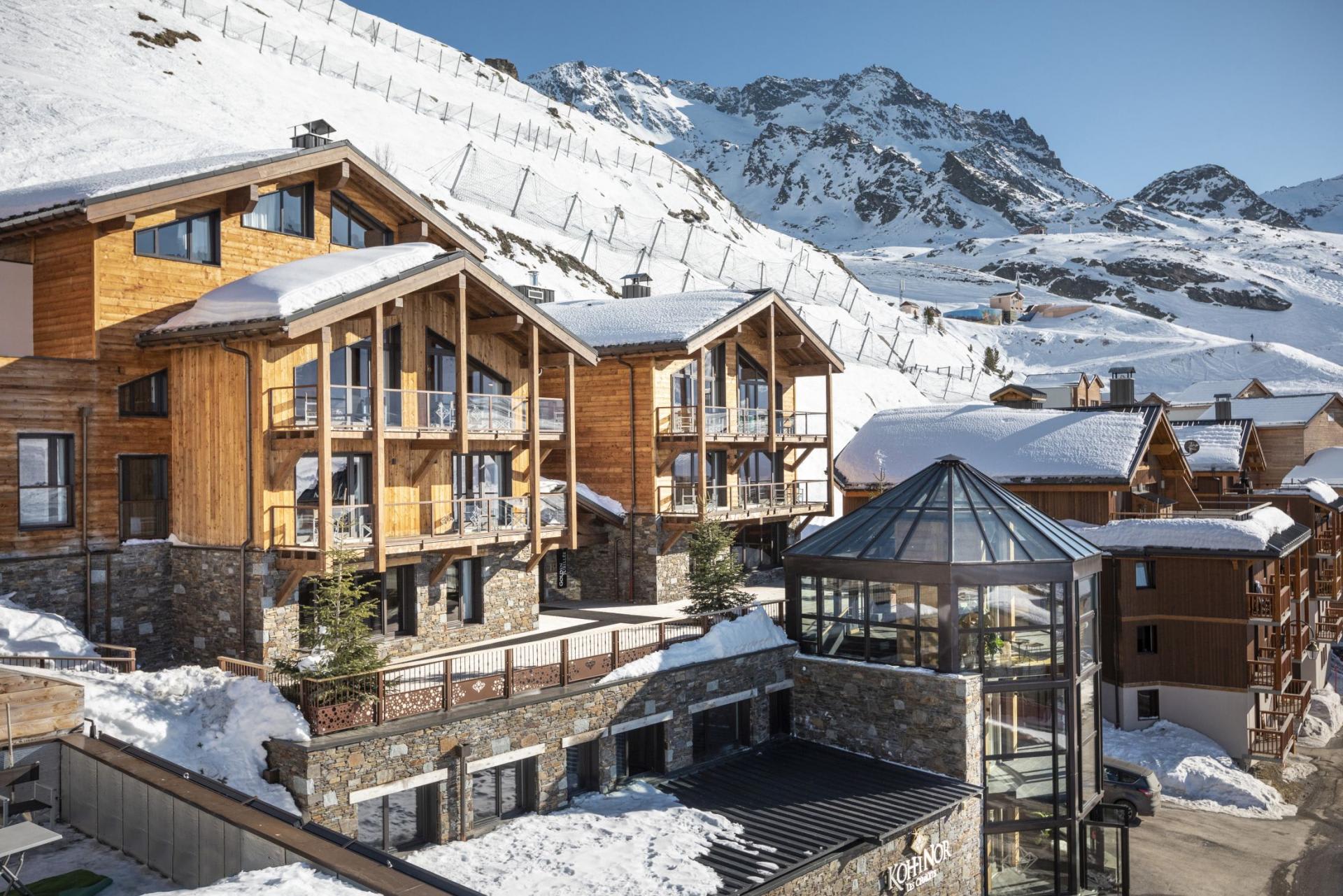
At the ultra-luxury end, Chalet La Datcha Val Thorens represents some of the finest chalet accommodation in the Three Valleys — eight bedrooms, 15 guests, catered service, and a weekly rate that reflects an exceptional level of fit-out and service.
Apartments
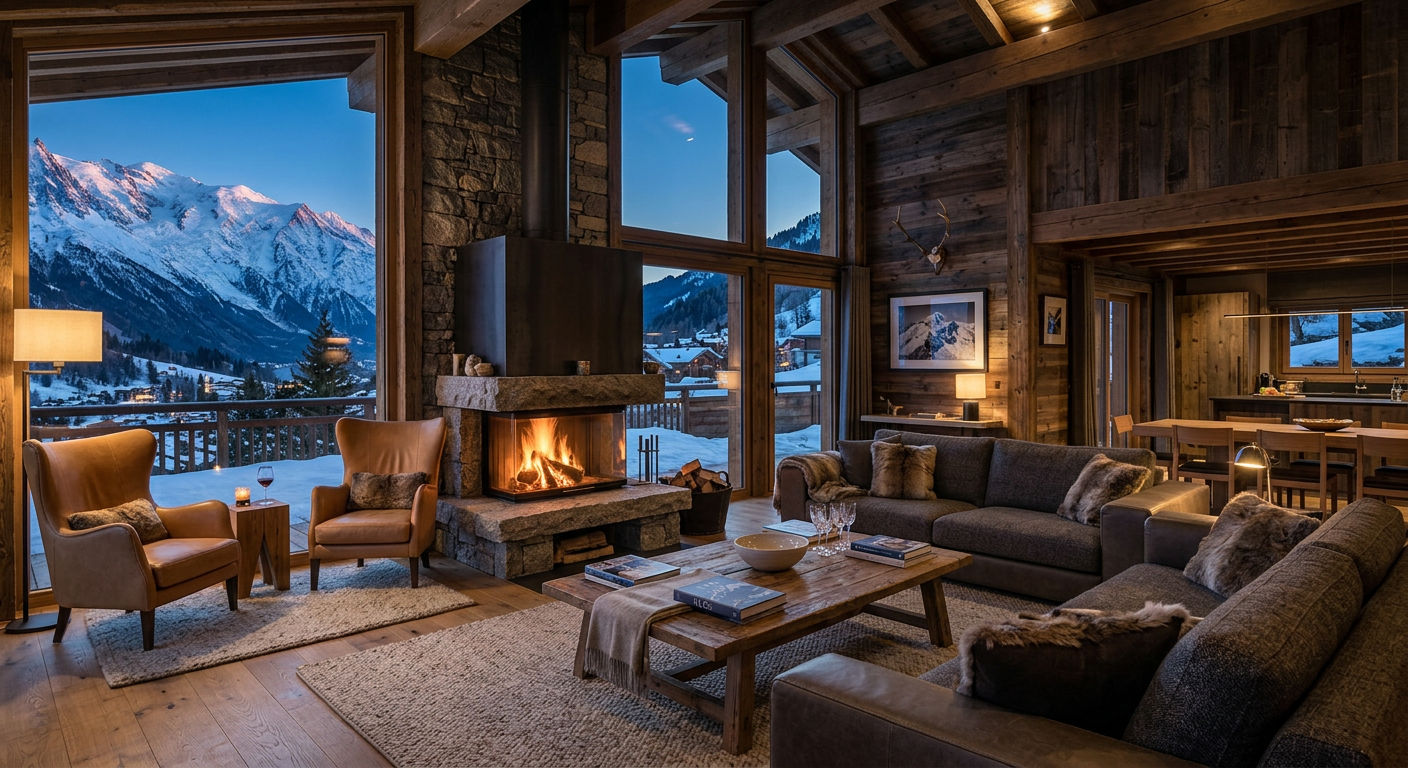
Four self-catered and serviced apartments suit smaller groups or families seeking independence. Prices start from around €7,800 per week for a three-bedroom unit — a more accessible entry point to Val Thorens than the chalet market.
Across the full collection, 17 of our 25 properties include a pool, 21 feature a hammam, and 16 accommodate 10 or more guests — reflecting the resort's orientation toward group trips and extended ski weeks.
Getting There: Airports and Transfers
Val Thorens sits deep in the Belleville Valley, which means longer transfer times than resorts closer to the motorway. The trade-off is that altitude and snow conditions at the far end of the valley are significantly better.
| Airport | Distance | Transfer Time | Notes |
|---|---|---|---|
| Chambéry (CMF) | 120km | 1h 45min | Closest; limited flight routes, mostly UK charters |
| Geneva (GVA) | 200km | 2h 30min | Best international connections; motorway most of the route |
| Lyon (LYS) | 210km | 2h 45min | Good budget airline options; slightly longer but easier drive |
| Grenoble (GNB) | 170km | 2h 15min | Seasonal; fewer flights but shorter distance |
The final 37km from Moûtiers — where the motorway ends — climbs through Les Menuires and takes around 45 minutes. The road is well-maintained and snow-cleared, but chains or winter tyres are legally required between November and March.
Saturday is the standard changeover day. Aim to arrive by mid-afternoon to collect lift passes and settle in before dark. The resort's compact layout means you can be skiing within minutes of reaching your accommodation.
Best Time to Visit
Val Thorens's altitude compresses the usual "best time to ski" decision. Snow is reliable from opening day in late November, and the resort rarely suffers the thin-cover anxiety that affects lower resorts in December.
January is the sweet spot for snow quality and quiet slopes — cold temperatures, consistent powder, and no school holidays except the first week. February brings half-term crowds across Europe but also the deepest snowpack. March offers the best combination: long days, warm sunshine at lunch, and cold snow on the upper mountain.
For value, the first two weeks of December and the last two weeks of April deliver strong skiing at significantly lower accommodation rates. The snow at 2,300m holds well in both windows.

Explore Val Thorens
Powder Edition brings together a curated collection of chalets, hotels, and apartments in Val Thorens — all with ski-in ski-out access and in-house wellness facilities. Browse our Val Thorens collection, explore properties with hot tubs, or discover chalets across the wider Three Valleys.
Frequently Asked Questions
How high is Val Thorens?
Val Thorens village sits at 2,300m, making it the highest ski resort in Europe. The ski area extends to 3,230m at the summit of the Cime de Caron. This altitude ensures reliable snow cover from late November through early May, with most terrain sitting above the rain line that can affect lower resorts.
Is Val Thorens good for beginners?
Val Thorens has dedicated beginner areas at village level, including the free Plein Sud and Moraine slopes. The consistent snow cover makes learning conditions more reliable than at lower-altitude resorts. However, the resort's terrain skews intermediate to advanced — beginners who want the widest choice of gentle runs may find Méribel or the lower Three Valleys villages better suited.
How does Val Thorens compare to Courchevel?
Val Thorens offers superior snow reliability, a longer season, and more accessible pricing. Courchevel delivers a more refined village experience, broader dining options, and a wider range of luxury accommodation. Both connect via the Three Valleys lift pass. Val Thorens suits snow-focused skiers; Courchevel suits those who value village atmosphere and off-slope culture equally.
When does Val Thorens ski season start and end?
The season typically runs from the last week of November through the first week of May — approximately 23 weeks. This is one of the longest seasons in the Alps, made possible by the resort's 2,300m base altitude. Glacier terrain above 3,000m can extend limited skiing into June in strong snow years.
Can you drive to Val Thorens?
Yes. Val Thorens is accessible by car from Geneva (2h 30min), Lyon (2h 45min), or Chambéry (1h 45min). The final approach from Moûtiers climbs 37km through Les Menuires. Winter tyres or chains are legally required from November to March. Saturday changeover traffic can add 30–45 minutes to the final section.
Is Val Thorens ski-in ski-out?
Val Thorens was purpose-built around ski access. The village layout means virtually all accommodation offers ski-in ski-out or near-piste access. In our current collection of 25 Val Thorens properties, every one provides ski-in ski-out access — the highest proportion of any resort in our portfolio.