Arlberg Skiing: A Complete Guide to Austria's Legendary Linked Ski Area
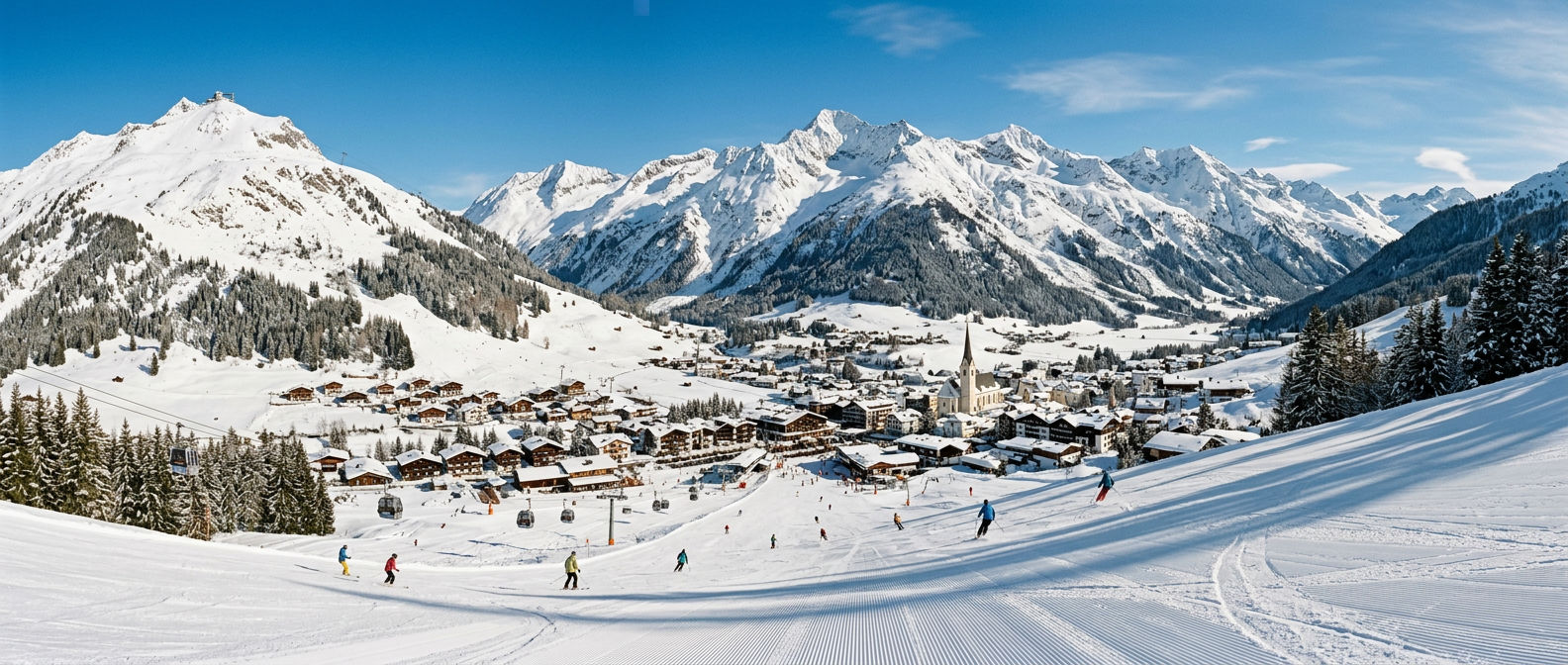
The Arlberg is where alpine skiing began. In the 1920s, Hannes Schneider developed the Arlberg technique in St. Anton, and the region has shaped the sport ever since. Today, five villages — St. Anton, Lech, Zürs, St. Christoph, and Oberlech — share a single lift pass covering 305 km of piste, 200 km of off-piste routes, and 88 lifts. It is Austria's largest interconnected ski area and, by most accounts, its finest.
Why the Arlberg Stands Apart
The Arlberg ski area ranks among Europe's most complete ski destinations, combining serious terrain with refined village culture across five interconnected resorts. Unlike single-village destinations, the Arlberg offers genuine variety within a single pass — from St. Anton's steep north-facing bowls to Lech's wide, cruising boulevards.
The terrain spans 1,300 to 2,811 metres in altitude, with 305 km of marked runs and roughly 200 km of documented off-piste itineraries. Snow reliability is strong: the Arlberg sits in one of the snowiest corridors in the Northern Alps, averaging 7 to 11 metres of snowfall per season depending on elevation.
What distinguishes the Arlberg from other large Austrian ski areas — the SkiWelt, for example, or Saalbach — is the sheer quality of the terrain. Over 40% of the marked runs are classified red or black, and the off-piste is genuinely world-class. The Valluga, at 2,811 metres above St. Anton, offers steep descents that require a guide. Lech's Mehlsack and Zürs's Madloch provide challenging powder runs that draw advanced skiers from across Europe.
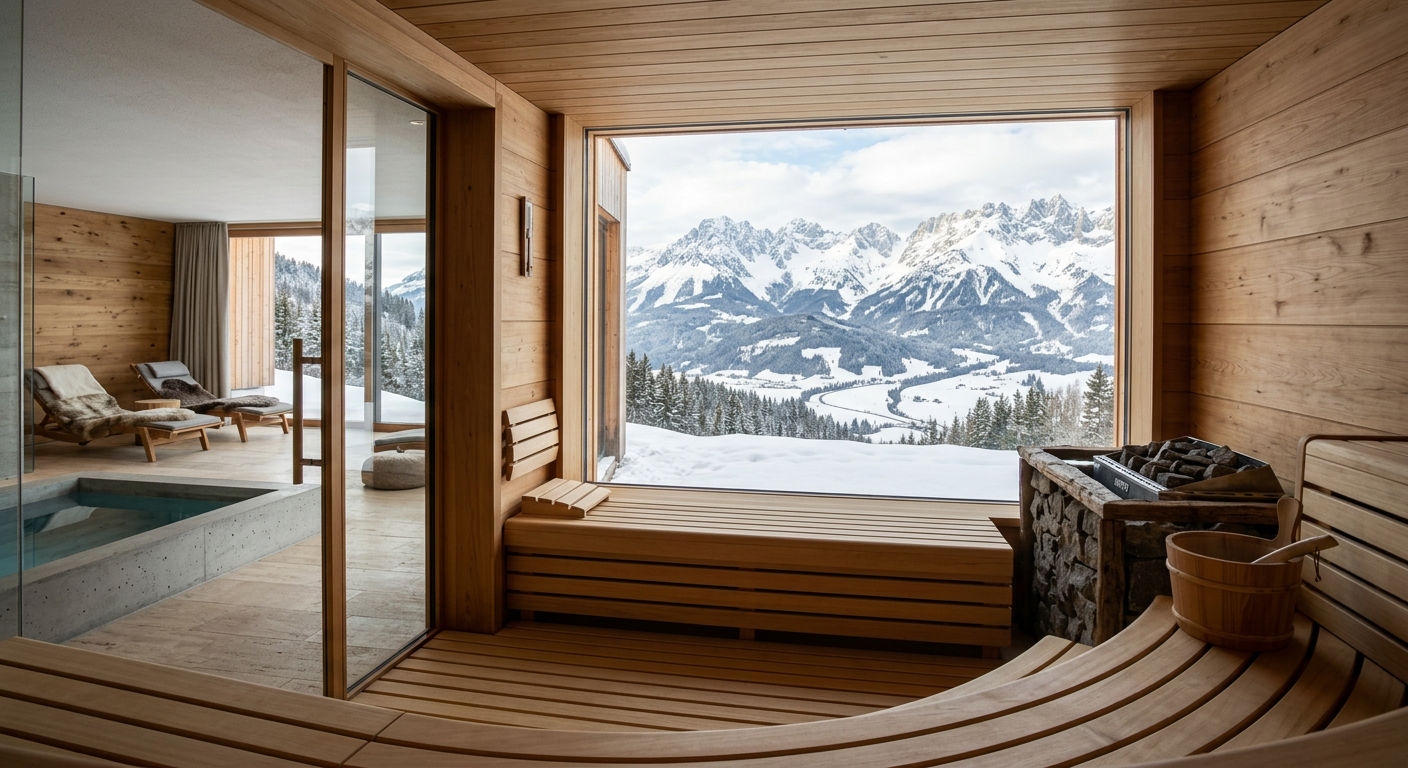
In our current collection of 173 Arlberg chalets, every single property includes a sauna — a detail that reflects how deeply the region's wellness culture is woven into the accommodation standard.
The Arlberg at a Glance
| Detail | Arlberg |
|---|---|
| Linked ski area | 305 km piste, 88 lifts |
| Altitude | 1,300 m – 2,811 m |
| Off-piste | ~200 km documented routes |
| Snowfall | 7–11 m average per season |
| Season | Late November – late April |
| Villages | St. Anton, Lech, Zürs, St. Christoph, Oberlech |
| Nearest airport | Innsbruck (100 km / 75 min) |
| Ski Arlberg pass | Covers all five villages |
| Run split | 43 blue, 86 red, 37 black |
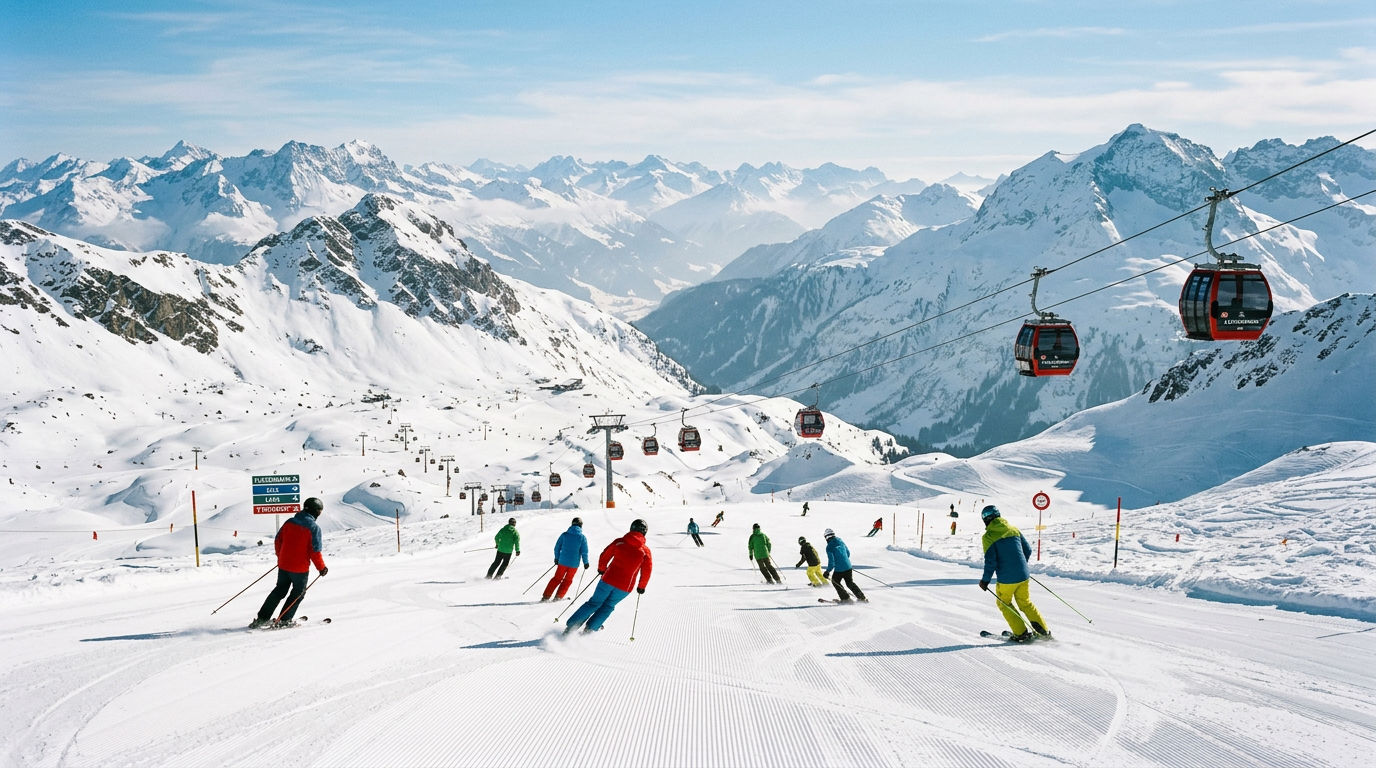
The Ski Arlberg pass replaced the old multi-area system in 2016/17 when the Flexenbahn gondola physically linked St. Anton and Lech/Zürs for the first time. Before that connection, skiers had to take a bus between the two sectors. Now, you can ski the entire area on lifts alone.
Where to Stay: Village by Village
Each Arlberg village has a distinct character. Choosing the right base depends on your skiing priorities, group size, and appetite for nightlife versus quiet refinement.
St. Anton — The Skier's Village
St. Anton is the Arlberg's largest and liveliest village, purpose-built around serious skiing and an equally serious après-ski scene. The Mooserwirt, Krazy Kanguruh, and Basecamp bars fill up by 3 PM and stay loud until late. This is not the Arlberg's quiet side.
The skiing from St. Anton is the steepest in the region. The Valluga, Rendl, and Gampen-Kapall sectors offer sustained vertical and genuine off-piste challenges. Intermediates are well served too — the long runs from Galzig down to St. Anton village are among the most satisfying cruisers in Austria.
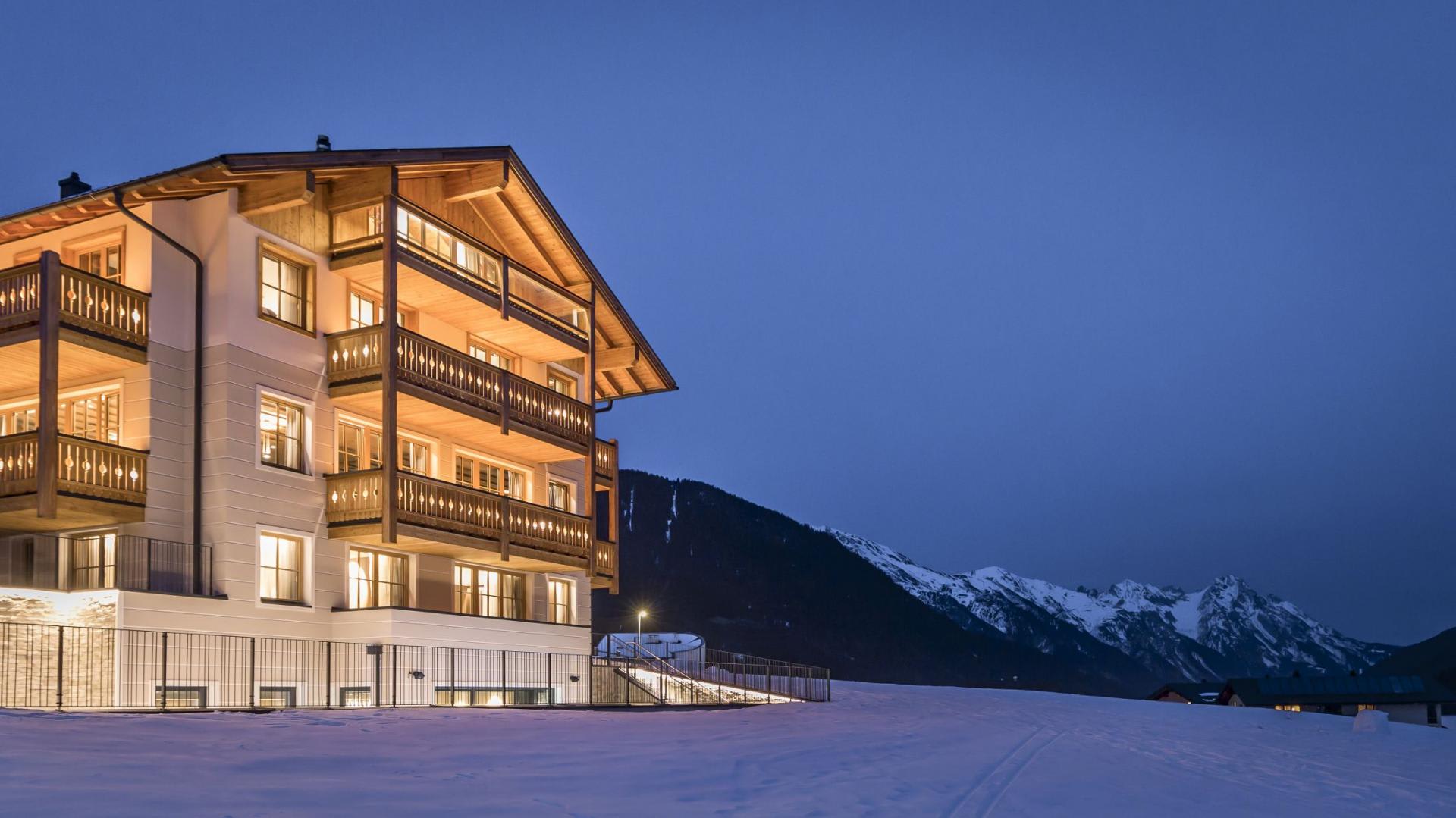
At time of writing, Powder Edition lists 83 properties in St. Anton. Of those, 42 include a private hot tub and 54 accommodate ten or more guests — making it the strongest Arlberg village for large groups. Prices range from around €1,100 per week for a compact apartment to €165,000 per week for the most appointed chalets. Explore our St. Anton collection.
Among the larger catered chalets in our St. Anton collection, Chalet Lena stands out for its combination of pool, hot tub, and sauna alongside direct access to the Nasserein gondola area.
Lech — Refined and Family-Friendly
Lech is the Arlberg's most polished village — quieter, more manicured, and considerably more expensive than St. Anton. The village centre is car-free in winter, the architecture is consistently traditional, and the dining options range from Michelin-starred restaurants to cosy Stuben.
The skiing from Lech is broad and varied. The Rüfikopf sector reaches the highest terrain, while Oberlech (a car-free sub-village above Lech, accessible by gondola) serves as a family-friendly base with direct slope access. The runs around Zuger Hochlicht and Kriegerhorn are among the best intermediate terrain in the Alps.
In our current Lech portfolio of 65 properties, 48 include a hot tub — nearly three-quarters of the collection. Lech also has the widest price range of any Arlberg village, from €1,140 per week to €410,000 per week, reflecting everything from simple apartments to some of the most opulent mountain residences in Europe. Browse Lech chalets.
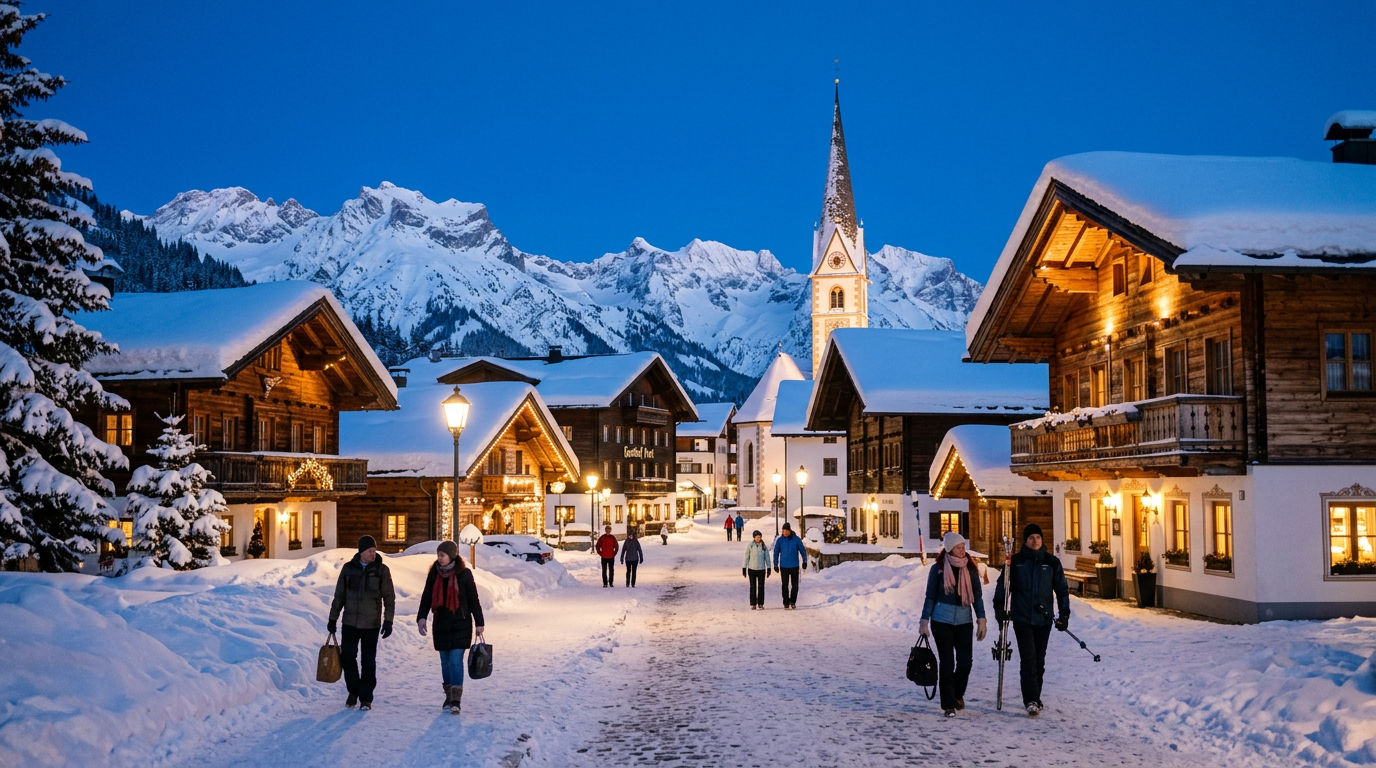
Le Chalet in Lech exemplifies the village's refined character — a seven-bedroom property with pool, wine cellar, and the kind of considered interior design that Lech does better than most Alpine resorts.
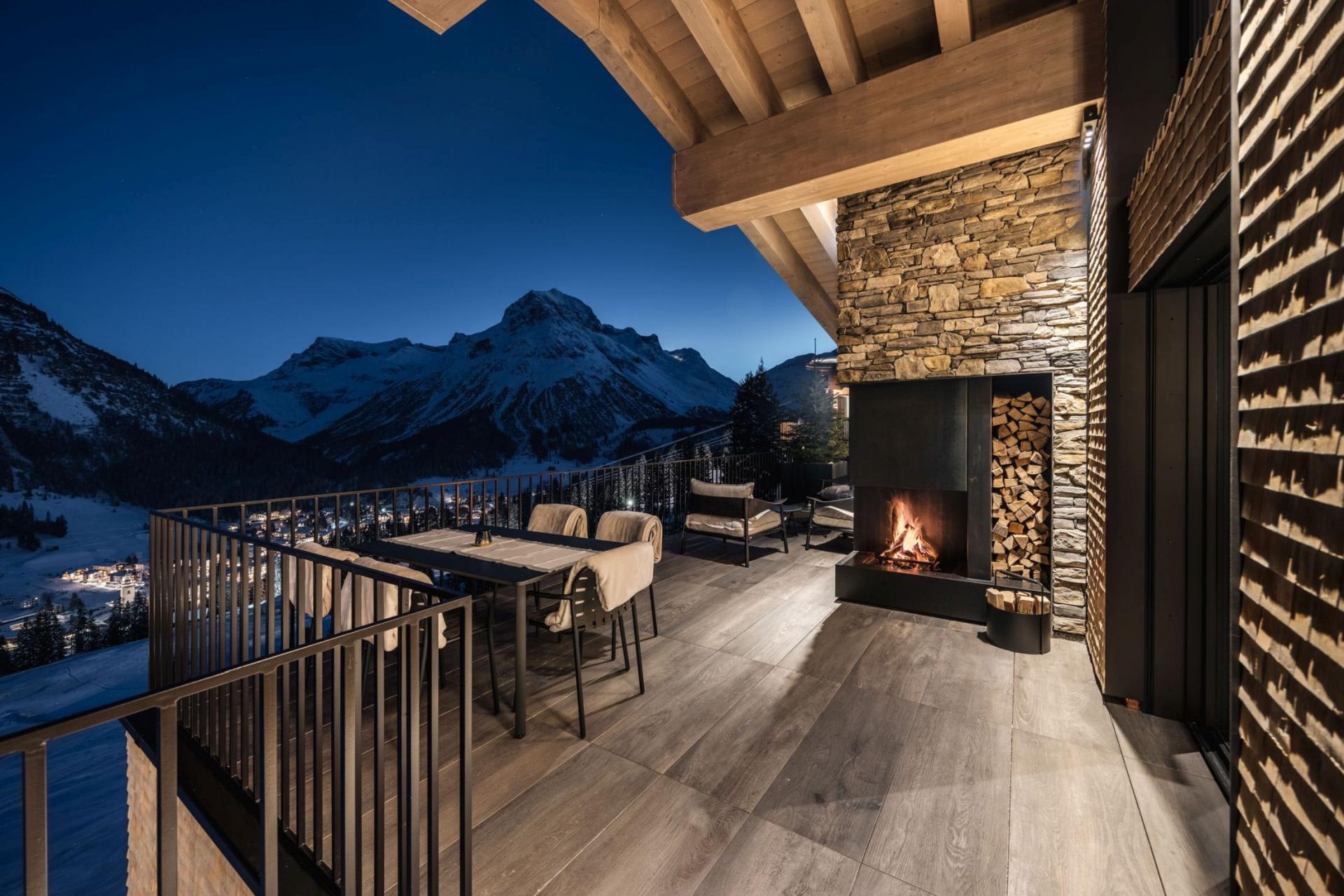
Zürs — Intimate and Snow-Sure
Zürs is the smallest of the main Arlberg villages and, at 1,720 metres, one of the highest. It sits directly on the Flexenpass road between St. Anton and Lech, which means it catches snow from both weather systems. The village has a handful of hotels and a cluster of chalets, no real high street, and an atmosphere that feels more like a private club than a public resort.
The skiing from Zürs is compact but well designed. The Trittkopf sector links directly to St. Anton via the Flexenbahn, while the Madloch and Muggengrat runs drop into Lech. Zürs is also where Austrian ski racing has deep roots — the village hosted the first-ever slalom race in 1922.
Powder Edition's 15 Zürs properties tend toward the refined end. Ten include a hot tub, and all 15 have a sauna. Prices start from €1,060 per week. View Zürs properties.
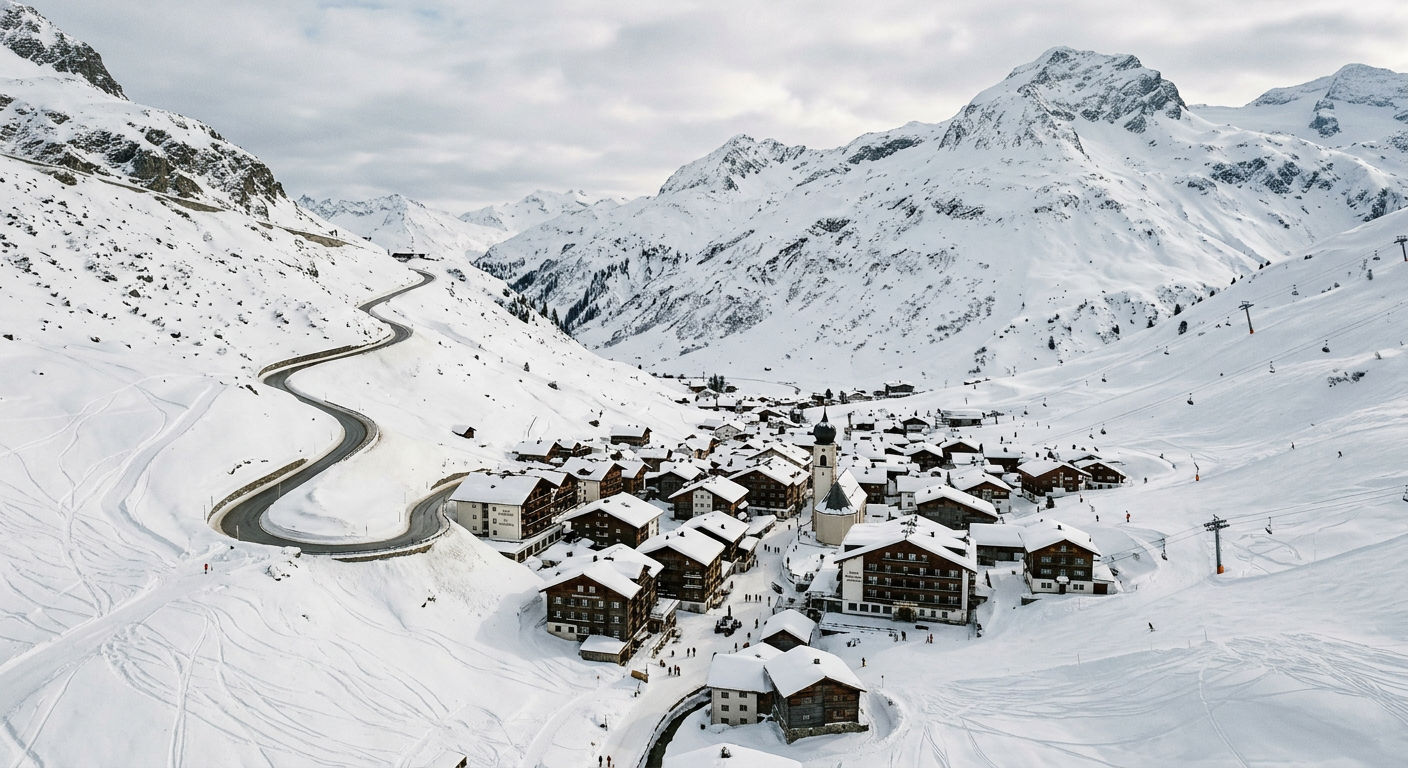
Chalet Hannes Schneider — named after the pioneer of the Arlberg technique — is a six-bedroom property with chef service, pool, and a front-row position above the village.
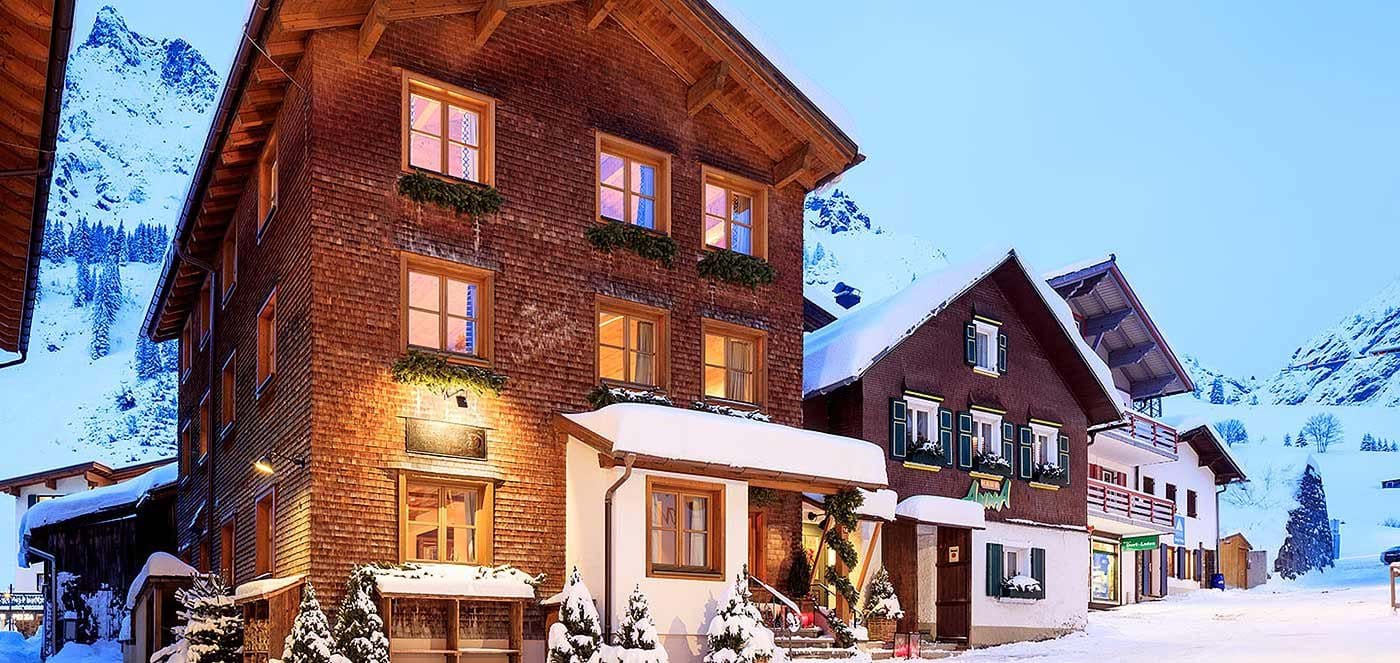
St. Christoph — Slope-Side Simplicity
St. Christoph sits at 1,800 metres on the Arlberg Pass road, directly between St. Anton and Zürs. It is the highest village in the Arlberg and the most compact — essentially a single cluster of hotels and a handful of chalets with immediate lift access. There is no village centre in the traditional sense. Skiers stay here for the snow record and the convenience of skiing out from the front door.
Powder Edition lists 4 properties in St. Christoph, priced from €2,195 to €45,000 per week. The inventory is small but each property offers genuine slope-side access.
Oberlech — Car-Free Above the Valley
Oberlech perches 300 metres above Lech, accessible only by gondola or on skis. Cars are left in the valley. This car-free setting makes it particularly appealing for families — children ski directly from the accommodation to the slopes, and the enclosed village feel keeps the atmosphere calm and contained.
We currently list 6 properties in Oberlech, all with sauna, priced from €2,095 per week.
When to Ski the Arlberg
The Arlberg season typically runs from late November through late April, with the strongest snow conditions falling between early January and mid-March. The region's altitude and north-facing exposure on the St. Anton side keep conditions reliable even in variable winters.
| Period | Conditions | Crowd Level |
|---|---|---|
| Late Nov – mid Dec | Early season, limited terrain open | Low |
| Christmas – New Year | Full terrain, peak pricing | Very high |
| January | Best powder probability, cold temps | Moderate |
| February | Half-term peaks, reliable snow | High |
| March | Longer days, spring snow begins | Moderate |
| April | Upper runs only, warm afternoons | Low |
January remains the most consistent month for powder skiing. The Arlberg's position on the northern edge of the Alps means it receives storm systems from the northwest that bypass resorts further south and east. February school holidays (which vary across European countries) bring the highest demand and pricing.
For those seeking the best combination of conditions and value, the first three weeks of January and the second half of March tend to offer the strongest balance.
Getting to the Arlberg
Innsbruck Airport is the closest major hub at roughly 100 km or 75 minutes by transfer. Zürich (200 km, 2.5 hours) and Munich (190 km, 2.5 hours) are practical alternatives with wider flight networks. The Arlberg is also served by rail — St. Anton's station sits on the main Innsbruck–Bludenz line, and the village centre is a ten-minute walk from the platform.
| Airport | Distance | Transfer Time |
|---|---|---|
| Innsbruck | 100 km | ~75 min |
| Zürich | 200 km | ~2.5 hours |
| Munich | 190 km | ~2.5 hours |
| Friedrichshafen | 130 km | ~1.5 hours |
Friedrichshafen, a smaller regional airport on Lake Constance, is worth considering for UK travellers — Ryanair operates seasonal flights, and the transfer is under 90 minutes.
Private transfers from Innsbruck typically cost €200–350 for up to four passengers. Several operators run shared shuttles for €40–60 per person.
The Ski Arlberg Pass
The unified Ski Arlberg pass covers all lifts across St. Anton, Lech, Zürs, St. Christoph, Oberlech, Stuben, and Warth-Schröcken. For the 2025/26 season, a six-day adult pass is priced at approximately €370.
The pass also includes evening skiing sessions in St. Anton (Wednesday and Friday evenings) and the heated outdoor pools at certain partner hotels. Multi-day passes of five days or more include one free day of skiing in the neighbouring Sonnenkopf area near Klösterle.
Children under eight ski free when accompanied by a paying adult.
Explore the Arlberg
Powder Edition brings together 173 chalets and apartments across the Arlberg's five villages — from slope-side apartments in St. Christoph to full-service chalets in Lech with private pools and chef service. Browse our full Arlberg collection, or narrow by village: St. Anton, Lech, Zürs. For properties with a hot tub, filter by amenity.
Frequently Asked Questions
How big is the Arlberg ski area?
The Arlberg ski area covers 305 km of groomed piste served by 88 lifts, spanning altitudes from 1,300 m to 2,811 m across five interconnected villages. An additional 200 km of documented off-piste itineraries makes the total skiable terrain among the largest in Austria. The Flexenbahn gondola, completed in 2016, physically linked the St. Anton and Lech/Zürs sectors for the first time, creating a single continuous ski area.
Is the Arlberg good for beginners?
The Arlberg offers adequate beginner terrain, though it is not its primary strength. Lech and Oberlech have gentle nursery slopes with conveyor lifts, and the long blue runs on Schlegelkopf above Lech are well suited to progressing intermediates. St. Anton's terrain skews steeper and is better suited to confident intermediate and advanced skiers. Families with young children tend to prefer Lech or Oberlech as a base.
What is the best village to stay in the Arlberg?
St. Anton is the best choice for advanced skiers, large groups, and those seeking lively après-ski — in our collection, 54 of 83 St. Anton properties sleep ten or more guests. Lech suits families and those who prefer a quieter, more refined village atmosphere. Zürs appeals to skiers who prize snow reliability and intimacy, with properties starting from around €1,060 per week. St. Christoph and Oberlech are smaller options offering direct slope access.
How much does it cost to ski the Arlberg?
A six-day Ski Arlberg pass costs approximately €370 for adults in the 2025/26 season. Children under eight ski free. Accommodation ranges widely across the region — from around €1,060 per week for a Zürs apartment to over €400,000 per week for the most appointed Lech chalets. A mid-range catered chalet for a group of ten in St. Anton typically costs €5,000–15,000 per week.
When does the Arlberg ski season start and end?
The Arlberg season typically opens in late November and closes in late April, though exact dates vary by year and snowfall. The core season — when all lifts and terrain are open — runs from mid-December through late March. January and February offer the most reliable powder conditions, while March brings longer days and the first hints of spring snow.
Can you ski between St. Anton and Lech?
Yes. Since the Flexenbahn gondola opened in 2016/17, skiers can travel between St. Anton and Lech entirely on lifts and piste. The connection runs via Zürs and takes approximately 30–40 minutes of skiing and lift time in each direction. Before the Flexenbahn, the only connection was by bus over the Flexenpass road.