Cortina Skiing: A Complete Guide to Italy's Most Storied Dolomite Resort
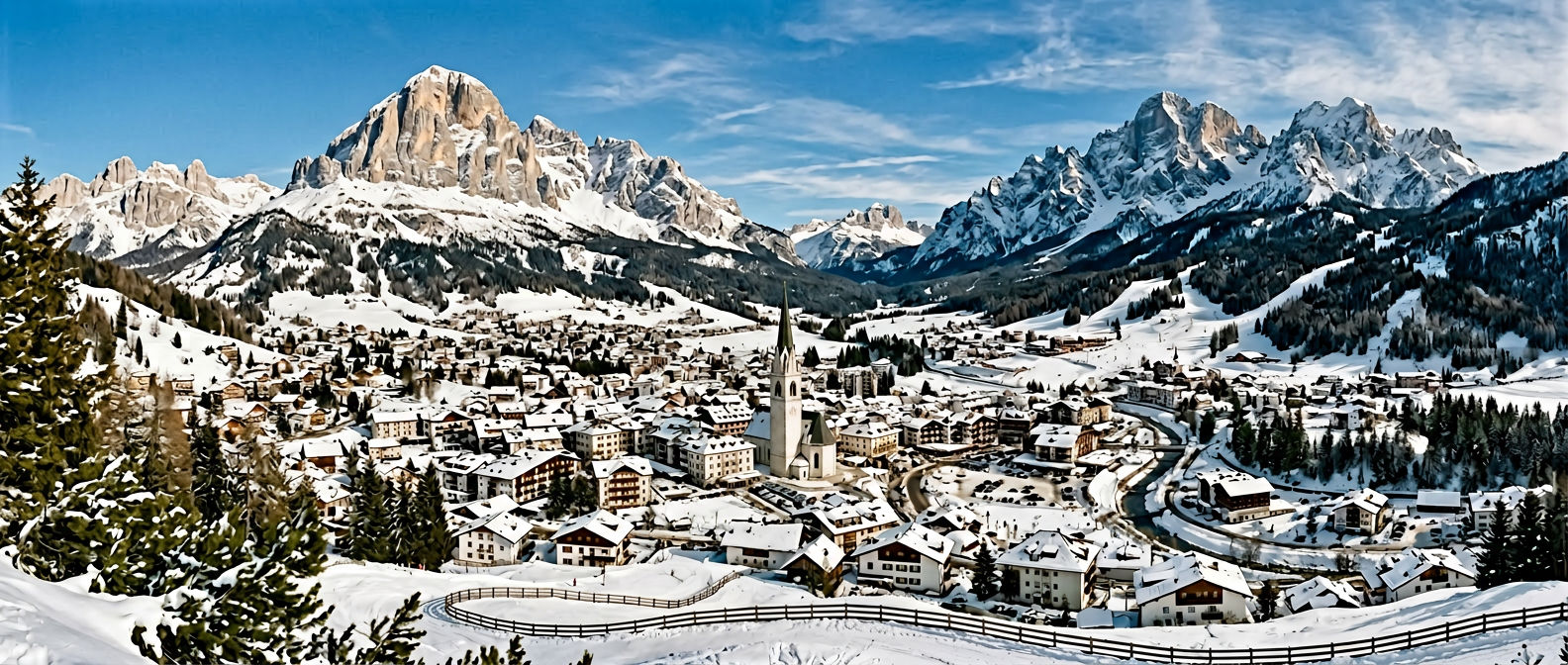
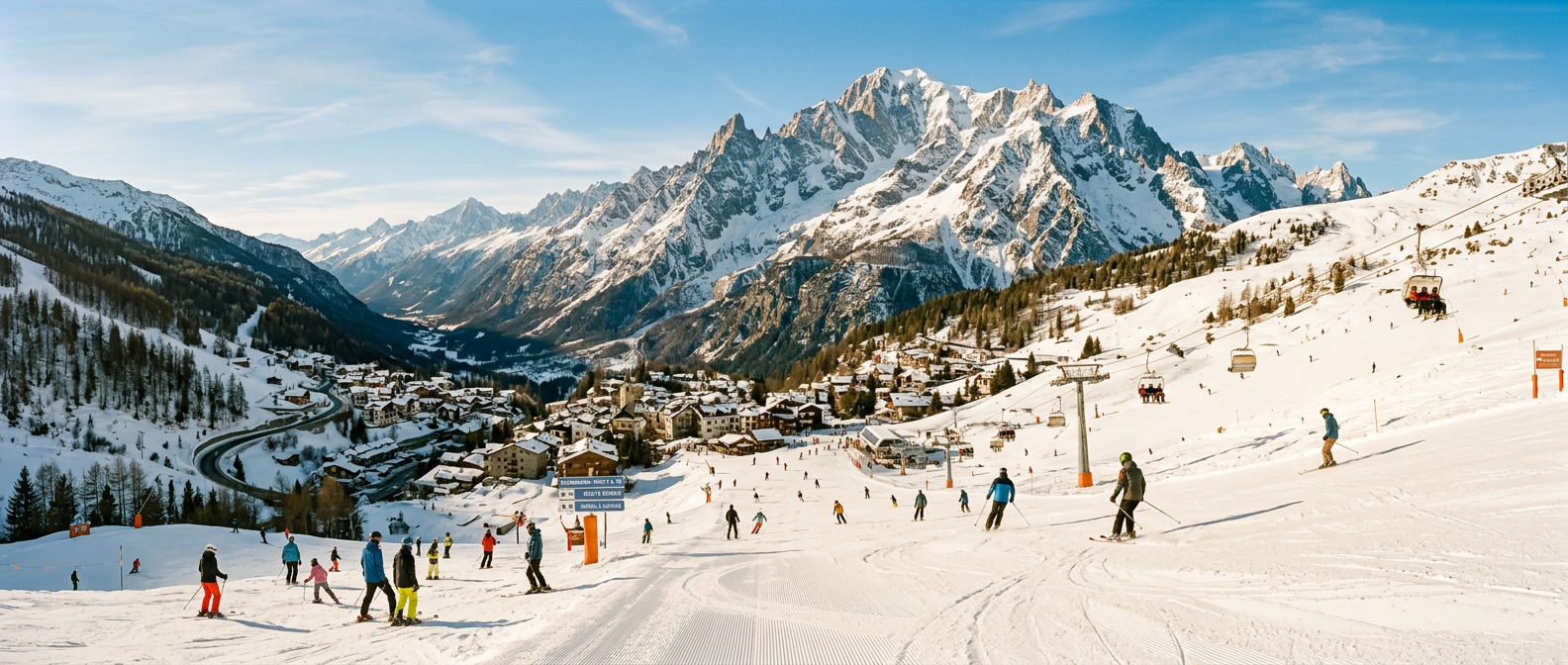
Cortina d'Ampezzo is the most recognised ski resort in Italy and one of the most distinguished in the Alps. Set at 1,224 metres in the Ampezzo Valley, the town is encircled by the pale, vertical rock faces of the Dolomites — a UNESCO World Heritage landscape that makes every chairlift ride feel cinematic. The resort hosted the 1956 Winter Olympics, returned as a venue for the Milano-Cortina 2026 Games, and has served as the backdrop for Italian alpine culture for over a century. With 120 km of pistes across three interconnected ski areas and access to the Dolomiti Superski network of 1,200 km, Cortina offers a skiing experience unlike anything in the French or Swiss Alps.
The Ski Areas: Three Sectors Across the Ampezzo Valley
Cortina's skiing divides into three main sectors — Tofana, Pomedes-Cristallo, and Faloria-Cinque Torri — each with distinct character and connected by ski bus or the Dolomiti Superski pass. The 2026 Olympics prompted significant lift upgrades, including the new Son dei Prade-Bai de Dones gondola linking the town centre directly to the Tofana sector.
Tofana
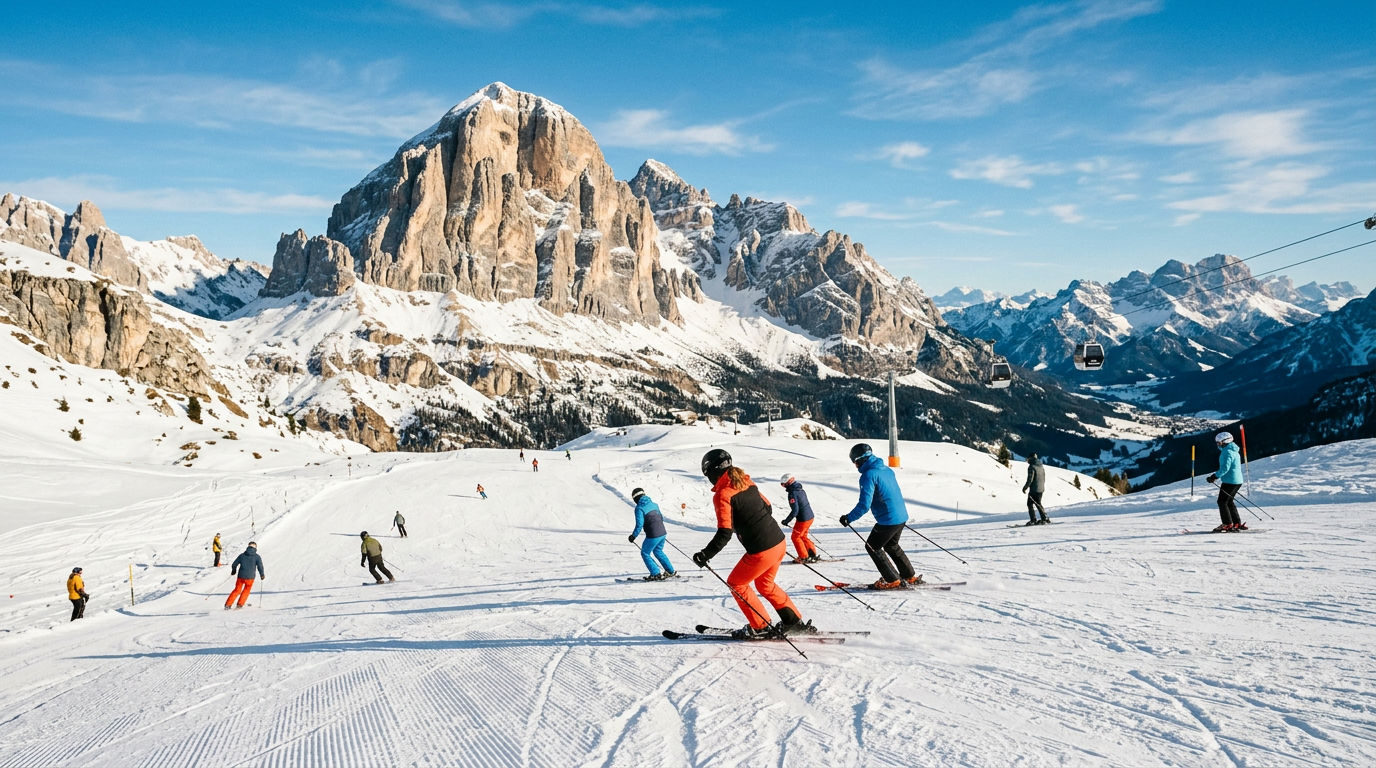
The largest of Cortina's ski areas, Tofana rises to 2,828 metres and offers the most varied terrain. The Olympia delle Tofane piste — site of the Women's World Cup downhill — is among the most celebrated race courses in Alpine skiing. Intermediate skiers will find long, cruising runs through larch forests, while the Ra Valles sector at the top provides steeper pitches and off-piste access.
Faloria and Cinque Torri
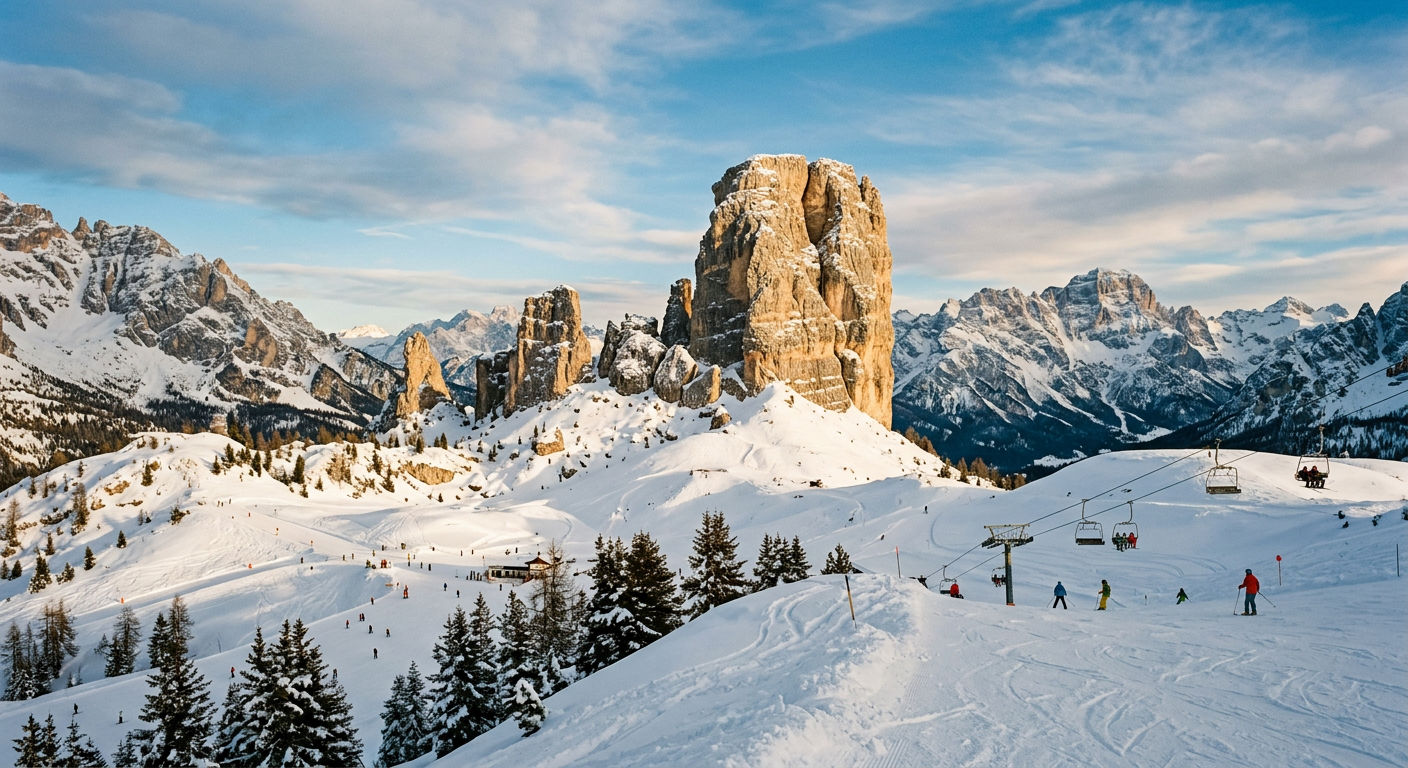
Faloria sits directly above the town, accessed by cable car from the centre. The terrain is predominantly intermediate, with wide runs and exceptional views towards the Tofana massif. Cinque Torri, reached via Lagazuoi, offers shorter but atmospheric runs through one of the most photographed landscapes in the Dolomites — five natural rock towers rising from the snowfield.
Pomedes and Cristallo
The quieter sector, Pomedes connects to the Cristallo area and tends to attract fewer crowds. Runs here suit confident intermediates, with tree-lined pistes and a more sheltered feel on stormy days.
Terrain Overview
| Sector | Summit | Pistes | Best For |
|---|---|---|---|
| Tofana | 2,828 m | ~47 km | All levels, racing heritage, off-piste |
| Faloria-Cinque Torri | 2,778 m | ~40 km | Intermediates, scenery, photography |
| Pomedes-Cristallo | 2,140 m | ~33 km | Quieter days, tree skiing, families |
The Dolomiti Superski pass unlocks 1,200 km of pistes across 12 valleys and 450 lifts — including the Sella Ronda circuit, Cervinia, and the broader Dolomites region. A six-day adult pass costs approximately €350 for the 2025/26 season (verify current pricing at dolomitisuperski.com).
Snow Conditions and Season Timing
Cortina's ski season typically runs from early December through mid-April, with the most reliable snow between January and mid-March. The resort sits lower than many French and Swiss counterparts — the town at 1,224 metres, with skiing reaching 2,828 metres at the Tofana summit — which means early and late season conditions depend heavily on snowmaking.
Cortina has invested substantially in snowmaking infrastructure, covering approximately 95% of its pistes. This ensures rideable conditions even during lean natural snowfall years. The best powder days tend to arrive with Adriatic weather systems from the south and east — a pattern distinct from the northwestern storms that feed French resorts.
| Month | Conditions | Crowds |
|---|---|---|
| December | Early season, improving coverage | Quiet until Christmas week |
| January | Peak snow, cold temperatures | Moderate |
| February | Reliable conditions, longest days | Busiest (Italian school holidays) |
| March | Spring snow, warm afternoons | Moderate, excellent value |
| April | Variable, upper slopes only | Quiet, closing dates vary |
Where to Stay in Cortina
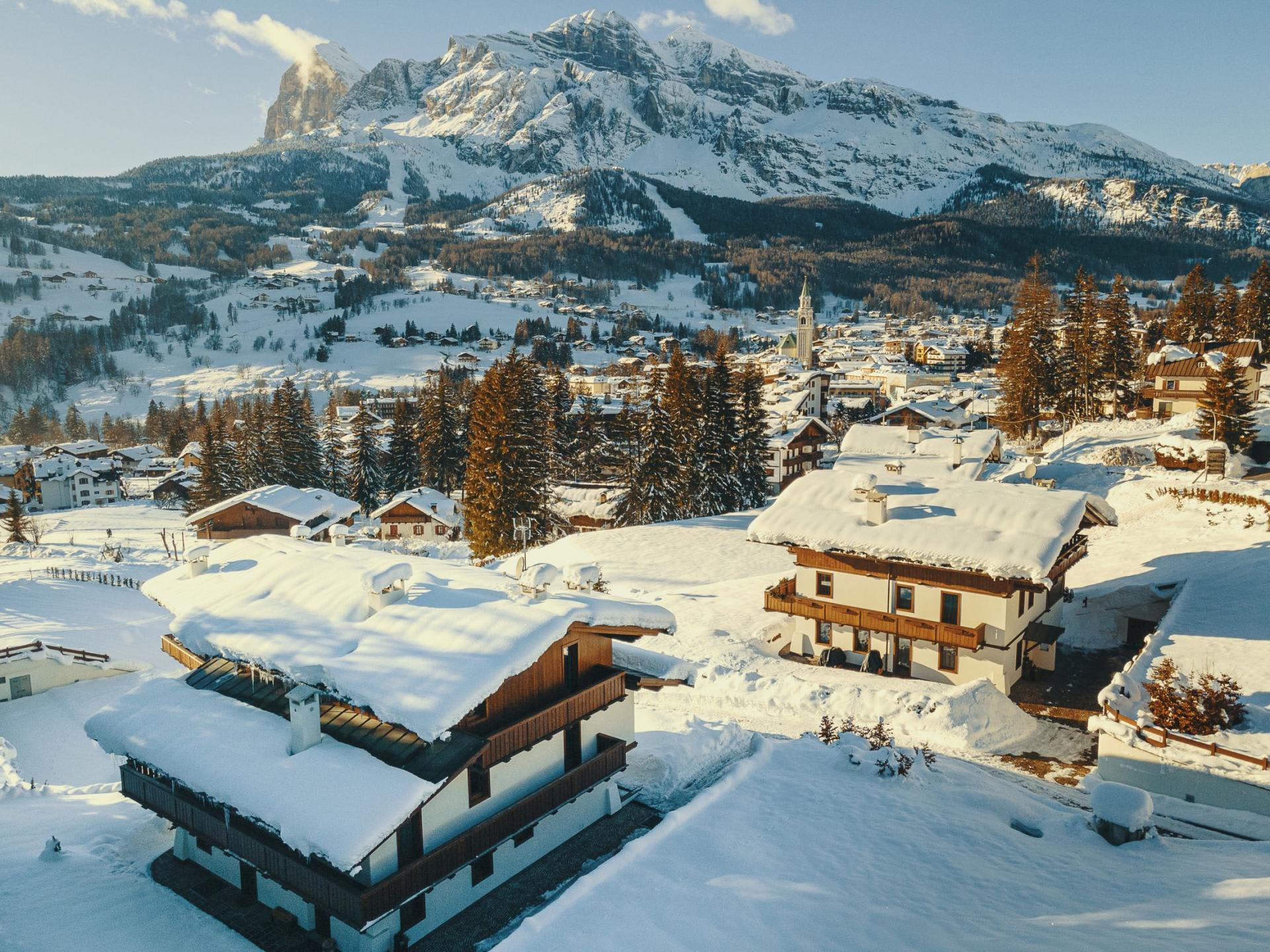
Cortina's accommodation sits primarily in and around the pedestrianised town centre along the Corso Italia, with properties ranging from historic grand hotels to private chalets in the surrounding hillside. In our current collection of 24 Cortina properties, the split reflects the town's heritage: 18 hotels and 6 private chalets, with the majority offering a level of wellness infrastructure uncommon outside the Dolomites.
The Spa and Wellness Standard
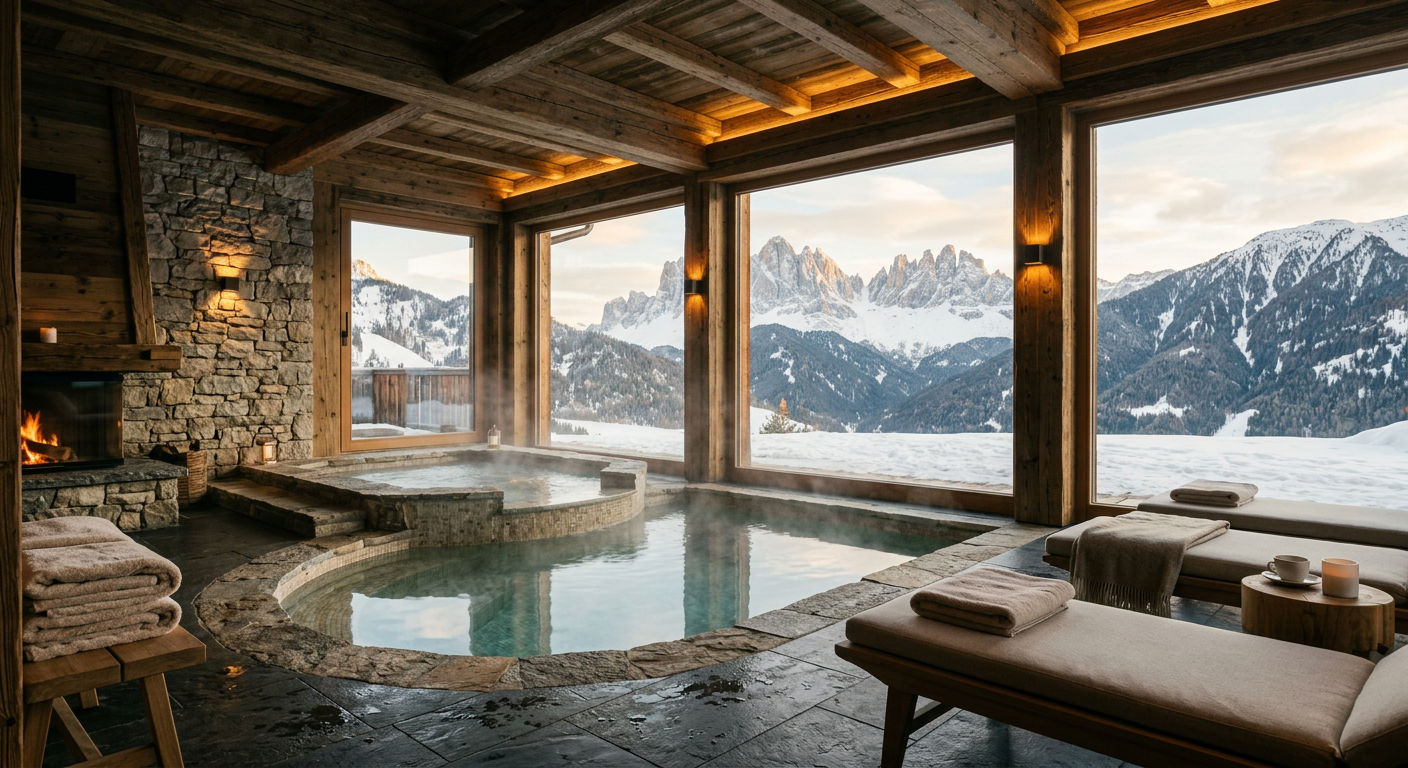
Every property in our Cortina portfolio includes spa access — a distinction that sets the resort apart from Alpine competitors where wellness is a premium add-on. Of the 24 properties, 19 feature saunas, 15 include hot tubs, 15 offer hammam facilities, and 13 have swimming pools. This reflects a broader Dolomite tradition where the spa is integral to the mountain day, not an afterthought.
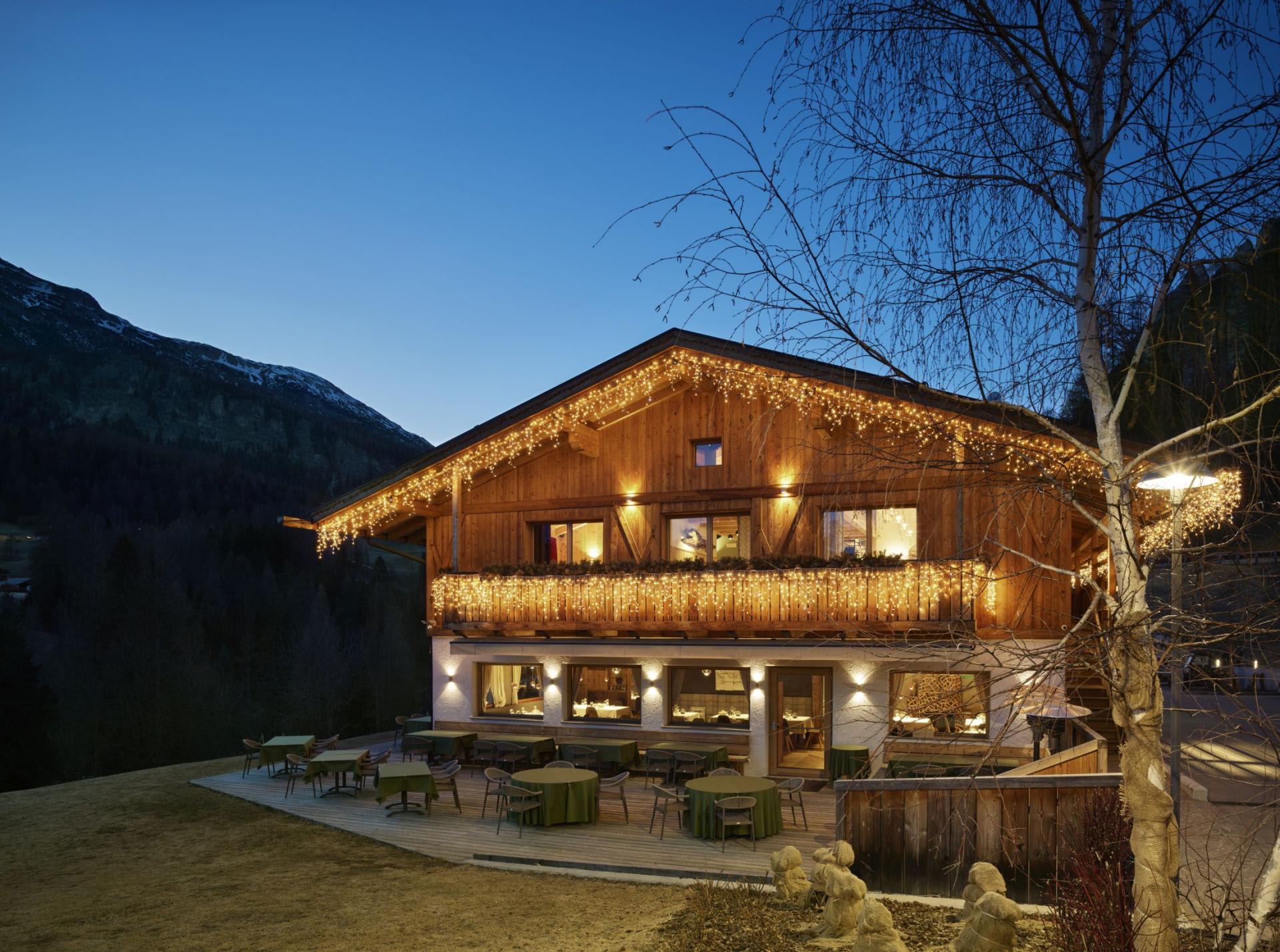
For those seeking the most refined private accommodation, Chalet Serge offers an intimate four-bedroom retreat for up to six guests, with the kind of considered design that defines Cortina's understated approach to luxury.
Accommodation Types
| Category | Count | Price Range | Best For |
|---|---|---|---|
| Hotels (B&B and half-board) | 18 | From €1,245/week | Couples, convenience, town-centre access |
| Chalets (private rental) | 6 | From €32,500/week | Groups, families, privacy, catered options |
Five of our Cortina properties offer chef service, and six properties in the collection sit within five minutes of the nearest lift — though Cortina's efficient ski bus network means even properties slightly further from the lifts are well connected.
For larger groups, the LV Estate Chalets accommodate up to 18 guests across 12 bedrooms — one of the more substantial private properties in the Italian Dolomites.
Proximity to the Slopes
| Ski Access | Properties |
|---|---|
| Under 5 minutes to lift | 6 |
| 5–15 minutes to lift | 4 |
| Ski bus / shuttle access | 3 |
Browse our full Cortina accommodation collection to compare locations and amenities.
Getting to Cortina
Cortina sits in the northeastern Italian Alps, closer to Venice and Austria than to Milan or Turin. The transfer logistics differ from the well-served French mega-resorts, but the journey itself — particularly from Venice — passes through some of the most striking landscapes in the Alps.
Transfer Options
| Origin | Distance | Drive Time | Notes |
|---|---|---|---|
| Venice Marco Polo (VCE) | 160 km | ~2 hours | Most scenic route, via A27 motorway |
| Innsbruck (INN) | 165 km | ~2.5 hours | Austrian approach via Brenner Pass |
| Treviso (TSF) | 140 km | ~1.75 hours | Budget airline hub, straightforward drive |
| Milan Malpensa (MXP) | 420 km | ~4.5 hours | Long transfer, better suited for multi-resort trips |
Venice is the natural gateway. Direct shuttle services operate during ski season, and car hire from Marco Polo airport is straightforward with well-maintained motorway and mountain roads. Chains or winter tyres are mandatory from November through April.
The nearest railway station is Calalzo di Cadore, approximately 35 km south, with Cortina Express bus connections to the town centre. A new rail link is under development as part of the Olympic infrastructure upgrades, though completion timelines extend beyond the 2025/26 season.
Apres Ski and Town Culture
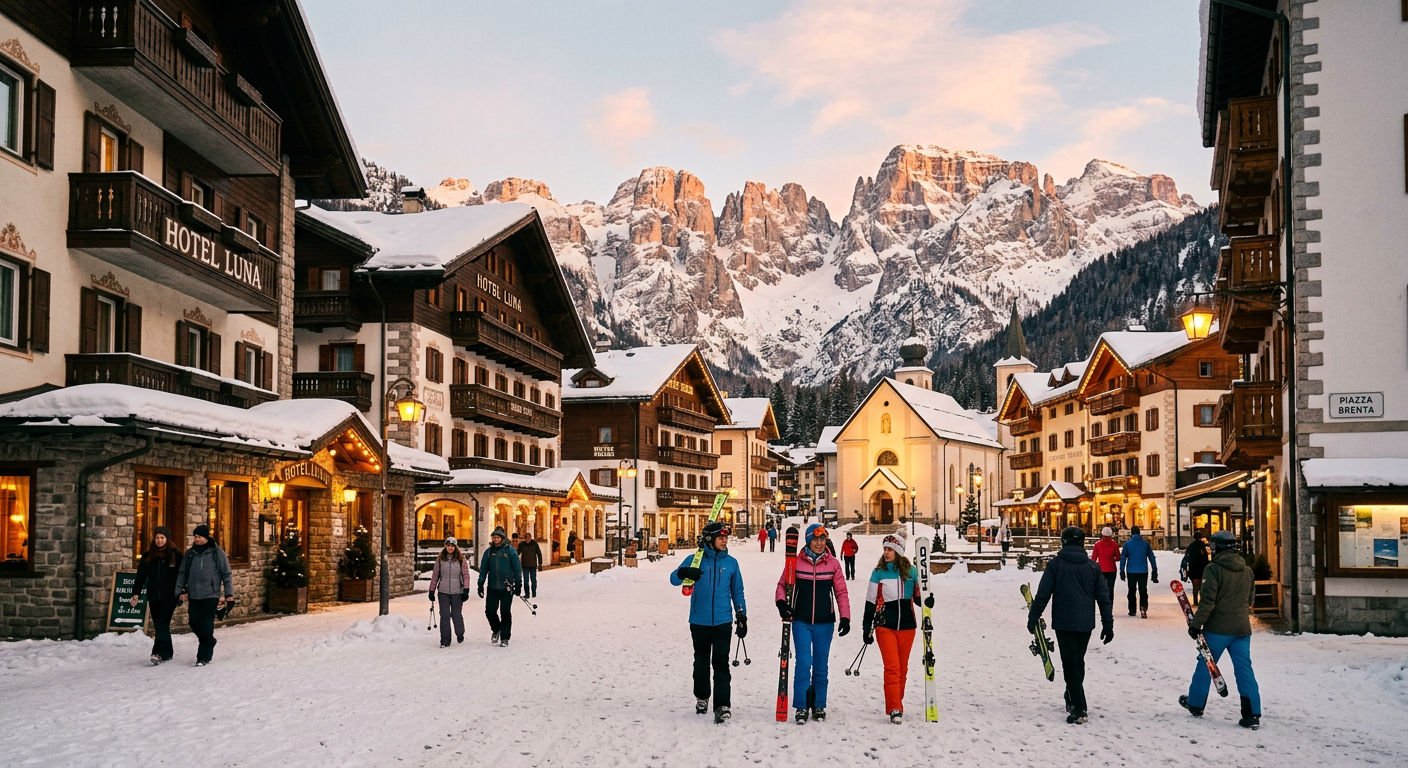
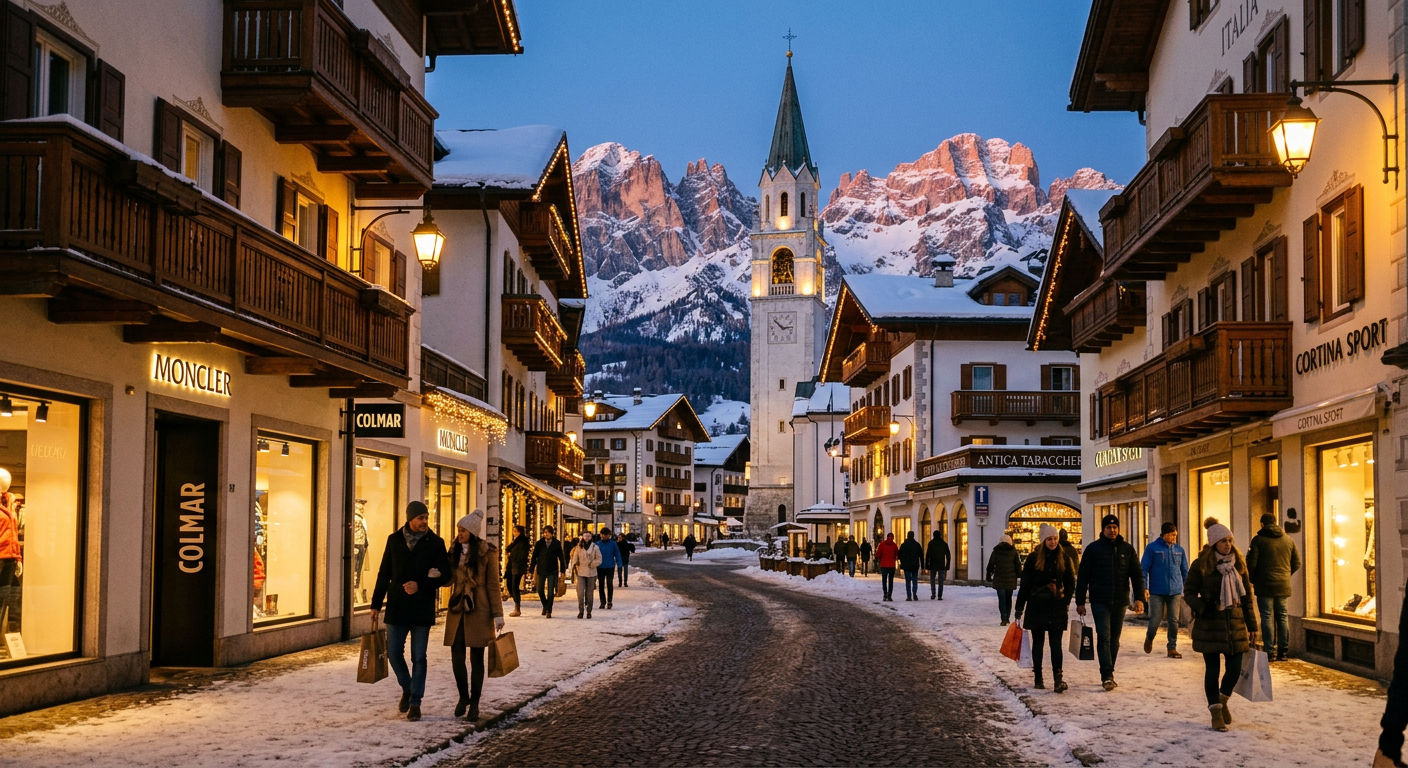
Cortina's apres ski operates differently from the Austrian model of piste-side bars and late-night clubs. Here, the ritual centres on the evening passeggiata — the Italian tradition of strolling the Corso Italia, the town's pedestrianised main street — followed by aperitivo at one of several wine bars and terraces.
The town has maintained its elegance for over a century, attracting Italian film stars, industrialists, and a discreet international clientele who return year after year. The atmosphere is refined without being exclusive — as comfortable in ski boots as in evening wear.
Where to Eat and Drink
- Rifugio Averau — Mountain hut at 2,413 metres near Cinque Torri, serving Ladin specialities with panoramic terrace views
- Enoteca Cortina — Wine bar on the Corso Italia for aperitivo and regional wines from Alto Adige and Veneto
- Il Meloncino al Caminetto — Traditional restaurant known for casunziei (local beetroot-filled pasta) and game dishes
- Bar Lovat — Central gathering point for espresso and people-watching
The Ladin culinary tradition — distinct from both Italian and Austrian cooking — is one of Cortina's quieter assets. Dishes like canederli (bread dumplings), speck, and polenta with venison ragù reflect the valley's position at the crossroads of Italian and Tyrolean cultures.
The 2026 Olympics Legacy
The Milano-Cortina 2026 Winter Olympics returned to Cortina in February 2026, sixty years after the town first hosted the Games. The event prompted the most significant infrastructure investment in the resort's modern history.
Key upgrades include the new Son dei Prade-Bai de Dones gondola connecting the town centre to the Tofana ski area, expanded snowmaking across all three sectors, and improvements to the road network linking Cortina to the A27 motorway. The Sliding Centre Cortina — purpose-built for bobsleigh and luge events — adds a new dimension to the town's sporting facilities.
For skiers, the practical benefits are tangible: faster lift access to Tofana, more reliable early-season conditions, and improved road transfers from Venice and Treviso airports.
Plan Your Cortina Ski Trip
Cortina d'Ampezzo offers something distinct in the Alpine landscape: Italian warmth, Dolomite drama, and a sophistication that has matured over more than a century. The post-Olympic infrastructure makes this an ideal moment to visit — upgraded lifts and snowmaking, yet the town retains the unhurried character that makes it unlike any resort in France or Switzerland. With 24 properties in our Cortina collection — including 19 with sauna access and 13 with pools — the accommodation matches the setting.
Explore our full Cortina collection, or browse properties with spa and wellness facilities to find the right base for your trip.
Frequently Asked Questions
Is Cortina d'Ampezzo good for skiing?
Cortina d'Ampezzo offers 120 km of pistes across three ski areas — Tofana, Faloria-Cinque Torri, and Pomedes-Cristallo — with terrain suited primarily to intermediate and advanced skiers. The Dolomiti Superski pass extends access to 1,200 km across 12 valleys, making it one of the largest ski networks in the world. The resort hosted Alpine skiing events at the 2026 Winter Olympics.
How much does a Cortina ski pass cost?
A six-day Dolomiti Superski pass costs approximately €350 for adults for the 2025/26 season, covering all lifts across Cortina's three ski areas and the wider 1,200 km Dolomiti Superski network. A Cortina-only pass is available at a lower price for skiers staying within the local area. Check dolomitisuperski.com for current pricing.
How do you get to Cortina d'Ampezzo?
Venice Marco Polo airport is the most convenient gateway, approximately 160 km and a two-hour drive via the A27 motorway. Innsbruck airport in Austria is a similar distance at 165 km. Direct shuttle services operate during ski season from both airports. Winter tyres or chains are mandatory on mountain roads from November through April.
When is the best time to ski in Cortina?
January through mid-March offers the most reliable snow and coldest temperatures. February is the busiest month due to Italian school holidays. March brings warmer days, spring snow conditions, and fewer crowds — often the best balance of conditions and value. The season runs from early December to mid-April.
What is Cortina known for besides skiing?
Cortina is renowned for its Dolomite setting — the surrounding peaks are a UNESCO World Heritage Site — and its role in Italian cultural life. The town has hosted two Winter Olympics (1956 and 2026), featured in the James Bond film For Your Eyes Only, and serves as a gathering place for Italian society during the winter season. The Ladin culinary tradition and the evening passeggiata along the Corso Italia are as much a part of the experience as the skiing.
Is Cortina suitable for beginners?
Cortina accommodates beginners, particularly on the nursery slopes near the Socrepes area and the gentler runs on Faloria. However, the resort's strength lies in intermediate and advanced terrain. Beginners planning a full week may find more dedicated learning infrastructure at resorts like Les Gets or Megeve, both of which offer more extensive green-rated terrain.