Val d'Isère Skiing: A Complete Guide to France's Most Reliable Ski Resort
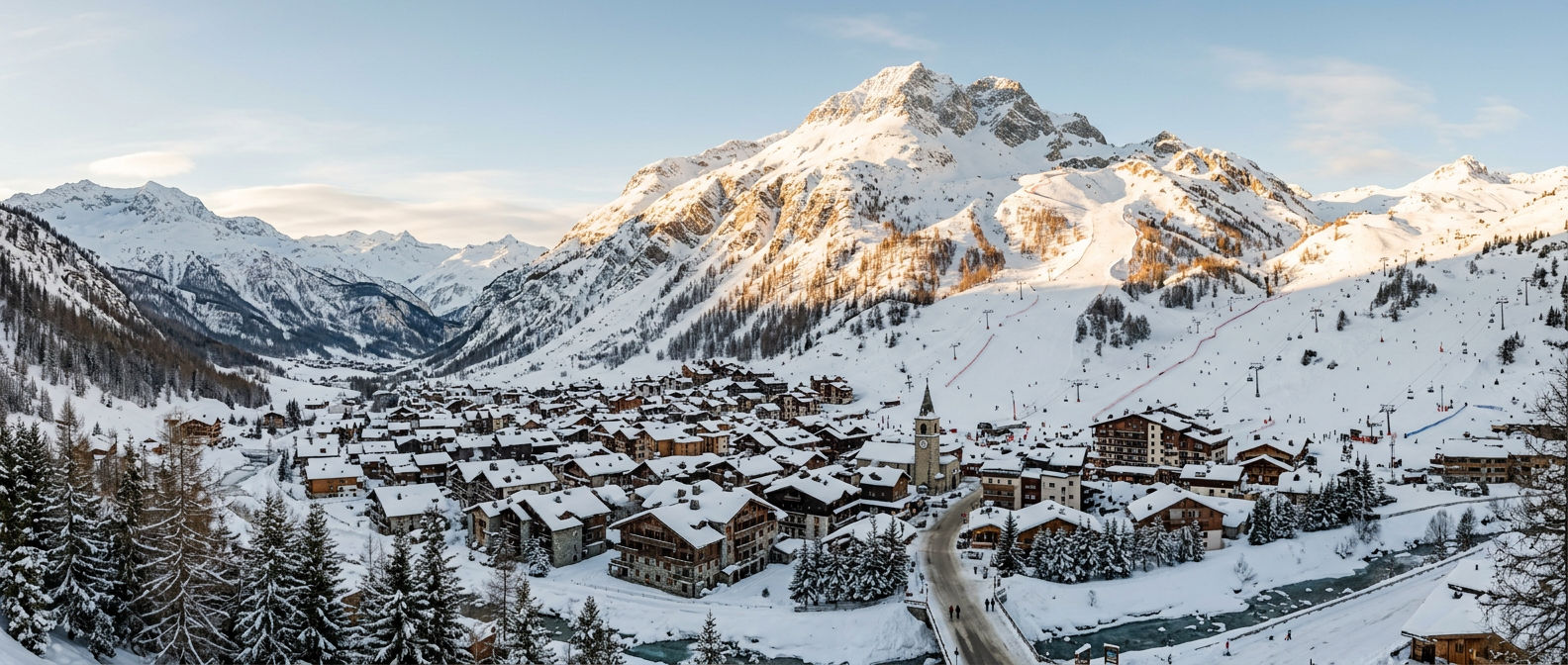
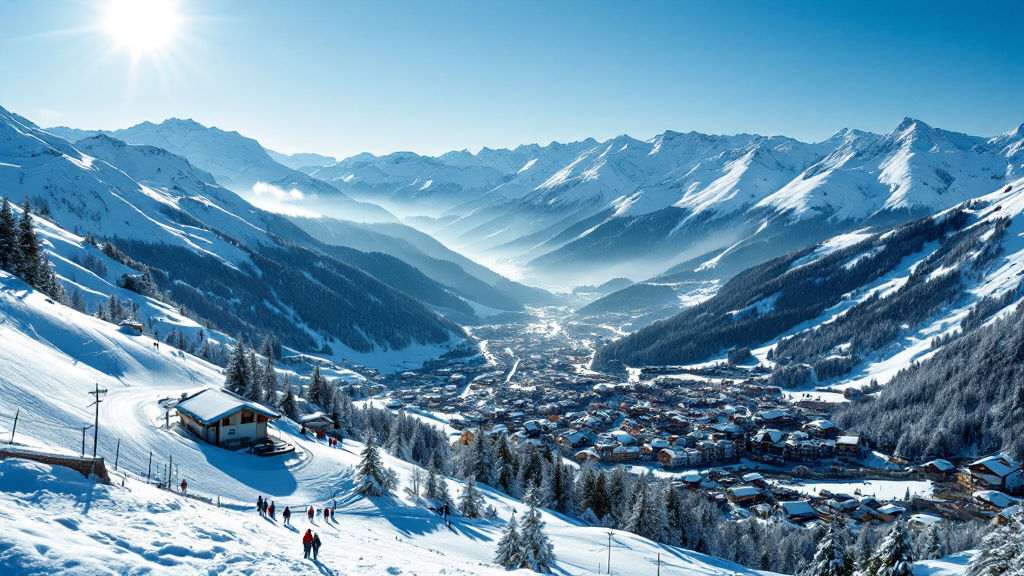
Val d'Isère is one of the most dependable ski destinations in the Alps, sitting at 1,850m in the Tarentaise Valley with skiing up to 3,456m on the Grande Motte glacier. The resort shares the 300km Espace Killy ski area with neighbouring Tignes and has hosted World Cup and Olympic events since 1955. With over 220 properties in our current collection — including 133 chalets, 58 apartments, and 28 hotels — it represents one of the deepest rental markets in European skiing.
The Ski Area: 300km Across the Espace Killy
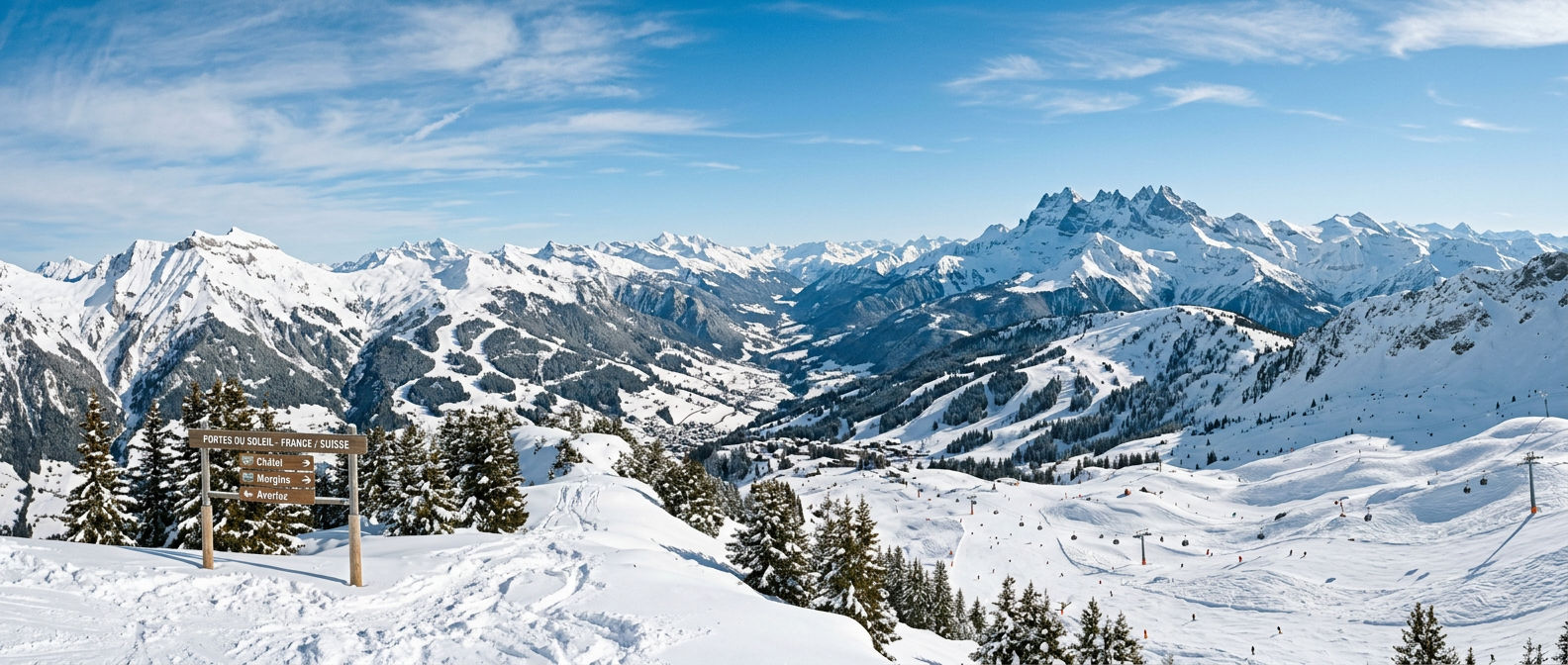
Val d'Isère and Tignes together form the Espace Killy, a 300km ski domain with 79 lifts covering terrain from 1,550m to 3,456m. The altitude range is among the highest in France, and the north-facing orientation of most runs means snow conditions hold well from late November through early May.
Val d'Isère's own sector centres on three main areas: Bellevarde (2,827m), Solaise (2,551m), and the Fornet valley leading to the Col de l'Iseran. Bellevarde is where the men's downhill Olympic course — the Face — drops 960 vertical metres in one sustained pitch. Solaise offers gentler, wide-open terrain suited to intermediates and confident beginners, while the Fornet valley is where experienced skiers find Val d'Isère at its quietest and most challenging.
| Terrain Area | Summit | Character | Best For |
|---|---|---|---|
| Bellevarde | 2,827m | Steep, varied, World Cup course | Advanced, strong intermediates |
| Solaise | 2,551m | Wide, open, sun-drenched | Intermediates, early-season skiing |
| Fornet / Col de l'Iseran | 2,770m | Remote, off-piste, steep couloirs | Experts, freeriders |
| Le Manchet / Tovière | 2,696m | Link to Tignes, varied terrain | All levels, Espace Killy exploration |
The Espace Killy lift pass covers both resorts on a single ticket. For the 2025/26 season, a six-day adult pass is priced around €350–380, with reductions for children under 13 and seniors over 65. The pass also includes one day's skiing in La Rosière, Les Arcs, or La Plagne through the extended partnership — a useful option for multi-week stays.
Off-Piste and Freeride Terrain
Val d'Isère is one of the strongest freeride destinations in the French Alps. The Fornet valley and the face of Bellevarde hold serious off-piste lines, while the accessible couloirs off Solaise give intermediate freeriders a taste of powder skiing without requiring a guide. For those who do hire a guide — strongly recommended for anything beyond the marked runs — the Col de l'Iseran and the back bowls above Le Fornet offer descents of over 1,500 vertical metres through untracked terrain.
The resort's high altitude and north-facing aspect mean fresh snow lingers on off-piste lines longer than at lower Tarentaise resorts, a meaningful advantage in late season.
Snow Reliability and Season Timing
Val d'Isère receives an average of 5–6 metres of natural snowfall per season, with the base village at 1,850m and skiing extending to 3,456m on the Grande Motte glacier shared with Tignes. The combination of altitude and aspect makes it one of the most snow-reliable resorts in the Alps.
The season typically runs from late November to early May, with the glacier open into summer for training camps. The most consistent conditions fall between mid-December and mid-April — though Christmas and February half-term weeks bring peak crowds. For the best balance of snow quality and quiet slopes, the first three weeks of January and the second half of March are considered the sweet spot among returning visitors.
| Period | Snow Quality | Crowds | Notes |
|---|---|---|---|
| Late Nov – mid Dec | Variable, early-season cover | Low | Limited terrain open, glacier reliable |
| Mid Dec – early Jan | Good to excellent | Peak over Christmas/New Year | Full ski area open |
| Jan (post-New Year) | Excellent, coldest temps | Low to moderate | Best value, fewest crowds |
| Feb | Very good, deeper base | Peak (school holidays) | Book well ahead |
| Mar | Good, spring conditions build | Moderate | Warm afternoons, morning powder |
| Apr – early May | Spring snow, freeze-thaw | Low | Shorter days, glacier still reliable |
The Village: Alpine Authenticity at Altitude
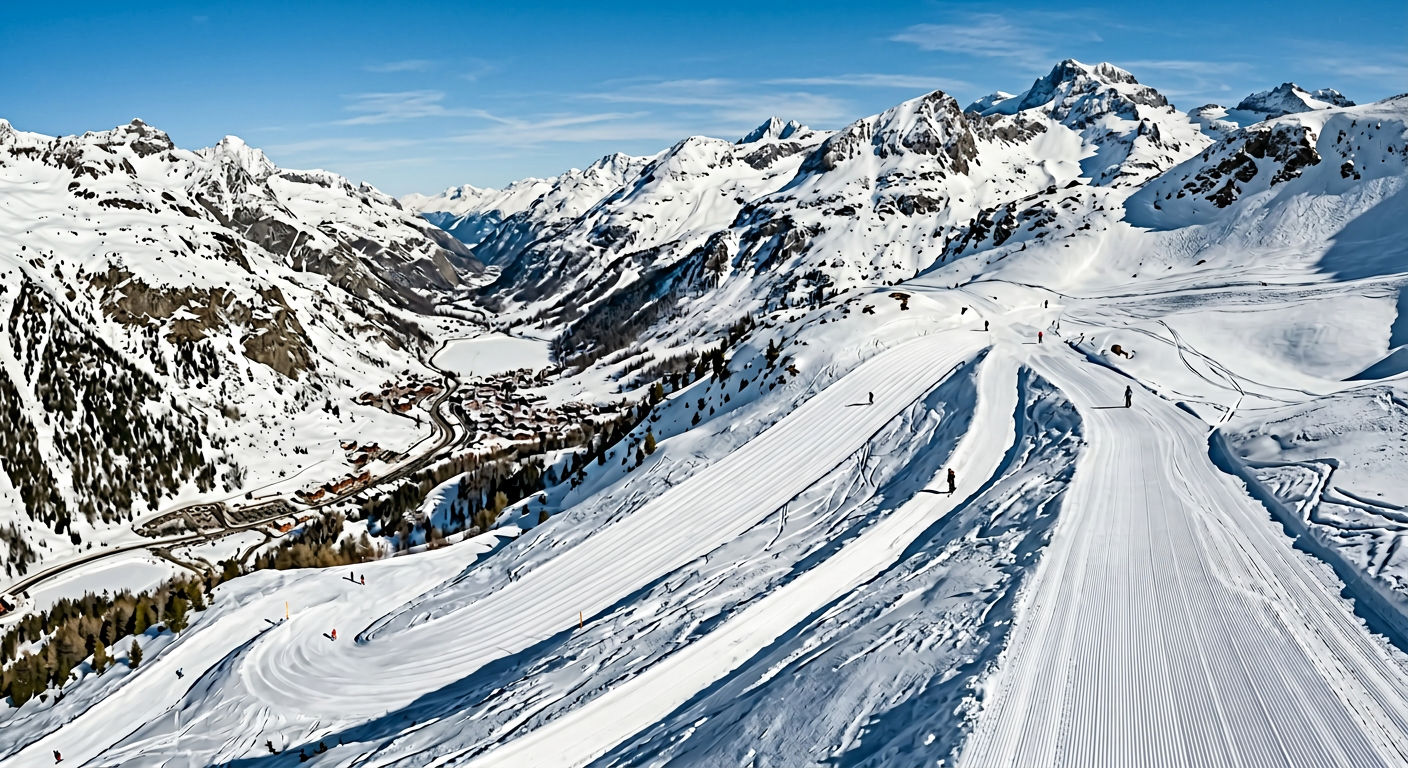
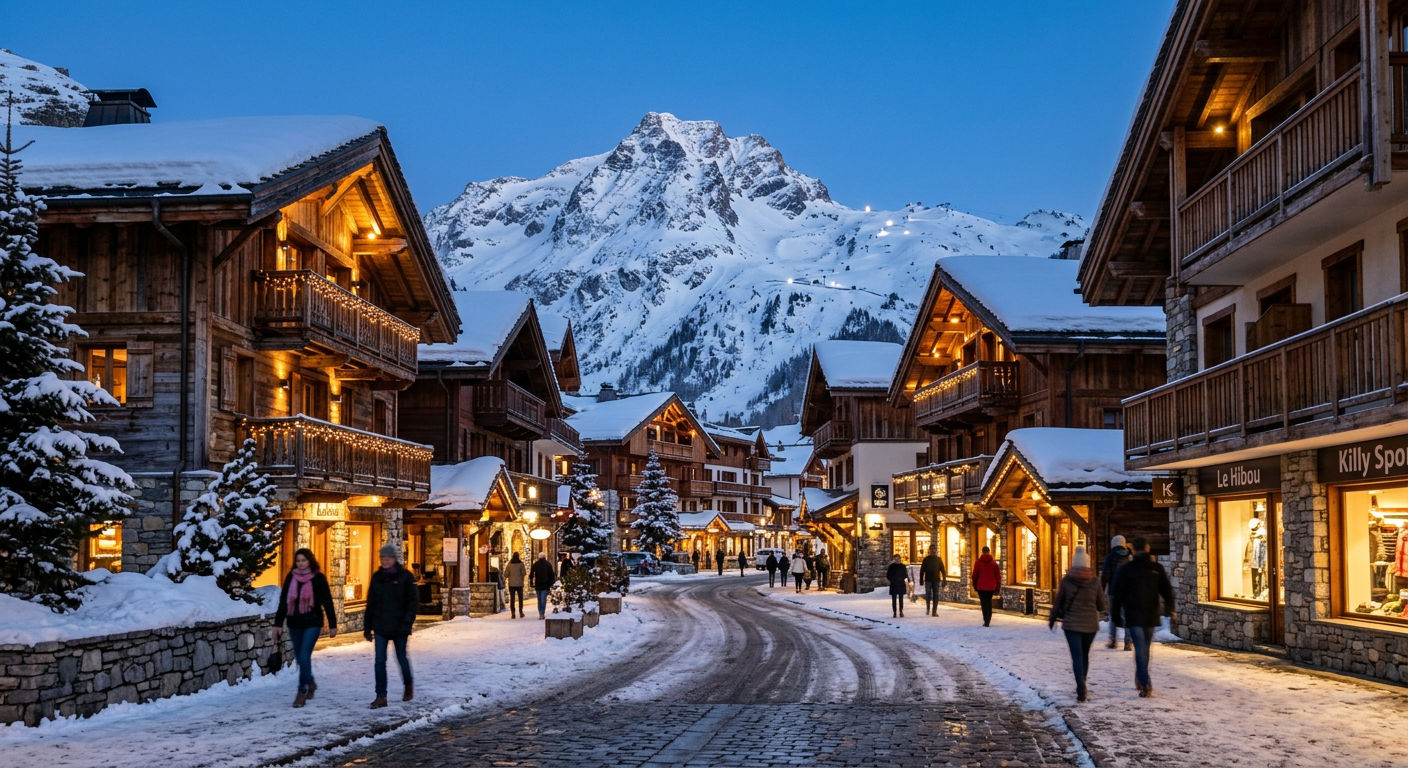
Val d'Isère retains the feel of a working mountain town rather than a purpose-built resort. The main village stretches along a single valley road, with stone-and-timber buildings housing restaurants, equipment shops, and bars alongside the more recent additions that arrived with the 1992 Winter Olympics. The church of Saint-Bernard de Menthon, dating to the 17th century, anchors the old quarter.
Unlike purpose-built neighbours such as Val Thorens or Les Arcs, Val d'Isère's village developed organically around farming and then skiing. This gives it an atmosphere that balances mountain tradition with the infrastructure required by a resort of its stature. The village sits compact enough to walk end-to-end in 15 minutes, with the main Bellevarde and Solaise lifts at either end.
Dining and Après-Ski
Val d'Isère has earned a reputation as one of the strongest après-ski destinations in Europe. La Folie Douce, perched at the Daille gondola mid-station, pioneered the on-mountain afternoon party format that has since spread to resorts across the Alps. In the village, the Petit Danois and Bananas remain staples of the early-evening circuit.
For dining, the resort punches above what its population would suggest. L'Atelier d'Edmond holds two Michelin stars in the hamlet of Le Fornet, while La Table de l'Ours (one Michelin star) at Les Barmes de l'Ours hotel delivers refined Savoyard cuisine. More casual options — raclette at La Fruitière, steak at Le Blizzard's brasserie — line the main street.
Where to Stay in Val d'Isère
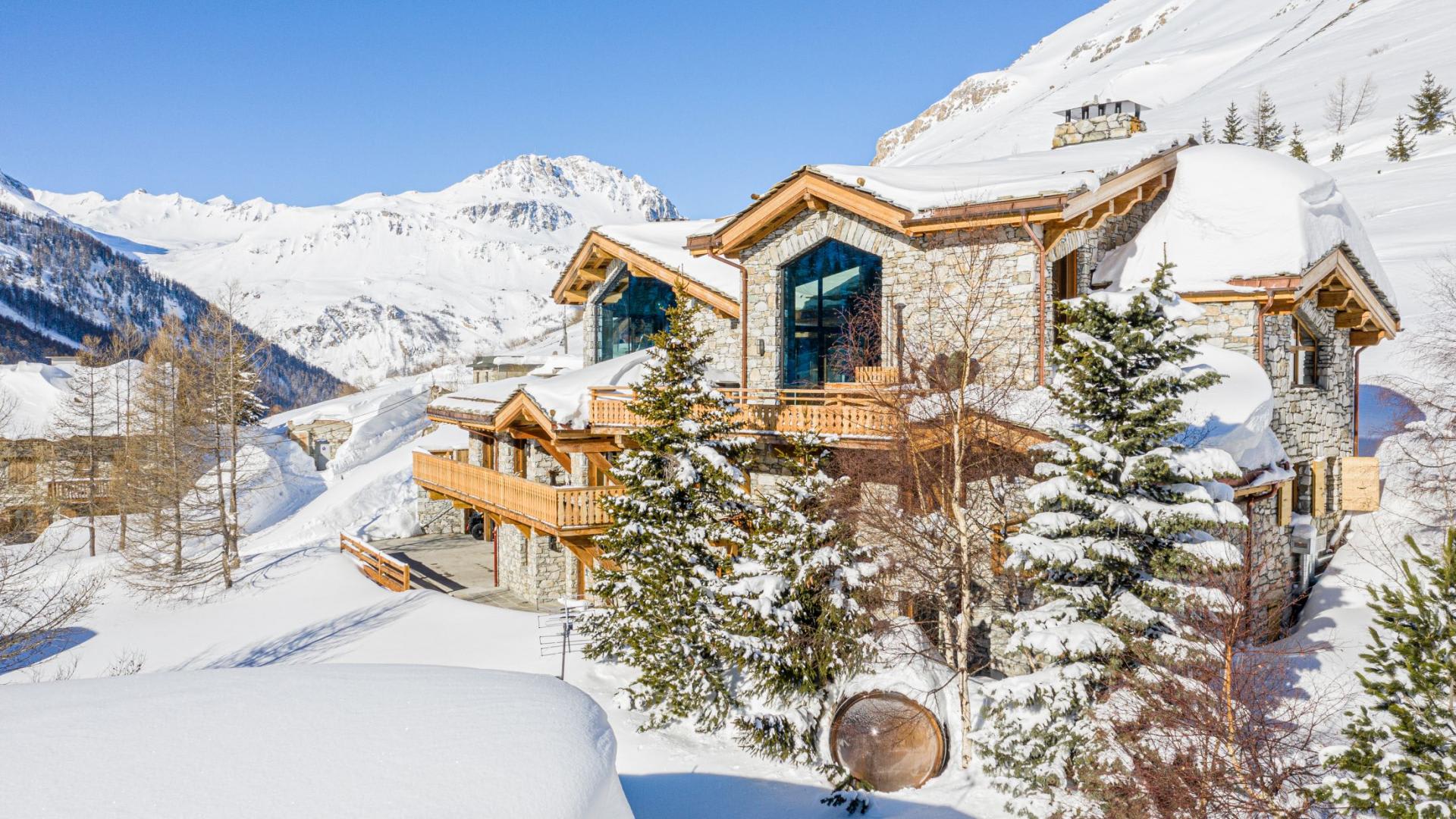
Val d'Isère offers one of the deepest accommodation markets in the Alps. In our current collection of over 220 properties, 89% offer ski-in ski-out access — an exceptional ratio that reflects the resort's layout, where runs thread through the village itself and most accommodation sits within a short walk or ski of a lift.
The collection splits roughly into chalets (133), apartments (58), hotels (28), and lodges (5). Service levels range from self-catered to fully staffed: 76 catered properties, 72 self-catered, 47 flexible, and 29 bed-and-breakfast options. Nearly half the collection — 109 properties — accommodates 10 or more guests, making Val d'Isère particularly well-suited to group ski holidays.
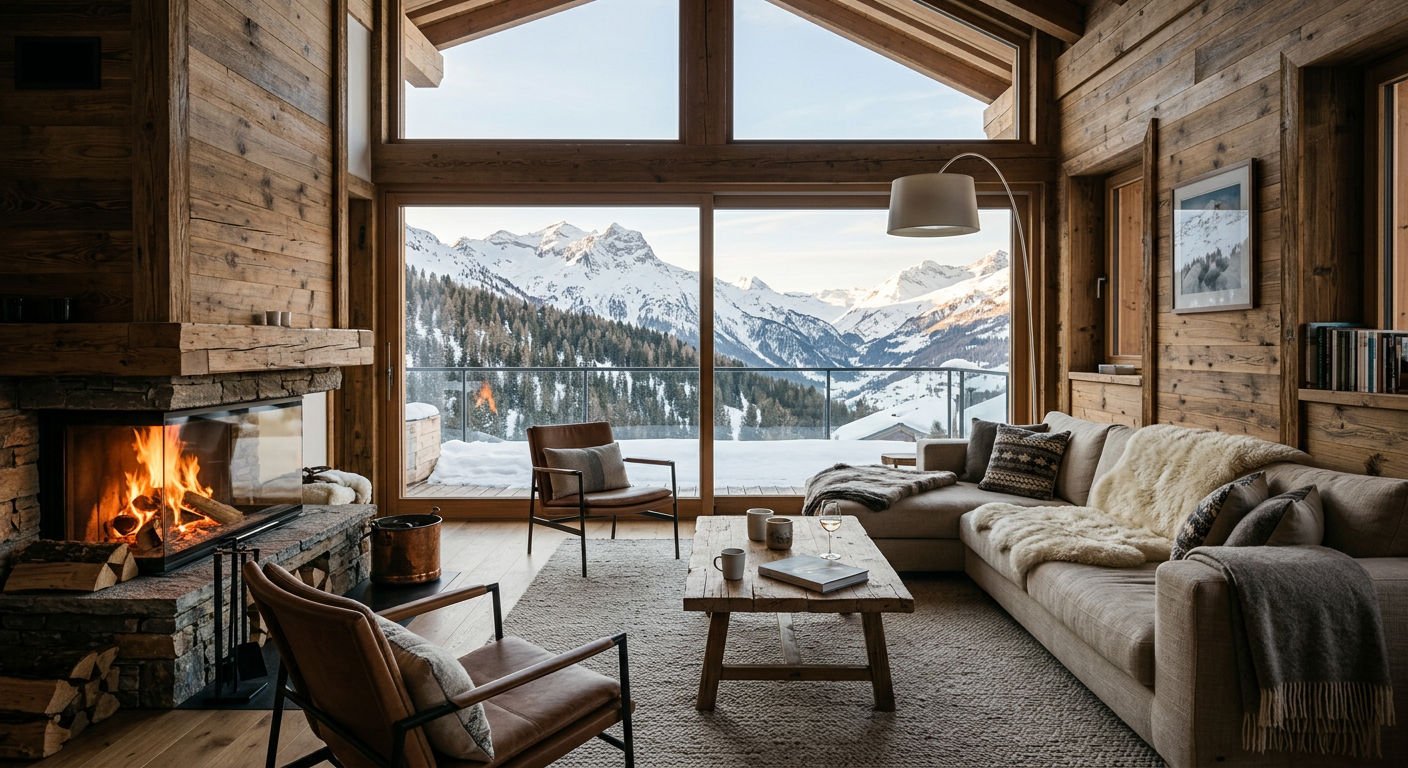
Wellness and Amenities
The standard of private amenities across Val d'Isère properties is notably high. In our current collection, 173 properties include a hot tub (77%), 164 have a sauna (73%), and 158 feature a private pool (71%). For those seeking a fully serviced stay, 28 properties offer a private chef.
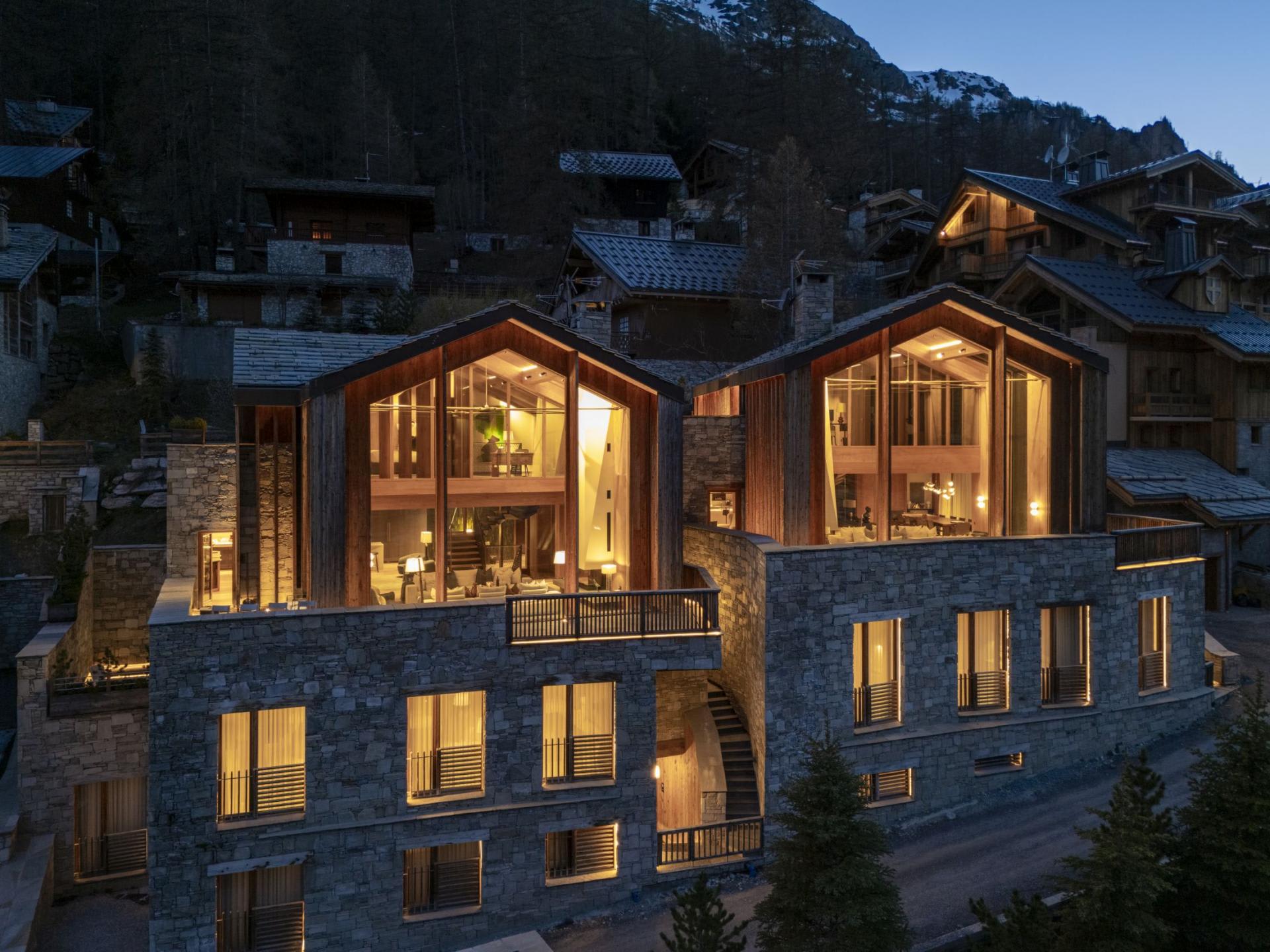
Among the catered chalets in our collection, Étoile du Nord's East Wing combines ski-in ski-out access with a private pool, spa, and dedicated chef — a level of service that defines the top tier of Val d'Isère accommodation.
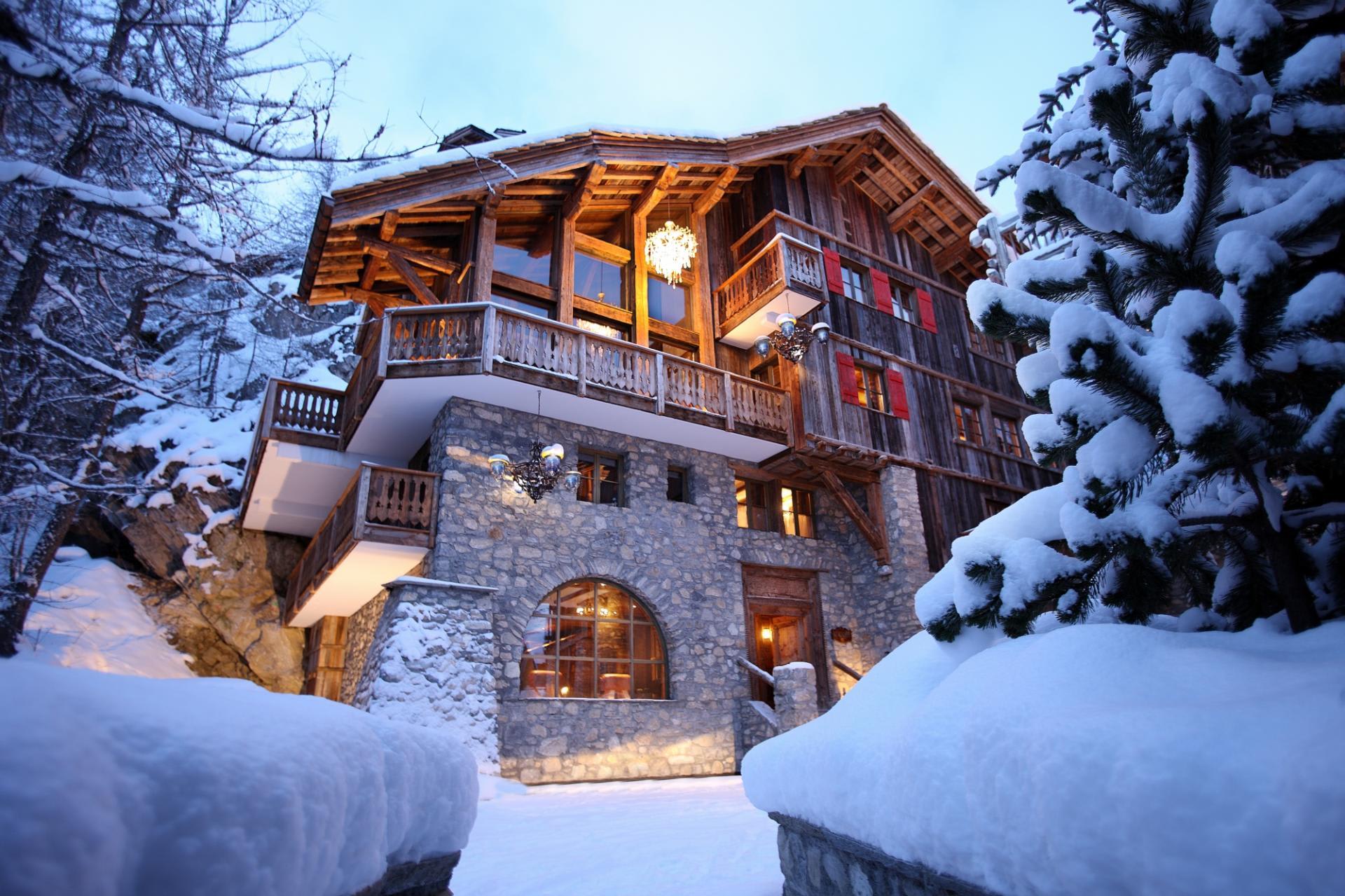
For larger groups, Chalet Le Rocher accommodates 14 guests across seven bedrooms with a private pool, cinema room, and direct slope access — a strong option for families travelling together or multi-generational trips.
Ski Access Explained
The 89% ski-in ski-out figure deserves context. Val d'Isère's pistes descend directly through the village — the Bellevarde run terminates in the centre, and the Solaise sector feeds into the eastern end. Properties at the base of either lift system offer genuine door-to-slope skiing. Those in the Daille area, a short distance down the valley, connect via the high-speed Funival underground funicular.
Even properties that are not technically ski-in ski-out are generally within a five-minute walk of a lift — 49 properties in our collection fall into this category. The free shuttle bus system fills any remaining gaps, running on a loop through the village and Daille from early morning until après-ski hours.
Getting to Val d'Isère
Val d'Isère is accessible from three airports, with Chambéry (CMF) the closest at approximately two hours by road transfer. Geneva (GVA) is the most commonly used international gateway at around three and a half hours, while Lyon (LYS) offers a similar transfer time with more low-cost carrier options.
| Airport | Code | Transfer Time | Notes |
|---|---|---|---|
| Chambéry | CMF | ~2 hours | Closest, limited flights, Saturdays busiest |
| Geneva | GVA | ~3.5 hours | Best international connections |
| Lyon Saint-Exupéry | LYS | ~3.5 hours | Low-cost carrier hub, Eurostar connection |
Saturday is the standard changeover day, and the D902 road into Val d'Isère can become congested during peak transfer windows. Arriving on a Friday evening or Sunday morning avoids the worst of it. The road closes for the season only rarely — Val d'Isère is not prone to the road-closure issues that affect some higher-pass resorts — though chains or winter tyres are mandatory from November.
For those exploring the wider Espace Killy, Tignes sits 20 minutes down the valley and is reachable on skis via the Tovière link.
Explore Val d'Isère with Powder Edition
Powder Edition brings together over 220 chalets, apartments, and hotels in Val d'Isère — from self-catered apartments for couples to fully staffed chalets sleeping 20 or more. Browse our full Val d'Isère collection, filter by ski-in ski-out access, or explore catered chalets with a private chef.
Frequently Asked Questions
Is Val d'Isère good for beginners?
Val d'Isère is a viable destination for beginners, though not the easiest in the Alps. The nursery slopes at Solaise and the Village area are wide and well-maintained, and the ski school (ESF Val d'Isère is one of the largest in France) runs group and private lessons from age three. However, the transition from green to blue runs involves steeper terrain than at resorts designed around first-timers like Courchevel or Obergurgl. Motivated beginners will progress well here; those seeking the gentlest possible introduction may prefer a lower-altitude option.
How does the Val d'Isère ski pass work?
The Espace Killy lift pass covers all lifts in both Val d'Isère and Tignes on a single ticket. A six-day adult pass for the 2025/26 season costs approximately €350–380. The pass also includes bonus days at La Rosière, Les Arcs, and La Plagne through the extended Espace Killy partnership. Half-day, single-day, and pedestrian passes are available. Children under five ski free, and there are reduced rates for juniors (5–13) and seniors (65+).
When is the best time to ski Val d'Isère?
The most reliable conditions run from mid-December through mid-April, but the resort's altitude (1,850m base, skiing to 3,456m) keeps conditions strong across the full late-November-to-May season. January offers the best combination of snow quality, low crowds, and competitive pricing. Late March brings warmer temperatures and spring snow — ideal for those who enjoy long lunches on sun-drenched terraces between morning runs.
How far is Val d'Isère from Geneva airport?
Geneva (GVA) is approximately three and a half hours by road transfer — the most commonly used international gateway. Chambéry (CMF) is closer at around two hours but has fewer flight connections. Private transfers, shared minibuses, and rental cars are all viable options. Saturday transfers experience the heaviest traffic; arriving Friday evening or Sunday avoids congestion on the D902 approach road.
Is Val d'Isère or Chamonix better for skiing?
Val d'Isère and Chamonix serve different skiing profiles. Val d'Isère offers a more integrated ski-in ski-out village with 300km of linked terrain via the Espace Killy — better suited to mixed-ability groups who want to ski together on interconnected pistes. Chamonix is a mountaineering town with separate, unlinked ski areas (Les Grands Montets, Brévent-Flégère, Les Houches) that reward expert skiers and off-piste enthusiasts. For convenience and variety of linked terrain, Val d'Isère; for extreme terrain and mountain culture, Chamonix.
Can you ski from Val d'Isère to Tignes?
Yes. Val d'Isère and Tignes share the Espace Killy ski area, and skiing between the two resorts is straightforward on a single lift pass. The Tovière lift above Val d'Isère connects directly to Tignes' ski domain, and you can make the return journey via multiple routes. Strong intermediates can comfortably explore both resorts in a single day. The Tignes resort guide covers the other half of the Espace Killy in detail.