La Plagne Skiing: A Complete Guide to the Paradiski's Most Versatile Resort
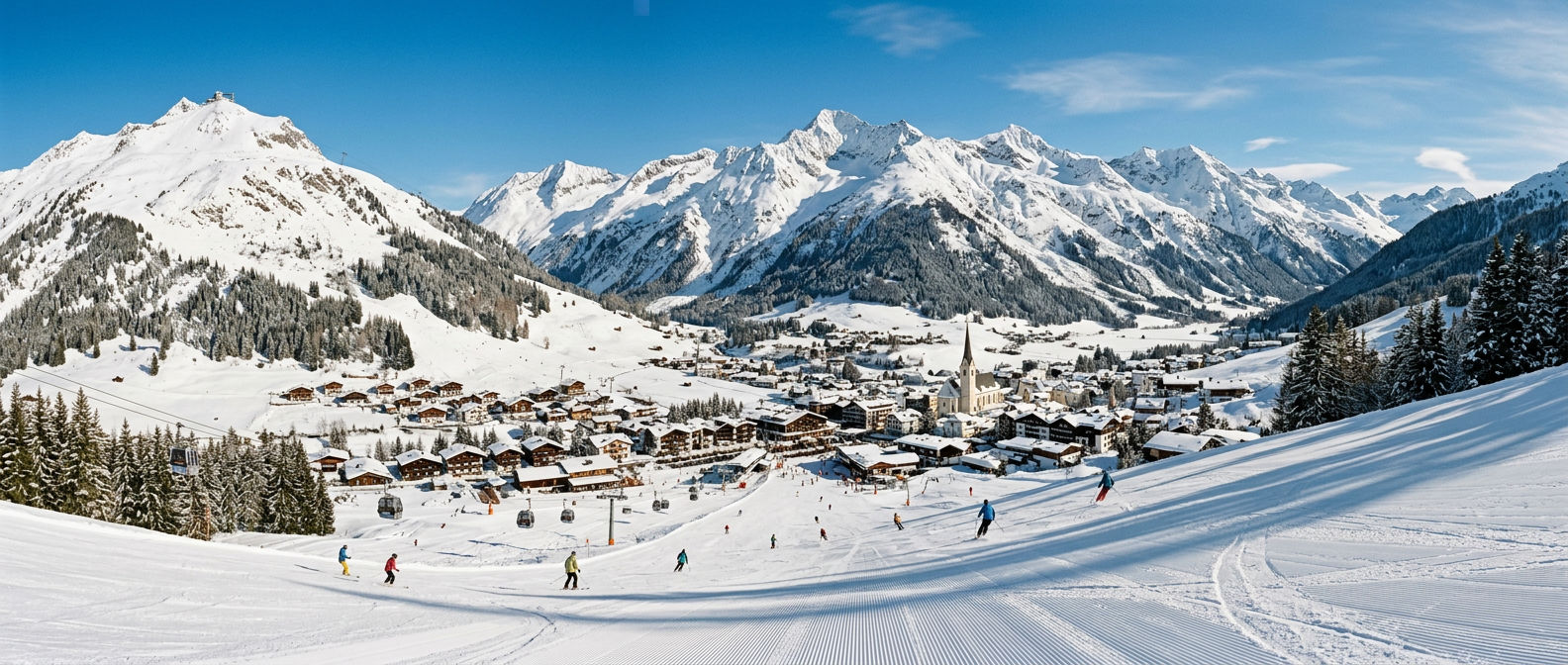
La Plagne is the most versatile ski resort in the French Alps for one reason: 11 villages at altitudes ranging from 1,250m to 2,100m, connected by 225 km of marked pistes and a single lift pass. Add the Vanoise Express cable car link to Les Arcs, and the combined Paradiski domain reaches 425 km — making it one of the largest ski areas in Europe. For families, intermediates, and groups seeking reliable snow without the premium pricing of the Three Valleys, La Plagne consistently delivers.
The Ski Area: 225 km Local, 425 km with Paradiski
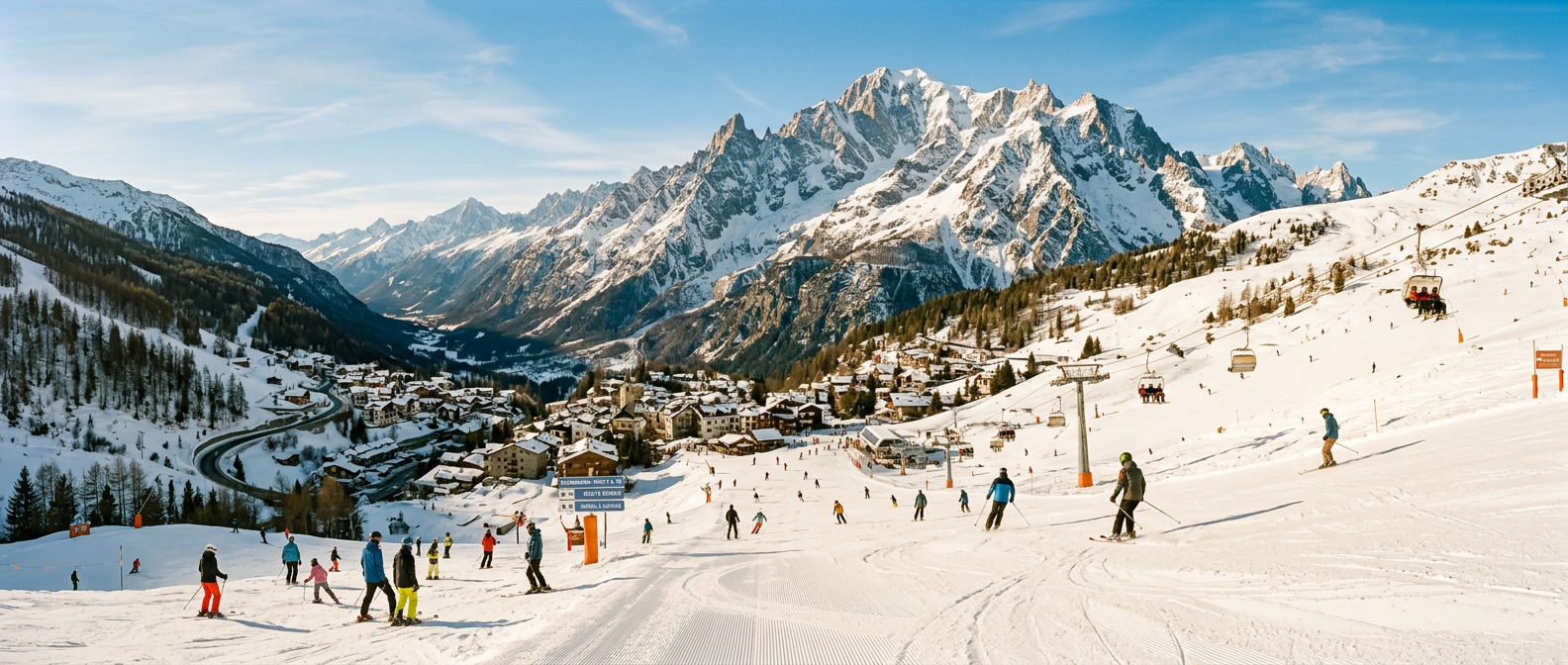
La Plagne's local ski area covers 225 km of marked runs served by 79 lifts, with terrain reaching 3,250m on the Bellecôte glacier. The breakdown favours intermediates and improving skiers: roughly 16% green, 36% blue, 38% red, and 10% black runs. This gradient mix means a group with mixed abilities can ski together far more easily than in steeper resorts like Chamonix or Verbier.
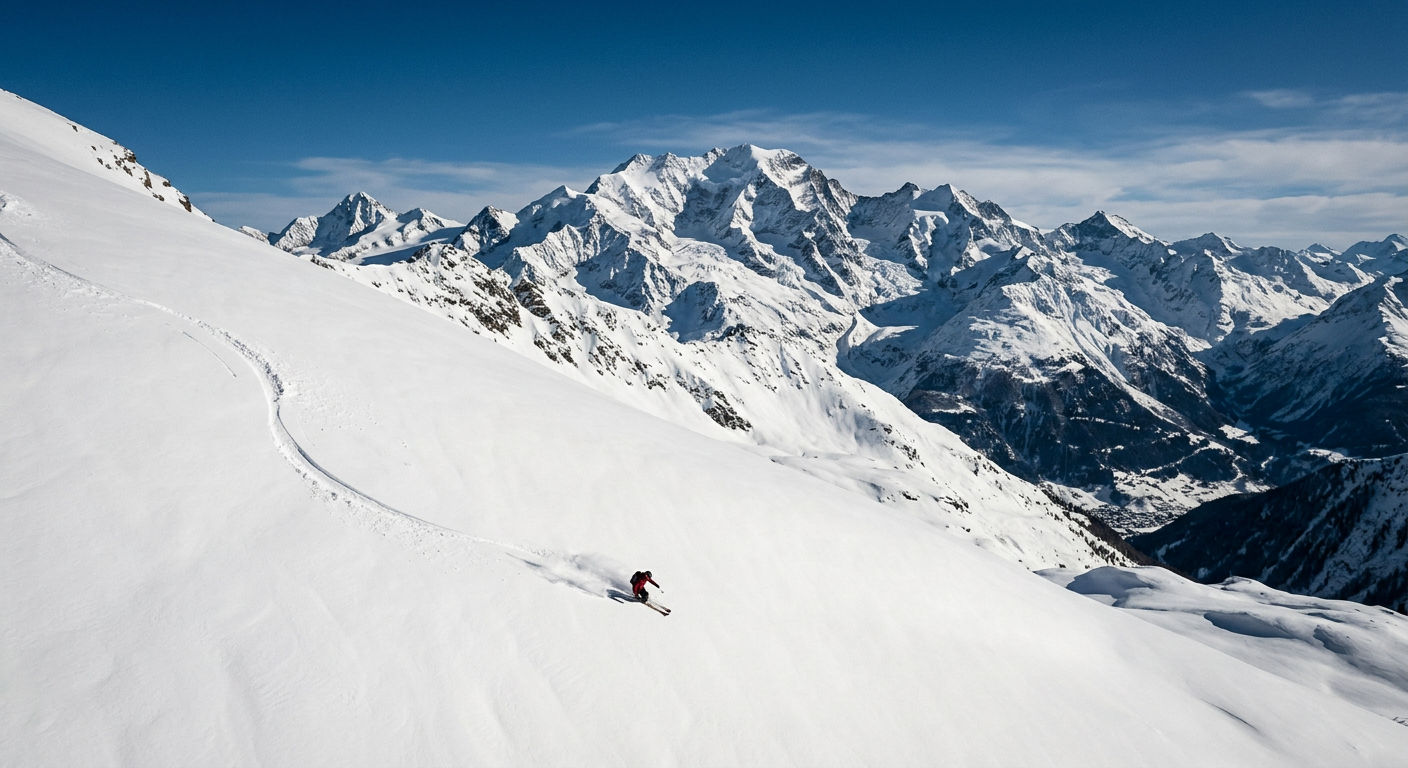
The resort's highest skiing sits on the Bellecôte glacier above 3,000m, offering snow-sure conditions well into spring. For advanced skiers, the north-facing slopes off the Bellecôte and the marked freeride zones around Bécoin and Arpette provide serious vertical without requiring a guide.
| Terrain Feature | Detail |
|---|---|
| Total pistes | 225 km (local) / 425 km (Paradiski) |
| Altitude range | 1,250m – 3,250m |
| Lifts | 79 (La Plagne) / 141 (Paradiski) |
| Green runs | 16% |
| Blue runs | 36% |
| Red runs | 38% |
| Black runs | 10% |
| Glacier skiing | Bellecôte, 3,250m |
The Paradiski connection — via the Vanoise Express double-decker cable car, opened in 2003 — links La Plagne to Les Arcs in under four minutes. With a Paradiski lift pass, skiers access a combined 425 km of pistes across two resorts. The link sits above the valley between Plan Peisey (Les Arcs side) and Montchavin (La Plagne side), and runs throughout the ski day with minimal queuing outside peak holiday weeks.
The 11 Villages: From High-Altitude Stations to Traditional Hamlets
La Plagne's defining feature is its village structure. Unlike single-base resorts such as Méribel or Val Thorens, La Plagne distributes skiers across 11 distinct bases — each with its own character, altitude, and proximity to the slopes.
High-Altitude Villages (1,800m – 2,100m)
Plagne Centre (1,970m) is the resort's commercial hub, with the widest selection of shops, restaurants, and ski schools. Its 1970s architecture is functional rather than charming, but the ski-in ski-out access and central lift connections make it the most practical base.
Belle Plagne (2,050m) sits slightly higher and has been substantially renovated, with a pedestrian centre and a more refined feel than Plagne Centre. It offers direct access to the Bellecôte glacier sector.
Plagne 1800 and Aime 2000 round out the upper tier. Both are purpose-built and altitude-friendly, with reliable doorstep snow throughout the season.
Traditional Villages (1,250m – 1,450m)
Montchavin-Les Coches (1,250m–1,450m) is the closest base to the Vanoise Express link to Les Arcs, and arguably the most appealing village aesthetically — traditional Savoyard stone-and-timber buildings, a quieter pace, and a genuine year-round community. Families and those seeking village character over convenience tend to gravitate here.
Champagny-en-Vanoise (1,250m) occupies a south-facing position at the edge of the Vanoise National Park. It connects to the main La Plagne ski area by gondola and appeals to hikers and nature-focused visitors as much as skiers.
Montalbert (1,350m) is the smallest and least developed of the lower villages — a good choice for families wanting a quiet base with easy access to the ski area.
Where to Stay: Chalets, Apartments & Service Levels
La Plagne's accommodation leans toward apartments and apart-hotels, but the chalet market has grown substantially. In our current collection of 30 La Plagne properties, 11 are chalets, 14 are apartments, and 5 are hotels — with one standout data point: every single property in our portfolio offers ski-in ski-out access. That is a 100% ski-in ski-out rate, a figure unmatched by any other resort in our collection.
The amenity profile is similarly strong. At time of writing, 29 of our 30 La Plagne properties include a private hot tub, 26 have a sauna, and 20 offer a swimming pool. For a resort often positioned as a more accessible alternative to the Three Valleys, the wellness amenity density is remarkable.
Service Levels
| Service Level | Properties | What's Included |
|---|---|---|
| Catered | 19 | Meals, hosting, housekeeping |
| Self-catered | 7 | Kitchen facilities, independent stay |
| Flexible | 4 | Choose catering options à la carte |
Catered properties dominate the La Plagne collection, accounting for nearly two-thirds of available accommodation. Weekly rates across our portfolio range from approximately €4,500 for a two-bedroom apartment to €26,500 for a penthouse sleeping 14 guests.
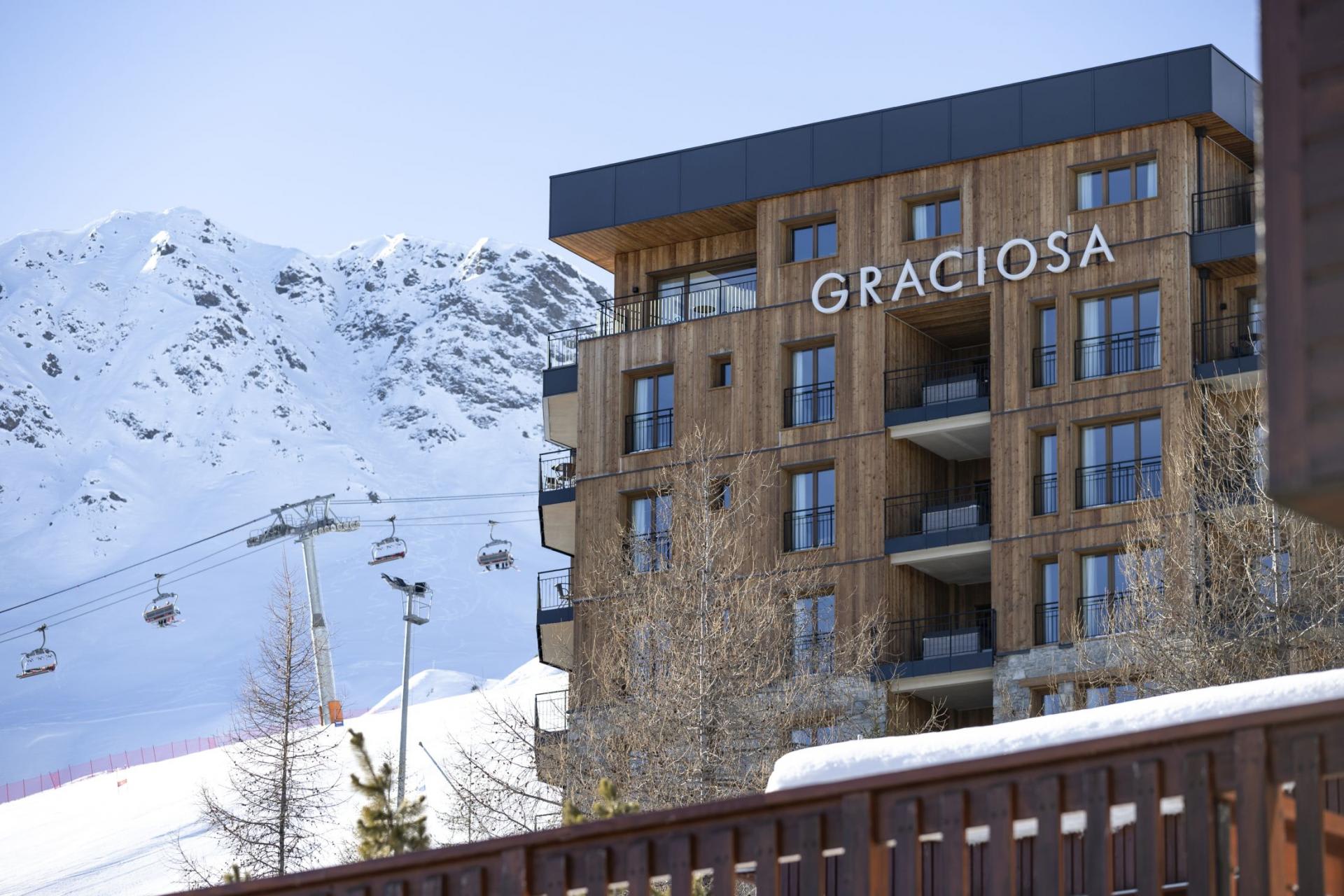
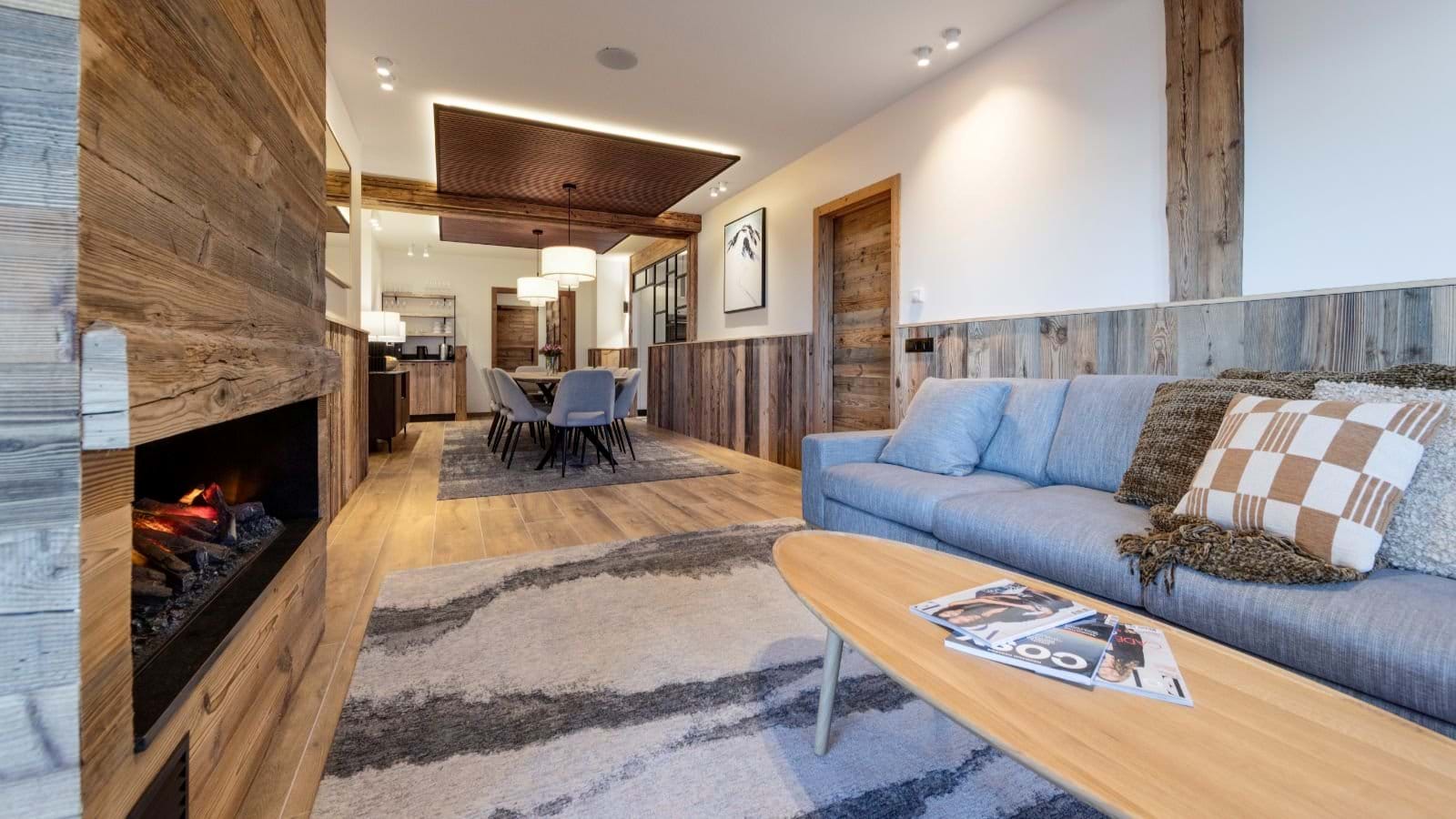
Among the catered chalets in our La Plagne collection, Chalet Piccard stands out for groups — sleeping 12 across five bedrooms with a private hot tub, sauna, and spa, from €23,400 per week.
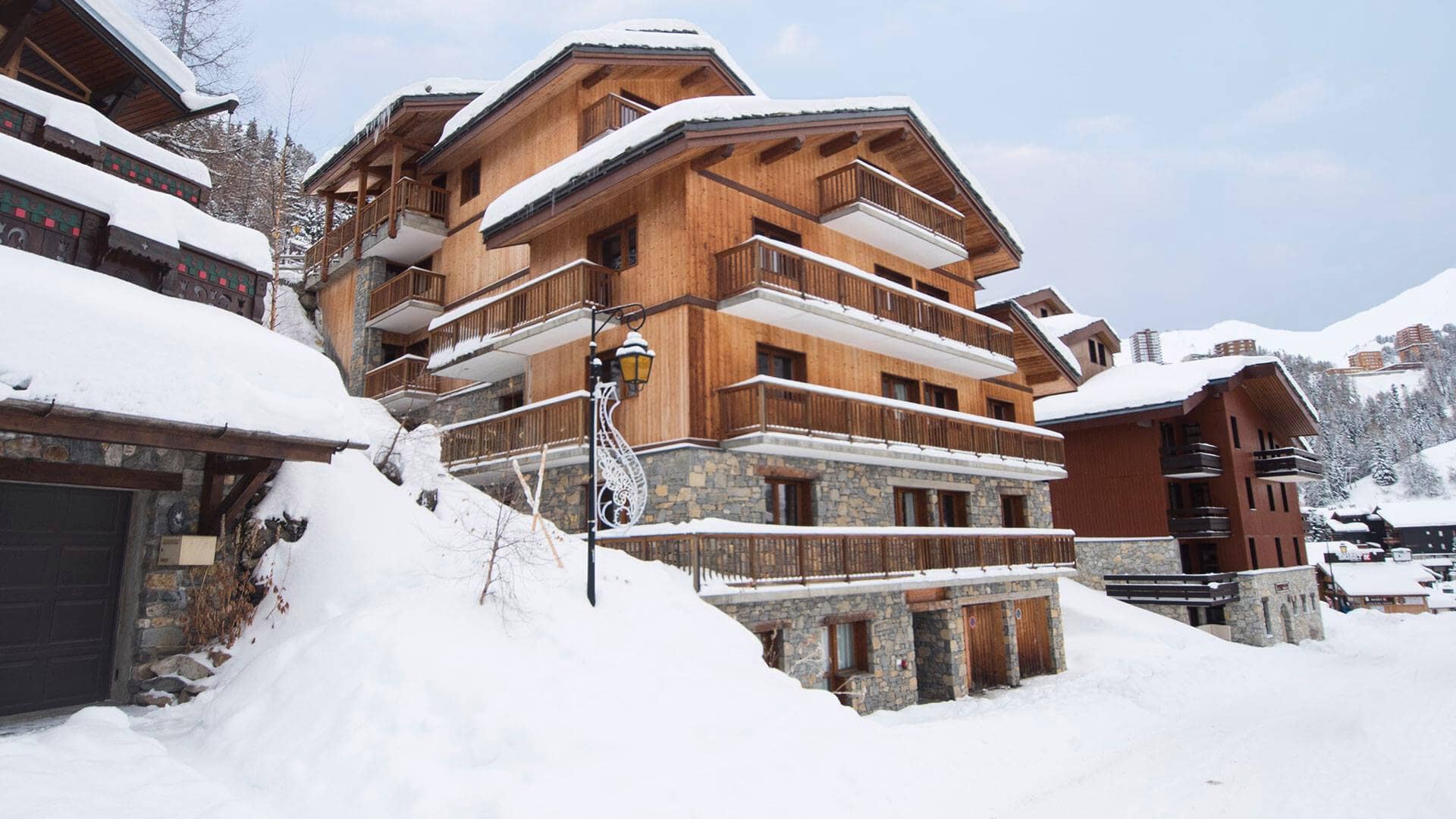
For couples or smaller groups, the Mio Suite offers a catered two-bedroom apartment with ski-in ski-out access and a private cinema room, from €4,899 per week — one of the most accessible entry points to a catered La Plagne stay.
Capacity for Groups
Of our 30 La Plagne properties, 11 accommodate 10 or more guests — making it a strong base for multi-family or group ski holidays. Several chalets sleep 12–14 in dedicated bedrooms, a capacity bracket that works well for extended families or groups of friends sharing costs.
The Rochette Suite — a catered four-bedroom property with ski-in ski-out access, a pool, hot tub, and spa — is a well-rounded mid-range option for groups of up to eight.
When to Visit and How to Get There
La Plagne's season typically runs from early December to late April, with the Bellecôte glacier extending high-altitude skiing into May in strong snow years. The most reliable conditions fall between January and mid-March, when the upper villages sit under consistent cover.
Peak and Off-Peak Timing
| Period | Conditions | Crowds | Value |
|---|---|---|---|
| Early Dec – mid-Dec | Opening weeks, variable cover below 1,800m | Quiet | Strong |
| Christmas – New Year | Full operation, heavy booking | Peak | Lowest |
| January | Reliable snow, cold temperatures | Moderate | Good |
| February (half-term) | Best all-round conditions | Peak | Moderate |
| March | Warming, spring snow above 2,000m | Moderate | Good |
| April | Glacier and upper runs only | Quiet | Strong |
Getting There
La Plagne sits in the Tarentaise Valley in Savoie. The closest airports are:
- Chambéry (CMF): ~105 minutes by road, the most direct transfer
- Lyon (LYS): ~2.5 hours, wider flight selection
- Geneva (GVA): ~2.5–3 hours, the busiest international hub for the French Alps
Transfer services run from all three airports, with private transfers and shared bus services both widely available. The resort is also accessible by train to Aime-La Plagne station (TGV from Paris in under 5 hours), with a connecting bus to the upper villages.
The Paradiski Connection: Skiing Between La Plagne and Les Arcs
The Vanoise Express cable car transformed La Plagne and Les Arcs into a single ski domain when it opened in 2003. The double-decker gondola carries 200 passengers per cabin across the Ponthurin valley in under four minutes, connecting Montchavin on the La Plagne side to Plan Peisey on the Les Arcs side.
With a Paradiski lift pass, skiers access 425 km of linked terrain — making it the second-largest ski domain in France after the Three Valleys. The Les Arcs side adds a different character: the Aiguille Rouge summit at 3,226m offers one of the longest descents in Europe (7 km, 2,000m vertical), and the Arc 1950 village is one of the most architecturally considered purpose-built bases in the Alps.
In our current collection, we list 34 properties in Les Arcs alongside the 30 in La Plagne — a combined 64 Paradiski properties, every one of them with ski-in ski-out access. For groups splitting between the two resorts or skiers who want to explore both sides across a week, the shared pass and connected terrain make it seamless.
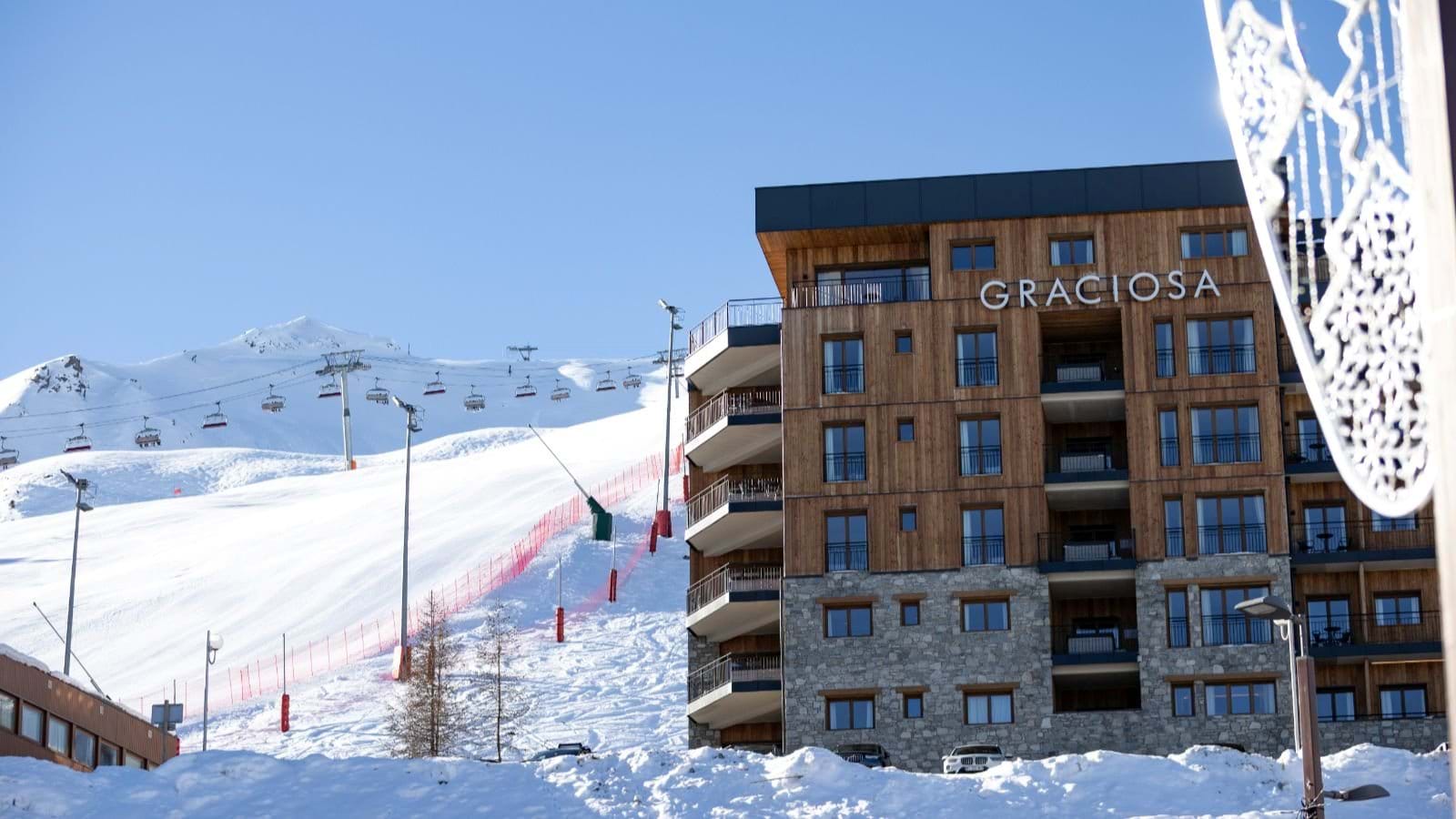
For those seeking a self-catered base with direct ski access and a swimming pool, the Bellecote Suite in Plagne Bellecôte offers a three-bedroom apartment sleeping six, from €10,500 per week.
Explore La Plagne with Powder Edition
Powder Edition brings together the finest ski properties across the Paradiski domain. Browse our La Plagne collection to find chalets, apartments, and hotels with ski-in ski-out access, or explore the full Paradiski selection spanning both La Plagne and Les Arcs. For properties with a private hot tub — which covers nearly our entire La Plagne portfolio — filter by amenity to see what's available for your dates.
Frequently Asked Questions
How big is the La Plagne ski area?
La Plagne's local ski area covers 225 km of marked pistes served by 79 lifts, with terrain from 1,250m to 3,250m. With a Paradiski lift pass, the linked domain with Les Arcs extends to 425 km — the second-largest in France after the Three Valleys.
Is La Plagne good for beginners?
La Plagne is one of the strongest beginner resorts in the Alps. Over half the terrain is graded green or blue, and each of the 11 villages has its own nursery slopes and ski school. The high-altitude villages — particularly Belle Plagne and Plagne Centre — offer gentle, snow-sure terrain at over 2,000m.
How do you get from La Plagne to Les Arcs?
The Vanoise Express cable car connects La Plagne (Montchavin side) to Les Arcs (Plan Peisey) in under four minutes. It runs throughout the ski day and is included in the Paradiski lift pass. From Montchavin, the connection is immediate; from the upper villages, allow 20–30 minutes of skiing to reach the link.
What is the best village in La Plagne?
It depends on priorities. Belle Plagne (2,050m) is the best all-rounder — refined for a purpose-built village, with reliable snow and direct glacier access. Montchavin-Les Coches suits families wanting traditional Savoyard character. Plagne Centre is the most practical base for access and amenities.
When does La Plagne ski season start and end?
La Plagne typically opens in early December and closes in late April. The Bellecôte glacier sector can extend into May in strong snow years. The most reliable conditions across all 11 villages fall between mid-January and mid-March.
How much does a La Plagne ski pass cost?
A six-day La Plagne-only pass typically costs between €250–€290 for adults, depending on the period. The Paradiski pass — covering both La Plagne and Les Arcs — runs approximately €310–€350 for six days. Under-fives ski free, and family rates are available. Check current pricing at the time of booking, as rates are updated seasonally.